
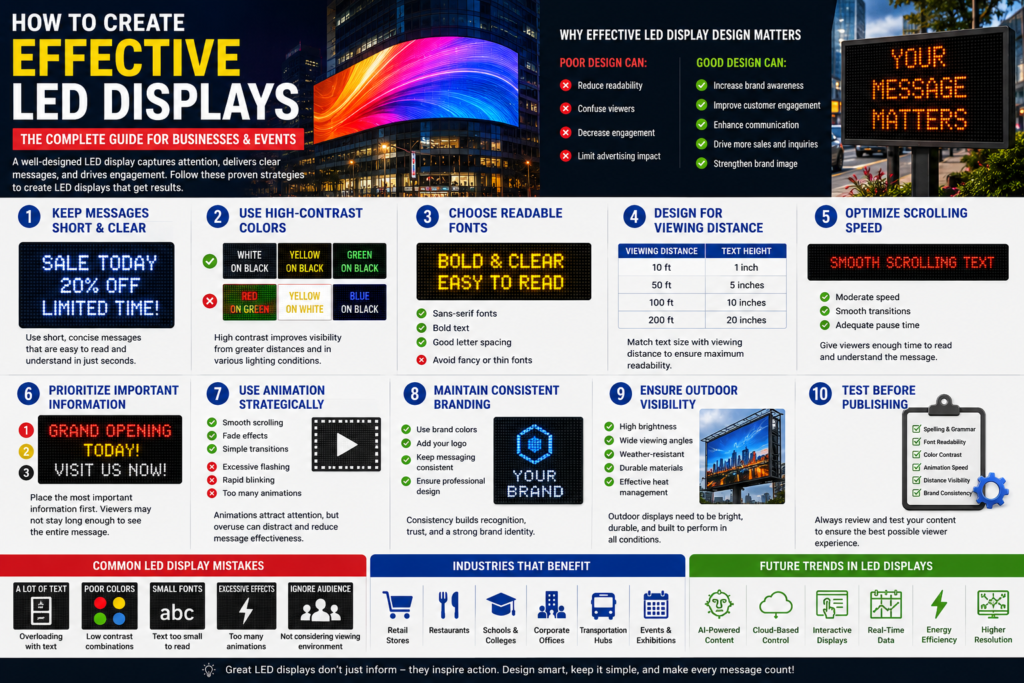
How to Create Effective LED Displays
LED displays have become one of the most powerful communication tools for businesses, retailers, event organizers, educational institutions, and public facilities. A well-designed LED display can instantly capture attention, communicate information clearly, and encourage audience engagement.
Whether you are using a scrolling LED sign, digital signage display, or large outdoor LED screen, understanding the fundamentals of effective display design can significantly improve your results.
This guide explains the key principles, design strategies, and industry best practices for creating LED displays that maximize visibility and impact.
What Is an LED Display?
An LED display is an electronic screen that uses Light Emitting Diodes (LEDs) to display text, graphics, animations, videos, and real-time information. LED displays are widely used because of their brightness, durability, energy efficiency, and excellent visibility in various environments.
Common applications include:
- Retail advertising
- Storefront signage
- Event promotions
- Transportation information boards
- Sports stadiums
- Corporate communication systems
- Educational institutions
- Public information displays
Modern LED technology allows organizations to communicate dynamic content efficiently while maintaining excellent visual performance.
Why Effective LED Display Design Matters
Most viewers spend only a few seconds looking at a display. During that brief moment, your message must attract attention and communicate information clearly.
Poorly designed displays can:
- Reduce readability
- Confuse viewers
- Decrease engagement
- Limit advertising effectiveness
Well-designed LED displays can:
- Increase brand awareness
- Improve customer engagement
- Enhance communication efficiency
- Drive more sales and inquiries
- Strengthen professional brand image
An effective LED display helps businesses deliver the right message to the right audience at the right time.
1. Keep Messages Short and Clear
One of the most common mistakes in LED display design is trying to communicate too much information at once.
People often view LED displays while walking, driving, or multitasking. Therefore, messages should be concise and easy to understand within seconds.
Effective Examples
- Grand Opening Today
- 20% Off All Products
- Free Shipping Available
- New Collection Now In Stock
Less Effective Example
- Visit our store today to explore our wide range of products and take advantage of limited-time discounts available this week.
Short messages are easier to read, remember, and act upon.
2. Use High-Contrast Colors
Color contrast plays a critical role in display visibility and readability.
High-contrast color combinations make text easier to read from greater distances and under various lighting conditions.
Recommended Color Combinations
- White on Black
- Yellow on Black
- Green on Black
- White on Blue
- Red on Black
Color Combinations to Avoid
- Red on Green
- Yellow on White
- Blue on Black
- Light Gray on White
Strong contrast ensures that viewers can quickly identify and understand your message.
3. Choose Readable Fonts
Font selection directly affects readability.
Decorative or highly stylized fonts may look attractive but often reduce clarity, especially when viewed from a distance.
Best Practices
- Use sans-serif fonts
- Choose bold font styles
- Maintain adequate spacing
- Avoid excessive font variations
- Ensure text size matches viewing distance
The primary goal is clear communication rather than artistic presentation.
4. Design for Viewing Distance
The size of your text should match the expected viewing distance.
A display viewed from across a street requires significantly larger text than one viewed from a few feet away.
| Viewing Distance | Recommended Text Height |
|---|---|
| 10 ft | 1 inch |
| 50 ft | 5 inches |
| 100 ft | 10 inches |
| 200 ft | 20 inches |
Proper scaling ensures that content remains legible and effective.
5. Optimize Scrolling Speed
Scrolling text can be highly effective when used correctly.
If the text moves too quickly, viewers may not have enough time to read and understand the message.
Recommended Settings
- Moderate scrolling speed
- Smooth transitions
- Adequate pause intervals
- Consistent animation timing
The goal is to make reading effortless and comfortable.
6. Prioritize Important Information
Always place the most important information first.
Viewers may not stay long enough to read an entire message sequence, so key details should appear immediately.
Effective Layout
SALE TODAY
50% OFF
LIMITED TIME OFFER
Less Effective Layout
Visit our store located near the shopping center where special discounts are available for selected products.
Lead with the message that matters most.
7. Use Animation Strategically
Motion naturally attracts attention, but excessive animation can distract viewers and reduce message effectiveness.
Recommended Effects
- Smooth scrolling
- Fade transitions
- Gentle slide effects
Effects to Avoid
- Rapid flashing
- Excessive blinking
- Multiple simultaneous animations
- Overly complex transitions
Simple and purposeful movement creates a professional appearance while maintaining readability.
8. Maintain Consistent Branding
Your LED display should align with your overall brand identity.
Consistency helps audiences recognize and remember your business.
Include
- Brand colors
- Company logo
- Consistent messaging style
- Professional visual design
Strong branding improves credibility and customer trust.
9. Ensure Outdoor Visibility
Outdoor LED displays face unique environmental challenges, including sunlight, weather conditions, and long viewing distances.
Outdoor Display Requirements
- High brightness levels
- Wide viewing angles
- Weather-resistant construction
- Durable materials
- Effective heat management
Properly designed outdoor displays remain visible and effective throughout the day.
10. Test Before Publishing
Before launching content, carefully review every aspect of the display.
Checklist
- Spelling accuracy
- Grammar correctness
- Font readability
- Color contrast
- Animation speed
- Mobile and distance visibility
- Brand consistency
Testing helps eliminate mistakes and ensures the best possible viewing experience.
Common LED Display Mistakes
Avoiding common errors can significantly improve display performance.
Too Much Text
Keep messages concise and focused.
Poor Color Selection
Choose high-contrast color combinations.
Small Fonts
Ensure text remains visible from the intended distance.
Excessive Effects
Use animation only when it enhances communication.
Ignoring Audience Behavior
Design displays based on how and where people will view them.
Industries That Benefit from LED Displays
Retail Stores
Promote sales, special offers, and new product launches.
Restaurants
Display menus, promotions, and daily specials.
Educational Institutions
Communicate announcements, schedules, and events.
Corporate Offices
Share internal communications and company updates.
Transportation Facilities
Provide real-time schedules and passenger information.
Events and Exhibitions
Display schedules, directions, and sponsor messages.
Future Trends in LED Display Technology
LED display technology continues to evolve rapidly.
Emerging trends include:
- AI-powered content management
- Interactive digital signage
- Cloud-based display control
- Smart audience targeting
- Real-time data integration
- Improved energy efficiency
- Higher-resolution display technology
These innovations are transforming how organizations communicate with their audiences.
Frequently Asked Questions
What makes an LED display effective?
An effective LED display combines clear messaging, readable fonts, high-contrast colors, appropriate text size, and optimized animation settings.
How many words should an LED message contain?
For maximum readability, most LED messages should contain between 5 and 10 words.
Which colors work best on LED displays?
White, yellow, and green text on dark backgrounds generally provide the highest visibility.
Are scrolling messages effective?
Yes. Scrolling messages can be highly effective when scrolling speed is optimized and content remains concise.
Conclusion
Creating an effective LED display requires a balance of readability, design, visibility, and audience engagement. By keeping messages concise, using high-contrast colors, selecting readable fonts, and optimizing viewing conditions, businesses can significantly improve communication effectiveness.
Whether used for advertising, public information, retail promotions, or event management, a professionally designed LED display helps attract attention, communicate clearly, and deliver measurable results. Proper planning and execution ensure that every message achieves its intended impact while enhancing the overall viewer experience.