
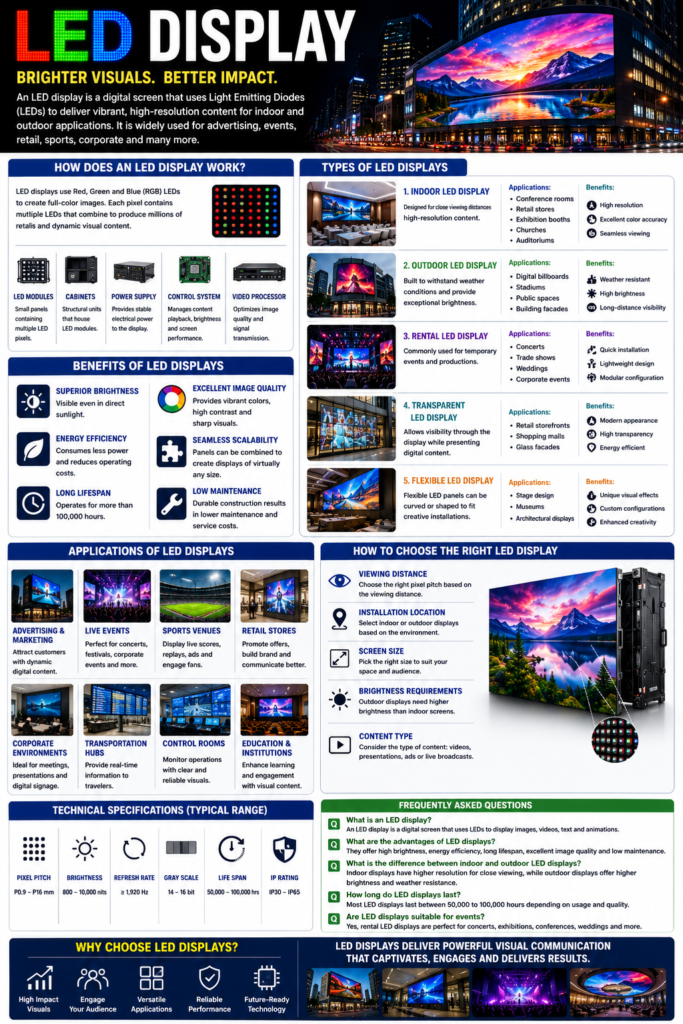
LED Display
Introduction
An LED display is a digital screen technology that uses Light Emitting Diodes (LEDs) to produce bright, vibrant, and high-resolution visuals for indoor and outdoor applications. LED displays have become the preferred choice for advertising, live events, sports venues, retail stores, corporate environments, and entertainment productions due to their superior brightness, energy efficiency, and long lifespan.
Whether used for digital billboards, stage backdrops, video walls, or information displays, LED screens deliver exceptional image quality and visibility in virtually any environment.
What Is an LED Display?
An LED display is a flat-panel screen made up of thousands or millions of individual LEDs that work together to create images, videos, text, and animations. Unlike traditional display technologies, LED displays offer higher brightness levels, better color accuracy, and greater durability.
Common Applications of LED Displays
Modern LED displays are widely used in:
- Advertising billboards
- Concert stages
- Corporate events
- Retail stores
- Sports stadiums
- Airports
- Shopping malls
- Control rooms
- Houses of worship
- Exhibition centers
How Does an LED Display Work?
LED displays use red, green, and blue (RGB) LEDs to create full-color images. Each pixel contains multiple LEDs that combine to display millions of colors and dynamic visual content.
Key Components
LED Modules
Small panels containing multiple LED pixels.
Cabinets
Structural units that house LED modules.
Power Supply
Provides stable electrical power to the display.
Control System
Manages content playback, brightness, and screen performance.
Video Processor
Optimizes image quality and signal transmission.
Types of LED Displays
Indoor LED Display
Indoor LED screens are designed for close viewing distances and high-resolution content.
Applications
- Conference rooms
- Retail stores
- Exhibition booths
- Churches
- Auditoriums
Benefits
- High resolution
- Excellent color accuracy
- Seamless viewing experience
Outdoor LED Display
Outdoor LED displays are built to withstand weather conditions and provide exceptional brightness.
Applications
- Digital billboards
- Stadiums
- Public spaces
- Building facades
Benefits
- Weather resistance
- High brightness
- Long-distance visibility
Rental LED Display
Rental LED screens are commonly used for temporary events and productions.
Applications
- Concerts
- Trade shows
- Weddings
- Corporate events
Benefits
- Quick installation
- Lightweight design
- Modular configuration
Transparent LED Display
Transparent LED screens allow visibility through the display while presenting digital content.
Applications
- Retail storefronts
- Shopping malls
- Glass facades
Benefits
- Modern appearance
- High transparency
- Energy efficiency
Flexible LED Display
Flexible LED panels can be curved or shaped to fit creative installations.
Applications
- Stage design
- Museums
- Architectural displays
Benefits
- Unique visual effects
- Custom configurations
- Enhanced creativity
Benefits of LED Displays
Superior Brightness
LED displays remain visible even in direct sunlight, making them ideal for outdoor advertising and public information systems.
Energy Efficiency
Modern LED technology consumes less power compared to traditional display systems, reducing operating costs over time.
Long Lifespan
High-quality LED displays can operate for more than 100,000 hours with proper maintenance.
Excellent Image Quality
LED screens provide vibrant colors, high contrast ratios, and sharp visuals that enhance audience engagement.
Seamless Scalability
LED panels can be combined to create displays of virtually any size, from small indoor screens to massive video walls.
Low Maintenance
Durable construction and reliable components help reduce maintenance requirements and long-term operational expenses.
LED Display Applications
Advertising and Marketing
Businesses use LED displays to attract customers with dynamic advertisements, promotional campaigns, and brand messaging.
Live Events
Concerts, festivals, conferences, and exhibitions rely on LED screens for visual presentations and audience engagement.
Sports Venues
LED displays provide live scores, instant replays, sponsorship advertisements, and fan interaction opportunities.
Retail Stores
Retailers use LED displays for promotions, product showcases, branding, and customer communication.
Corporate Environments
Companies utilize LED video walls and digital signage systems for meetings, presentations, and internal communications.
Transportation Hubs
Airports, train stations, and bus terminals use LED displays to provide real-time schedules, announcements, and travel information.
Choosing the Right LED Display
Viewing Distance
Pixel pitch should match the expected viewing distance to ensure optimal image clarity and viewing comfort.
Installation Location
Determine whether the display will be used indoors or outdoors, as each environment requires different specifications.
Screen Size
Select a display size that aligns with your audience size, venue dimensions, and content requirements.
Brightness Requirements
Outdoor LED displays require significantly higher brightness levels than indoor screens to remain visible in daylight.
Content Type
Consider whether the display will show videos, presentations, live broadcasts, advertisements, or interactive content.
Frequently Asked Questions
What is an LED display?
An LED display is a digital screen that uses light-emitting diodes to display images, videos, text, animations, and other visual content.
What are the advantages of LED displays?
LED displays offer high brightness, energy efficiency, long lifespan, excellent image quality, durability, and low maintenance requirements.
What is the difference between indoor and outdoor LED displays?
Indoor LED displays provide higher resolution for close viewing distances, while outdoor displays offer greater brightness, weather resistance, and long-distance visibility.
How long do LED displays last?
Most commercial LED displays have a lifespan ranging from approximately 50,000 to 100,000 hours, depending on usage and maintenance.
Are LED displays suitable for events?
Yes. Rental LED displays are widely used for concerts, exhibitions, conferences, weddings, corporate events, and live productions because of their flexibility and visual impact.
Conclusion
An LED display is one of the most versatile and effective digital display solutions available today. With outstanding brightness, durability, scalability, energy efficiency, and image quality, LED displays continue to transform advertising, entertainment, communication, and live event experiences.
Whether used for indoor presentations, retail advertising, corporate communication, or large outdoor installations, LED technology provides a powerful visual platform for businesses and organizations worldwide. As display technology continues to evolve, LED displays will remain a leading solution for delivering engaging and impactful visual experiences.