
What Is a Podcast Microphone Kit?
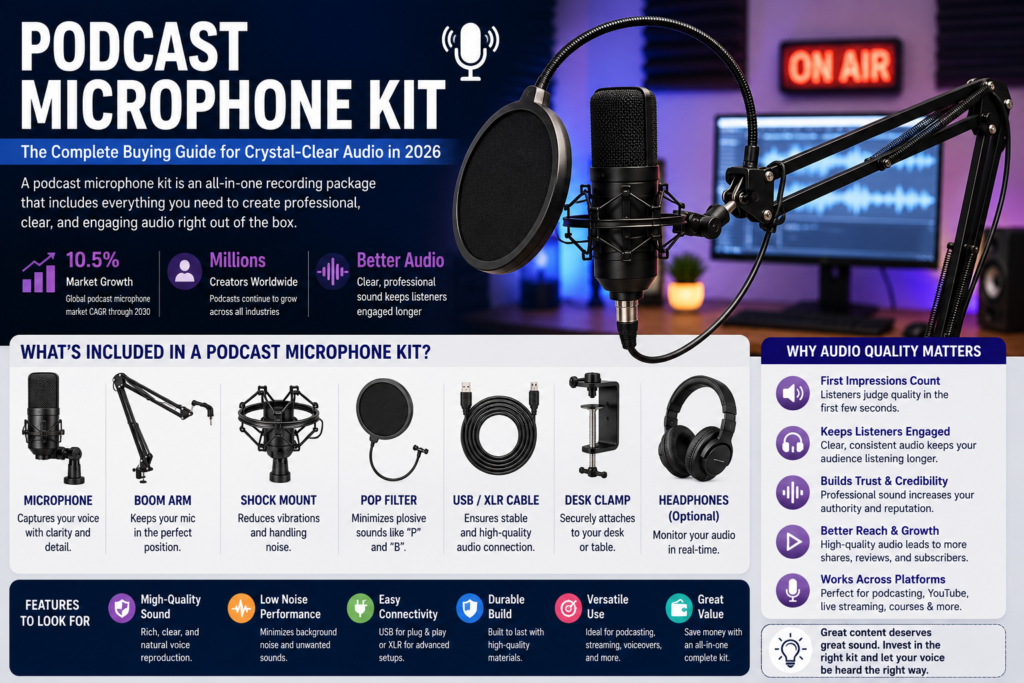
A podcast microphone kit is an all-in-one recording package designed to help creators produce professional-quality audio without having to purchase each accessory separately. Instead of buying a microphone today, a boom arm next month, and a pop filter later, a complete kit gives you everything needed to begin recording immediately. Most kits include a microphone, adjustable boom arm, shock mount, pop filter, USB or XLR cable, desk clamp, and sometimes headphones or an audio interface.
Podcasting continues to grow worldwide, and the demand for quality recording equipment has never been stronger. Market analysts estimate that the global podcast microphone market will grow at a compound annual growth rate of approximately 10.5% through 2030, driven by independent creators, educators, businesses, and live streamers.
Whether you’re launching your first interview show, creating educational content, recording voiceovers, or streaming live, choosing the right podcast microphone kit can dramatically improve your production quality. Listeners may forgive average video quality, but poor audio often causes them to leave within minutes.
If you want to understand how audio systems deliver powerful and clear sound, our guide on power amplifiers explains everything in simple terms. Learn what a power amplifier looks like, how it works, and the key features that make it essential for speakers, live sound, and professional audio setups. Read more What Does a Power Amplifier Look Like?
Why Audio Quality Matters More Than Ever
Imagine listening to your favorite podcast while driving to work or exercising at the gym. If the host’s voice sounds muffled, full of background noise, or constantly changes in volume, chances are you’ll switch to another show within minutes. That is exactly why audio quality has become one of the biggest factors in podcast success. Great content deserves great sound because listeners often judge a podcast’s professionalism before they even pay attention to the information being shared. A clear, warm, and balanced recording immediately creates trust, while distorted audio can make even the most knowledgeable host sound inexperienced. Investing in a quality podcast microphone kit helps eliminate many of the common recording problems that beginners face, including popping sounds, desk vibrations, and inconsistent microphone positioning.
The explosion of podcasts across business, education, entertainment, and marketing has also raised listener expectations. Millions of podcasts compete for attention, meaning creators must deliver an enjoyable listening experience from the very first episode. A complete microphone kit doesn’t simply improve voice quality; it creates consistency from episode to episode. Accessories like shock mounts reduce unwanted vibrations, pop filters soften harsh consonants, and boom arms allow the microphone to remain in the ideal position throughout the recording. These seemingly small improvements combine to create a polished sound that encourages listeners to stay engaged, subscribe, and recommend the show to others. Good audio is no longer a luxury reserved for professional studios—it’s an expectation that every serious podcaster should strive to meet.
The Rise of Professional Podcasting
Podcasting has transformed from a niche hobby into a mainstream media industry. Businesses now launch branded podcasts to connect with customers, universities use podcasts for educational content, and independent creators build loyal communities around their expertise. With more advertisers investing in podcast sponsorships and more creators entering the market every year, production quality has become a competitive advantage. Listeners can instantly compare one podcast against thousands of others, making high-quality recording equipment an essential investment rather than an optional upgrade.
Professional podcasting also extends beyond traditional audio platforms. The same microphone setup is often used for YouTube videos, webinars, online courses, Twitch streaming, Discord communities, remote interviews, and virtual meetings. This versatility makes a complete podcast microphone kit an excellent value because it supports multiple types of content creation. Instead of purchasing different microphones for every purpose, creators can rely on one dependable recording setup that delivers consistent results across various platforms. As personal branding continues to grow, having professional-quality audio can help establish credibility and leave a lasting impression on every listener.
What’s Included in a Podcast Microphone Kit?
One of the biggest advantages of purchasing a podcast microphone kit is convenience. Rather than researching individual accessories and worrying about compatibility, everything arrives in one package, ready for assembly. Although the exact contents vary between brands, most complete kits include the essential tools needed to begin recording immediately. This not only saves money but also ensures that every accessory is designed to work seamlessly with the microphone. Beginners especially appreciate this approach because it removes much of the confusion associated with building a recording setup from scratch.
A complete kit also creates a cleaner and more organized workspace. Instead of placing a microphone on your desk where keyboard vibrations and accidental bumps affect recordings, the included accessories help isolate and position the microphone correctly. This results in cleaner recordings with less editing required afterward. Even experienced podcasters often choose microphone bundles because purchasing everything together frequently costs less than buying each component individually.
Microphone
The microphone is naturally the centerpiece of the entire kit. Its primary job is to capture your voice accurately while minimizing unwanted background sounds. Entry-level kits usually feature USB condenser microphones, making them ideal for beginners who simply plug the microphone into a computer and start recording. Premium kits often include XLR microphones that provide greater flexibility and studio-quality sound when paired with an audio interface.
The microphone’s frequency response, sensitivity, and pickup pattern all influence the final recording quality. A good podcast microphone captures the warmth and clarity of the human voice while reducing distortion during louder speech. Choosing a microphone designed specifically for spoken-word content can make conversations sound more natural and engaging.
Boom Arm
A boom arm is one of the most underrated accessories included in many microphone kits. Instead of placing the microphone on a desk stand, the boom arm suspends it comfortably at mouth level. This allows users to maintain proper microphone distance while recording, resulting in more consistent audio quality throughout an episode.
Boom arms also reduce desk clutter and create additional workspace for keyboards, notes, or mixing equipment. Since the microphone remains suspended, accidental desk bumps are far less likely to transfer into the recording. Adjustable boom arms further improve comfort by allowing creators to reposition the microphone quickly during interviews or collaborative recording sessions.
Shock Mount
The shock mount serves as a protective suspension system for the microphone. It uses elastic bands or specialized supports to isolate the microphone from vibrations caused by typing, desk movement, or accidental contact with the boom arm. Without a shock mount, even minor vibrations can produce distracting low-frequency noises that require additional editing later.
Although beginners sometimes overlook this accessory, experienced podcasters recognize its importance in achieving clean recordings. A properly installed shock mount dramatically reduces mechanical noise while preserving the clarity of the speaker’s voice. It becomes especially valuable during longer recording sessions where movement around the desk is unavoidable.
Pop Filter
A pop filter prevents harsh popping sounds created by explosive consonants such as “P,” “B,” and “T.” These sudden bursts of air can overload a microphone capsule and create unpleasant spikes in the recording. Positioned a few inches in front of the microphone, the pop filter diffuses airflow while allowing sound waves to pass through naturally.
Using a pop filter also encourages consistent microphone positioning because it acts as a comfortable distance guide for speakers. This helps maintain stable recording levels throughout an episode. For creators producing interviews or narrative podcasts, a pop filter contributes significantly to achieving the smooth, broadcast-quality sound that listeners appreciate.
USB or XLR Cable
Every microphone needs a reliable connection, and most kits include either a USB cable or an XLR cable depending on the microphone type. USB cables offer maximum simplicity by connecting directly to computers without requiring additional hardware. This plug-and-play functionality makes USB kits extremely popular among beginners and solo creators.
XLR cables, meanwhile, are intended for professional recording environments where microphones connect through an audio interface or mixer. Although this setup involves more equipment, it delivers greater control over gain, monitoring, and future upgrades. High-quality cables also reduce signal interference, ensuring that recordings remain clean and free from unwanted electrical noise.
USB vs XLR Podcast Microphone Kits
One of the first decisions you’ll make when shopping for a podcast microphone kit is whether to choose a USB or an XLR setup. At first glance, they may look similar because both can produce excellent audio, but the way they connect and perform is quite different. Your choice should depend on your experience level, recording environment, budget, and long-term goals. A beginner recording solo episodes from a home office has different needs than a professional hosting interviews in a dedicated studio. Understanding these differences will help you invest in equipment that supports your growth instead of limiting it.
USB microphone kits are designed for simplicity. You connect the microphone directly to your computer, install any required software if necessary, and start recording almost immediately. There is no need for mixers, preamps, or audio interfaces. This straightforward setup makes USB kits ideal for new podcasters, students, educators, remote workers, and content creators who want professional audio without dealing with complicated hardware. Many modern USB microphones even include headphone monitoring, mute buttons, gain controls, and built-in digital converters that produce surprisingly clean recordings.
XLR microphone kits, on the other hand, are built for flexibility and professional performance. These microphones require an external audio interface or mixer, allowing users to fine-tune gain, connect multiple microphones simultaneously, and upgrade individual components over time. While the initial investment is higher, an XLR setup provides greater control over audio quality and future expansion. If your podcast is expected to grow into a professional production with guests, multiple hosts, or studio-quality editing, an XLR system offers the scalability needed for long-term success.
USB Kits
USB microphone kits have become incredibly popular because they remove almost every technical barrier associated with recording. They are often described as “plug-and-play” solutions, meaning that even someone with no recording experience can start creating content within minutes. Most USB microphones work seamlessly with popular podcast recording software, making them an excellent choice for independent creators working from home.
Another significant advantage is portability. Since there is no external audio interface to carry, USB kits are perfect for travel, remote interviews, business trips, and mobile recording setups. Many YouTubers, streamers, and online educators rely on USB microphones because they provide dependable sound quality while remaining affordable. For anyone starting a podcast with a limited budget, a USB microphone kit offers an excellent balance between convenience, performance, and value.
XLR Kits
XLR microphone kits represent the professional standard used in recording studios, broadcast stations, and commercial podcast productions. Although the setup process requires more equipment, the rewards become apparent as your production grows. An audio interface gives you greater control over microphone gain, headphone monitoring, equalization, and recording multiple speakers simultaneously. This flexibility is especially valuable for interview podcasts where several microphones need to operate together.
Another major advantage of XLR systems is their upgrade potential. Instead of replacing your entire setup when your needs change, you can upgrade individual components such as the microphone, audio interface, or preamp. This modular approach protects your investment over time. Professional podcasters often begin with an entry-level XLR setup and gradually improve each component as their audience and production requirements increase, making it a smart long-term solution for serious creators.
Dynamic vs Condenser Microphones
Choosing between a dynamic and a condenser microphone is just as important as deciding between USB and XLR connectivity. Both microphone types have strengths, and neither is universally better than the other. The right choice depends on your recording environment, speaking style, and the type of content you create. Understanding how each microphone works allows you to avoid unnecessary expenses while achieving the sound you’re aiming for.
Dynamic microphones are well known for their durability and excellent background noise rejection. They focus primarily on the sound directly in front of the microphone while minimizing surrounding noises such as computer fans, air conditioners, traffic, or keyboard clicks. This makes them an excellent choice for home offices or untreated rooms where controlling environmental noise is difficult. Many famous radio stations and podcast studios rely on dynamic microphones because they consistently produce warm, rich vocals that listeners associate with professional broadcasting.
Condenser microphones, by comparison, are much more sensitive and capture a greater amount of detail. They reproduce subtle vocal tones with exceptional clarity, making them ideal for voiceovers, narration, acoustic instruments, and professionally treated recording spaces. Because they are more sensitive, condenser microphones also pick up more room reflections and background sounds. If your recording space is quiet and acoustically treated, a condenser microphone can produce incredibly natural and detailed audio. If your environment is noisy, however, a dynamic microphone may deliver cleaner overall results despite capturing slightly less vocal detail.
Features to Look for Before Buying
With hundreds of podcast microphone kits available on the market, selecting the right one can feel overwhelming. While marketing materials often focus on flashy specifications, experienced podcasters know that a few practical features make the biggest difference in everyday use. Rather than chasing the highest numbers or the most expensive option, focus on features that improve recording consistency, reduce editing time, and provide room for future growth. A well-designed microphone kit should make recording easier, not more complicated.
Build quality is another factor that deserves attention. A microphone is an investment that may be used several times every week for years. Strong metal construction, smooth boom arm movement, reliable connectors, and durable cables contribute to a better long-term experience. Reading customer reviews can also reveal how well a kit performs after months of regular use, helping you avoid products that appear impressive but lack reliability.
Polar Pattern
The polar pattern describes the direction from which a microphone captures sound. For podcasting, the cardioid polar pattern is the most popular because it focuses primarily on the speaker positioned directly in front of the microphone while reducing sounds coming from the sides and rear. This helps produce cleaner recordings even in rooms that are not perfectly soundproof.
Some premium microphones include multiple polar patterns such as omnidirectional, bidirectional, and stereo modes. These options are useful for interviews, roundtable discussions, or creative recording projects. However, for the majority of podcasters, a cardioid microphone offers the ideal balance between simplicity and professional-quality audio.
Noise Reduction
Background noise is one of the most common challenges faced by new podcasters. While software can remove some unwanted sounds during editing, preventing noise during recording is always the better approach. High-quality microphone kits often include shock mounts, foam windscreens, and effective pop filters that reduce unwanted vibrations and plosive sounds before they reach the recording.
Some modern USB microphones also feature built-in digital signal processing, noise suppression, or monitoring controls that help users achieve cleaner recordings without extensive editing. These features can save significant time, especially for creators publishing episodes frequently.
Build Quality
A microphone kit should withstand years of regular use without developing loose joints, damaged cables, or unstable mounting hardware. Metal boom arms generally outperform lightweight plastic alternatives, providing smoother adjustments and greater stability. Durable shock mounts and reinforced desk clamps also contribute to a more dependable recording setup.
Investing in solid construction doesn’t necessarily mean buying the most expensive product. Many mid-range microphone kits now offer professional-grade materials that rival premium brands. Choosing reliable hardware ensures your equipment remains dependable as your podcast grows, allowing you to focus on creating engaging content rather than replacing worn-out accessories.
Best Podcast Microphone Kit for Different Budgets
Finding the ideal podcast microphone kit isn’t about purchasing the most expensive option—it’s about selecting equipment that matches your experience, recording environment, and future goals. The market offers excellent choices at nearly every price point, making it possible for beginners and professionals alike to produce impressive audio. Before spending your budget, think about how often you’ll record, whether you’ll host guests, and if you plan to expand your setup later. A smart purchase today can continue serving your podcast for years without requiring immediate upgrades.
The table below compares common microphone kit categories to help simplify your decision.
| Budget | Best For | Typical Features | Recommended Connection |
| Under $100 | Beginners, students, hobby podcasters | USB microphone, boom arm, pop filter, shock mount | USB |
| $100–$250 | Regular podcasters, YouTubers, streamers | Higher-quality microphone, metal boom arm, headphone monitoring | USB or XLR |
| $250–$500 | Semi-professional creators | Premium build quality, improved sound, upgrade options | XLR |
| $500+ | Professional studios and businesses | Broadcast-quality microphone, audio interface compatibility, advanced accessories | XLR |
If you’re just starting, a USB microphone kit provides excellent value and allows you to focus on creating content instead of learning complex audio equipment. Mid-range kits deliver better construction, cleaner recordings, and additional controls that become useful as your confidence grows. Professional XLR setups require a larger investment, but they reward creators with superior flexibility and long-term scalability. Rather than chasing premium equipment immediately, buy the best microphone kit that fits both your current needs and future ambitions.
Common Mistakes Beginners Make
Many first-time podcasters assume that buying an expensive microphone automatically guarantees professional audio. In reality, even the best podcast microphone kit cannot compensate for poor recording habits. One of the biggest mistakes is speaking too far away from the microphone. This forces the microphone to capture more room noise than voice, making recordings sound distant and echoey. Maintaining a consistent distance of about six to eight inches usually produces much cleaner and fuller audio.
Another frequent mistake is ignoring the recording environment. Hard walls, empty rooms, ceiling fans, and open windows all contribute unwanted echoes and background noise. Beginners often spend hundreds of dollars upgrading microphones when simply recording in a quieter room with soft furnishings would produce a bigger improvement. Even simple additions like curtains, carpets, bookshelves, or acoustic foam panels can significantly improve sound quality without requiring expensive studio renovations.
Poor microphone positioning is another common issue. Speaking directly into the microphone at the wrong angle often creates harsh plosive sounds despite using a pop filter. Positioning the microphone slightly off-center while maintaining consistent speaking volume creates a much smoother recording. New podcasters should also avoid constantly adjusting the boom arm or touching the microphone during recording, as these movements generate vibrations that become noticeable in the final audio.
Finally, many beginners overlook monitoring their recordings. Wearing headphones while recording allows you to hear unwanted background noises immediately instead of discovering problems during editing. Spending a few minutes testing microphone levels before each recording session can save hours of editing later. Developing these good habits early will improve every episode you produce.
Tips to Improve Recording Quality
Owning a quality podcast microphone kit is only part of the equation. The way you use your equipment has an equally important impact on the final recording. Fortunately, achieving professional sound doesn’t require an expensive recording studio. A few simple adjustments to your setup and recording routine can dramatically improve clarity, consistency, and listener satisfaction.
Begin by choosing the quietest room available. Turn off fans, silence mobile phones, close windows, and reduce background noise wherever possible. Recording during quieter hours of the day can also make a noticeable difference. The cleaner your original recording, the less editing you’ll need afterward.
Consistency is another key factor. Keep your microphone at the same height and distance during every recording session. Sudden movements toward or away from the microphone create distracting volume changes that make editing more difficult. A boom arm and pop filter help maintain proper positioning while allowing you to speak naturally throughout the conversation.
Don’t overlook basic microphone settings. Adjust your gain so your voice remains strong without clipping or distortion. Record a short test before every episode, listen carefully through headphones, and make any necessary adjustments. Many experienced podcasters also record in 24-bit quality when possible, providing greater flexibility during editing.
Editing should enhance your recording rather than rescue it. Simple adjustments such as noise reduction, equalization, compression, and loudness normalization create a polished, broadcast-ready sound. However, these tools work best when paired with a clean original recording. Investing a few extra minutes in preparation before pressing the record button often produces better results than hours spent repairing audio afterward.
Conclusion
A podcast microphone kit is one of the smartest investments any content creator can make. Whether you’re launching your first podcast, producing online courses, streaming games, recording voiceovers, or interviewing industry experts, the right kit provides everything needed to create clear, engaging audio from day one. Instead of purchasing accessories separately, a complete bundle delivers convenience, compatibility, and better overall value.
The ideal microphone kit depends on your experience, recording space, and long-term goals. Beginners often benefit from simple USB kits that require minimal setup, while growing creators may appreciate the flexibility of an XLR system. Understanding the differences between dynamic and condenser microphones, choosing the appropriate accessories, and following good recording practices will have a greater impact on your audio than simply buying the most expensive equipment.
Remember that great podcasts are built on consistency. Listeners return because they enjoy both your content and the quality of your presentation. By selecting a reliable podcast microphone kit and learning how to use it effectively, you’ll create recordings that sound professional, keep audiences engaged, and support your growth as a creator for years to come.
FAQs
1. Is a podcast microphone kit better than buying accessories separately?
Yes. A complete podcast microphone kit usually costs less than purchasing each accessory individually while ensuring all components are compatible with one another.
2. Which is better for beginners: USB or XLR?
USB microphone kits are generally the best choice for beginners because they are easy to install, require no audio interface, and deliver excellent sound quality with minimal setup.
3. Can I use a podcast microphone kit for YouTube and streaming?
Absolutely. Most podcast microphone kits work perfectly for YouTube videos, live streaming, online meetings, voiceovers, gaming, and other content creation activities.
4. How long does a quality podcast microphone last?
A well-built microphone can last many years with proper care. Many professional microphones remain in daily use for a decade or longer.
5. Do I need a soundproof room to record a podcast?
No. While a treated room improves audio quality, a good microphone kit combined with proper microphone placement and a quiet recording space can produce professional-sounding results without a fully soundproof studio.