
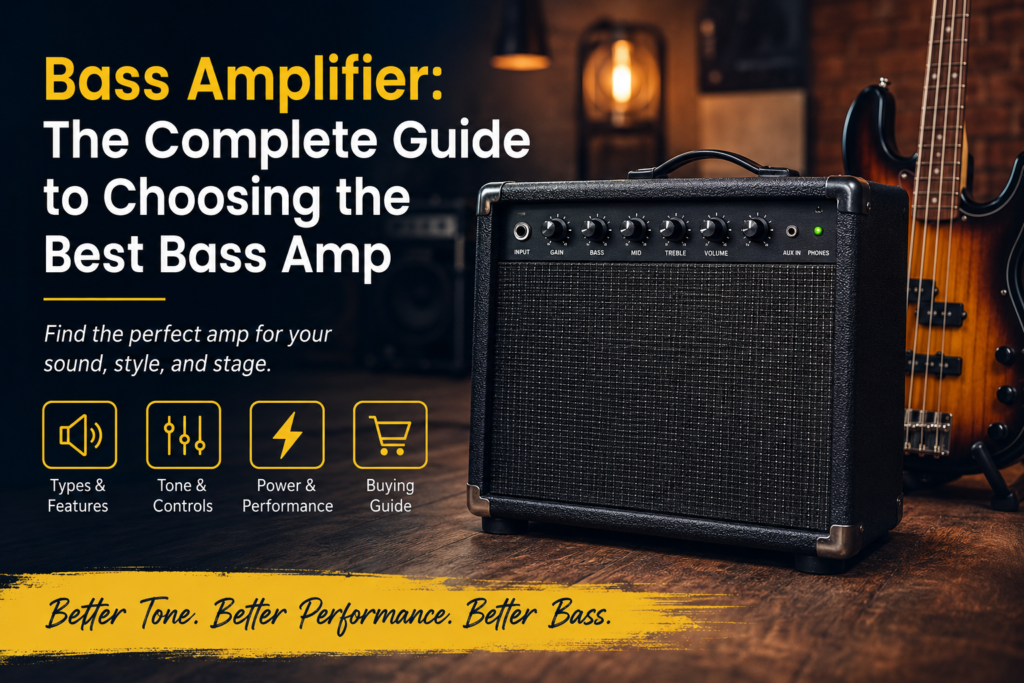
A bass amplifier is much more than a speaker that makes your instrument louder. It is the heart of your bass tone, shaping everything from deep, warm lows to punchy mids and crystal-clear highs. Whether you are practicing in your bedroom, recording in a studio, or performing on stage, the amplifier you choose has a direct impact on how your bass sounds and feels. Many beginners underestimate its importance, spending most of their budget on the instrument while overlooking the amp. In reality, even an expensive bass guitar can sound uninspiring through a poor-quality amplifier, while a great amp can make a modest bass come alive.
The bass amplifier market continues to evolve with lightweight Class-D technology, integrated digital signal processing (DSP), Bluetooth connectivity, and improved portability. Industry reports forecast steady global market growth through the next decade as more musicians seek compact yet powerful amplifiers for live performances, home studios, and rehearsals.
In this comprehensive guide, you’ll discover everything you need to know before purchasing your next bass amplifier.
What Is a Bass Amplifier?
A bass amplifier is specifically engineered to reproduce the low-frequency signals generated by an electric bass guitar. Unlike standard audio speakers or guitar amplifiers, bass amps are designed to handle powerful low-end frequencies without distortion or speaker damage. They include a preamp section that shapes your tone and a power amp section that drives the speaker.
Modern bass amplifiers come in many forms, from compact practice combos to professional touring rigs capable of filling stadiums. Advances in amplifier design mean today’s bassists have access to lightweight equipment that delivers remarkable power without the excessive weight of older models. Community discussions among experienced bass players consistently highlight the transition from heavy traditional rigs to compact Class-D amplifiers and lightweight cabinets as one of the biggest improvements in modern bass equipment.
How a Bass Amplifier Works
Your bass guitar sends an electrical signal through the instrument cable into the amplifier’s input. The preamp boosts this signal while allowing adjustments to bass, mids, treble, gain, and sometimes compression or overdrive. After tone shaping, the power amplifier increases the signal strength before sending it to the speaker.
The speaker converts the electrical energy into sound waves that accurately reproduce the bass frequencies. Larger speakers typically provide deeper low-end response, although cabinet design plays an equally important role.
Why Bass Amps Differ from Guitar Amps
Bass amplifiers are specifically built to reproduce frequencies that standard guitar amplifiers cannot safely handle. Guitar speakers emphasize midrange frequencies, while bass speakers feature heavier construction and larger voice coils capable of moving more air.
Using a guitar amplifier for a bass guitar can permanently damage the speaker because bass frequencies require significantly greater cone movement.
A wireless microphone mic system provides greater freedom of movement while delivering clear and reliable audio performance. Whether used for live events, presentations, content creation, or stage performances, choosing the right wireless setup improves sound quality and flexibility. Explore how wireless microphone systems work and find the best solution for your audio needs.
Types of Bass Amplifiers
Choosing the right amplifier starts with understanding the major categories available today.
Combo Bass Amplifiers
Combo amplifiers combine the amplifier and speaker into one portable unit. They are popular among beginners, hobbyists, and musicians who frequently travel to rehearsals.
Benefits include:
- Easy transportation
- Simple setup
- Lower overall cost
- Great for practice and small gigs
Many modern combo amplifiers also include headphone outputs, USB recording interfaces, Bluetooth streaming, and auxiliary inputs.
Bass Heads and Speaker Cabinets
Professional bassists often prefer separate amplifier heads and speaker cabinets.
Advantages include:
| Feature | Benefit |
| Modular setup | Upgrade individual components |
| Higher power | Better for large venues |
| Flexible speaker options | Customize your sound |
| Easier maintenance | Replace only damaged components |
This setup offers greater flexibility but usually costs more than a combo amplifier.
Tube vs Solid-State vs Class-D Amplifiers
Each amplifier technology offers unique characteristics.
| Type | Advantages | Disadvantages |
| Tube | Warm vintage tone | Heavy, expensive |
| Solid-State | Reliable and affordable | Less harmonic coloration |
| Class-D | Lightweight, efficient, powerful | Modern sound character |
Recent market trends show Class-D amplifiers dominating new product releases because they significantly reduce weight while improving energy efficiency. DSP-equipped models are also becoming increasingly common among professional musicians.
Key Features to Consider
Buying a bass amplifier isn’t simply about choosing the model with the highest wattage or the biggest speaker. The best amplifier is one that complements your playing style, fits your performance environment, and gives you enough flexibility to grow as a musician. Think of it like buying a car. A compact city car works wonderfully for daily commuting, but it won’t perform like a heavy-duty truck when carrying massive loads. Similarly, a small practice amp might sound excellent in your bedroom but struggle to keep up with a drummer during rehearsals.
Modern bass amplifiers offer an impressive selection of features that can dramatically improve your playing experience. From onboard compression and digital effects to Bluetooth streaming and USB recording, today’s amps are far more versatile than those available just a decade ago. Instead of focusing only on price, pay attention to long-term usability. Spending a little more on an amplifier with expandable features often saves money in the future because you won’t outgrow it as quickly. Understanding the specifications before buying also helps prevent common mistakes, such as purchasing an underpowered amplifier for live performances or an oversized rig for home practice.
Wattage and Power Output
Power output is one of the first specifications musicians compare, but bigger numbers don’t always mean better sound. Wattage determines how much clean volume an amplifier can produce before distortion begins. For bedroom practice, an amplifier producing between 20 and 50 watts is generally more than sufficient. These compact amps provide enough volume while remaining manageable in small spaces and keeping costs relatively low.
For rehearsals with a full band, bassists typically benefit from amplifiers in the 100 to 300-watt range. This extra headroom allows the bass to remain clear even when competing with loud drums and electric guitars. Professional stage performances often require 500 watts or more, especially for larger venues or outdoor events where additional projection is necessary. Fortunately, many modern Class-D amplifiers deliver this power in surprisingly lightweight packages, making transportation much easier than older equipment.
It’s also worth remembering that speaker efficiency affects perceived loudness. Two amplifiers with identical wattage ratings can sound noticeably different depending on cabinet design, speaker sensitivity, and overall build quality. Instead of focusing solely on power numbers, always consider the complete amplifier system.
Speaker Size
Speaker diameter significantly influences your bass tone. Larger speakers generally move more air and produce stronger low frequencies, while smaller speakers often provide quicker response and greater definition. The right choice depends on your musical style and performance needs.
| Speaker Size | Best For | Sound Characteristics |
| 8-inch | Home practice | Tight, compact sound |
| 10-inch | Versatile use | Balanced response |
| 12-inch | Small gigs | Warm and punchy |
| 15-inch | Deep bass | Powerful low-end |
| Multiple 10-inch | Professional touring | Excellent clarity and projection |
Cabinet construction also plays a major role in tone. Sealed cabinets typically produce a tighter, more controlled bass response, while ported cabinets generate greater low-frequency extension and higher efficiency. Many professional players combine multiple cabinet sizes to achieve a balanced sound across the frequency spectrum.
EQ Controls and Tone Shaping
Equalization controls allow musicians to customize their sound for different genres and performance environments. Basic amplifiers usually include Bass, Mid, and Treble controls, while advanced models may offer semi-parametric or fully parametric equalizers for precise tone adjustments.
For example, a jazz bassist may prefer a warm, rounded tone with boosted lows and softened highs. A rock player might emphasize aggressive mids to cut through a dense band mix, while funk musicians often favor crisp highs that highlight slap bass techniques. Some premium amplifiers also include contour switches, bright modes, vintage voicing, and onboard compressors, making it easier to achieve professional-quality sounds without external pedals.
Learning how each EQ control affects your tone is one of the fastest ways to improve your overall sound. Rather than relying on factory presets, experimenting with different settings helps develop a signature tone that reflects your personal playing style.
If you have ever wondered What Does a Power Amplifier Look Like, the answer depends on its application and output capacity. Power amplifiers typically feature a metal chassis, cooling vents or heat sinks, input/output connections, and simple front-panel controls. Understanding their design helps you choose the right amplifier for home audio, live sound, or professional setups.
Connectivity Options
Today’s bass amplifiers are designed for much more than simply amplifying your instrument. Connectivity features have become increasingly important for modern musicians who practice, record, stream, and perform in different environments.
Common connectivity options include:
- Headphone outputs for silent practice
- Auxiliary inputs for playing along with backing tracks
- Bluetooth audio streaming
- USB interfaces for direct recording
- XLR DI outputs for live sound systems
- Effects loops for external processors
- Footswitch compatibility
These features make an amplifier far more versatile. A USB-equipped amp, for example, can eliminate the need for a separate recording interface when producing demos at home. Similarly, an XLR direct output allows bassists to send a clean signal directly to a venue’s mixing console while still using their amplifier as a personal monitor on stage.
Choosing the Right Bass Amplifier
Every bassist has unique requirements, and selecting the right amplifier means honestly evaluating where and how you’ll use it. Beginners often assume they need the biggest amplifier they can afford, while experienced players understand that matching the equipment to the application produces better results. A lightweight combo amplifier may be ideal for regular rehearsals, whereas a touring professional might prioritize modular rigs with separate amplifier heads and cabinets.
Budget is naturally an important consideration, but value matters more than initial price alone. Investing in a well-built amplifier from a reputable manufacturer often provides years of dependable performance with minimal maintenance. Reading user reviews, testing amplifiers in person whenever possible, and considering future upgrades all contribute to making a smarter purchasing decision.
Home Practice
For home use, portability, quiet operation, and ease of use are usually the highest priorities. Practice amplifiers between 20 and 50 watts offer more than enough volume for personal practice while including convenient features like headphone outputs and auxiliary inputs.
Compact combo amplifiers also require very little setup, making them perfect for musicians who want to practice regularly without assembling multiple pieces of equipment. Digital modeling features found in many modern practice amps further increase versatility by offering multiple amp simulations and built-in effects.
Studio Recording
Recording environments require clean, detailed sound reproduction rather than overwhelming volume. Many studio bassists rely on amplifiers with balanced DI outputs or USB recording capability to capture consistent tones with minimal background noise.
Some engineers record both the amplifier microphone and the direct output simultaneously, blending the warmth of the speaker with the clarity of the direct signal during mixing. This approach provides greater flexibility throughout the production process and allows producers to shape the bass tone without requiring additional recording sessions.
Live Performances
Performing live presents entirely different challenges. Bass frequencies require considerable power to remain clear in large venues, especially when competing with energetic drummers and multiple guitarists. Amplifiers between 300 and 800 watts are common for professional stage use, although venue size and PA support also influence equipment requirements.
Reliability becomes especially important for touring musicians. Lightweight Class-D amplifier heads paired with high-quality speaker cabinets have become the preferred solution for many professionals because they combine exceptional power, reduced transportation costs, and excellent durability. A dependable amplifier should inspire confidence on stage, allowing musicians to focus entirely on their performance rather than worrying about technical issues.
Popular Bass Amplifier Brands
The bass amplifier market is filled with manufacturers that have earned loyal followings through decades of innovation and dependable performance. Each brand has its own philosophy when it comes to tone, design, and features, making it important to understand what each company does best before making a purchase. Some focus on vintage warmth and analog character, while others prioritize lightweight construction, digital processing, and modern versatility. Rather than searching for a universally “best” amplifier, it’s smarter to identify which brand aligns with your musical goals, playing style, and budget.
For example, Ampeg has built a legendary reputation for delivering the classic rock bass sound heard on countless recordings. Fender offers warm, balanced tones that suit beginners and professionals alike, while Hartke is known for its aluminum cone speakers that produce exceptional clarity and punch. Markbass has become a favorite among touring musicians because its compact Class-D amplifiers deliver remarkable power without excessive weight. Other respected names such as Gallien-Krueger, Orange, Aguilar, Ashdown, Trace Elliot, and Darkglass Electronics continue introducing innovative products that cater to modern bassists. Many of these companies now incorporate digital technology, lightweight materials, and advanced tone-shaping features without sacrificing the rich low-frequency response players expect.
| Brand | Best Known For | Ideal User |
| Ampeg | Vintage rock tone | Professional performers |
| Fender | Balanced sound | Beginners to professionals |
| Hartke | Bright, punchy response | Rock and funk players |
| Markbass | Lightweight power | Touring musicians |
| Gallien-Krueger | Fast attack | Slap and modern bass styles |
| Orange | Warm British character | Alternative and rock musicians |
| Aguilar | Premium boutique sound | Studio professionals |
| Darkglass | Modern distortion and DSP | Metal and progressive bassists |
Although brand reputation matters, the individual amplifier model often matters even more. Reading reviews, testing equipment in person, and considering your own musical needs will always produce better results than simply buying the most recognizable logo.
Bass Amplifier Maintenance Tips
Even the highest-quality bass amplifier requires regular care to maintain peak performance. Like any electronic equipment, dust, moisture, vibration, and improper transportation can gradually reduce reliability over time. Fortunately, maintaining a bass amplifier isn’t difficult, and a few simple habits can significantly extend its lifespan. Many professional musicians use the same amplifier for years simply because they follow basic maintenance routines after every rehearsal or performance.
One of the most important practices is keeping the amplifier clean and well-ventilated. Dust buildup inside cooling vents can reduce airflow, causing internal temperatures to rise during extended use. Excessive heat shortens the life of electronic components and may eventually lead to amplifier failure. Cleaning the exterior regularly with a soft microfiber cloth and occasionally using compressed air to remove dust from vents helps prevent these issues. Always disconnect the amplifier from power before cleaning any internal or external components.
Transportation also deserves careful attention. Bass amplifiers experience significant vibration while being moved between rehearsals and performances. Using padded covers or protective flight cases reduces the risk of cosmetic damage and internal component stress. Never leave an amplifier inside a hot vehicle for extended periods, as excessive heat can damage electronic circuits and speaker materials. Likewise, allowing a cold amplifier to reach room temperature before powering it on helps prevent moisture-related issues.
Routine cable inspection is another often-overlooked maintenance task. Damaged instrument cables, loose speaker connections, or worn power cords can introduce unwanted noise that many musicians mistakenly attribute to amplifier problems. Replacing inexpensive cables before they fail completely is far easier than troubleshooting intermittent audio issues during a live performance.
Quick Maintenance Checklist
| Task | Recommended Frequency |
| Clean exterior | Weekly |
| Remove dust from vents | Monthly |
| Inspect cables | Before every performance |
| Tighten loose hardware | Every few months |
| Test all inputs and outputs | Monthly |
| Professional servicing | Every 2–3 years if heavily used |
Following these simple maintenance practices ensures consistent performance while protecting your investment for many years.
Bass Amplifier Buying Guide
Shopping for a bass amplifier can feel overwhelming because of the enormous number of available options. Manufacturers advertise hundreds of specifications, technical features, and marketing claims that often confuse first-time buyers. The most effective approach is to ignore unnecessary complexity and instead focus on how the amplifier will actually be used. Your playing environment, musical genre, budget, and long-term goals should always guide your purchasing decision more than impressive technical specifications.
Start by identifying your primary purpose. If you’re learning bass at home, portability and quiet practice features deserve higher priority than maximum power output. A compact combo amplifier with headphone capability and auxiliary input will usually provide everything needed for productive practice sessions. If you regularly perform with a band, however, investing in additional wattage and higher-quality speakers becomes much more important because your bass needs enough clean headroom to remain audible in a full ensemble.
Budget planning also deserves careful thought. While inexpensive amplifiers may seem attractive initially, extremely cheap models often sacrifice speaker quality, reliability, and upgrade potential. Spending slightly more on a respected manufacturer usually results in better construction, improved sound quality, and greater resale value. Rather than replacing an entry-level amplifier after only a year or two, many musicians find that buying a better model from the beginning ultimately saves money.
Another useful strategy is thinking ahead. Consider whether your musical activities are likely to expand over the next several years. If live performances are part of your future plans, selecting an amplifier with XLR outputs, effects loops, and expandable speaker options provides greater flexibility as your needs evolve. Purchasing equipment that supports your future development helps avoid unnecessary upgrades later.
Buying Checklist
- Choose the amplifier based on where you’ll play most often.
- Match wattage to your performance environment.
- Test different speaker sizes before buying.
- Prioritize sound quality over unnecessary features.
- Consider future upgrades and expansion options.
- Read independent reviews from experienced bass players.
- Buy from reputable brands with strong warranty support.
Conclusion
A great bass amplifier does much more than increase volume—it becomes an essential part of your musical identity. Every adjustment to the EQ, every speaker choice, and every watt of clean power contributes to the tone that audiences hear. Whether you’re practicing scales at home, recording your next album, or performing in front of thousands of fans, the right amplifier helps translate your creativity into powerful, expressive sound.
Today’s market offers outstanding choices for every budget and experience level. Lightweight Class-D amplifiers have made professional-quality performance more portable than ever before, while modern connectivity features simplify recording and practice. Rather than chasing the most expensive equipment, focus on selecting an amplifier that matches your playing style, performance needs, and future ambitions. With thoughtful research and careful consideration, your next bass amplifier can become a reliable companion for many years of music-making.
Frequently Asked Questions
1. What size bass amplifier is best for beginners?
A 20 to 50-watt combo amplifier is usually the best choice for beginners. It provides enough volume for home practice while remaining affordable, portable, and easy to use.
2. Can I use a guitar amplifier for a bass guitar?
It is not recommended. Bass frequencies place much greater stress on guitar speakers, which may become damaged when used with a bass guitar.
3. Is a tube bass amplifier better than a solid-state amplifier?
Not necessarily. Tube amplifiers offer warm vintage tones, while solid-state and Class-D amplifiers provide excellent reliability, lower maintenance, lighter weight, and greater affordability.
4. How much wattage do I need for live performances?
Small venues typically require around 200–300 watts, while medium to large venues often benefit from 500 watts or more, especially if there is limited PA support.
5. How long does a quality bass amplifier last?
With proper maintenance and careful handling, a high-quality bass amplifier can easily last 10 to 20 years or even longer, making it a worthwhile long-term investment for serious musicians.