
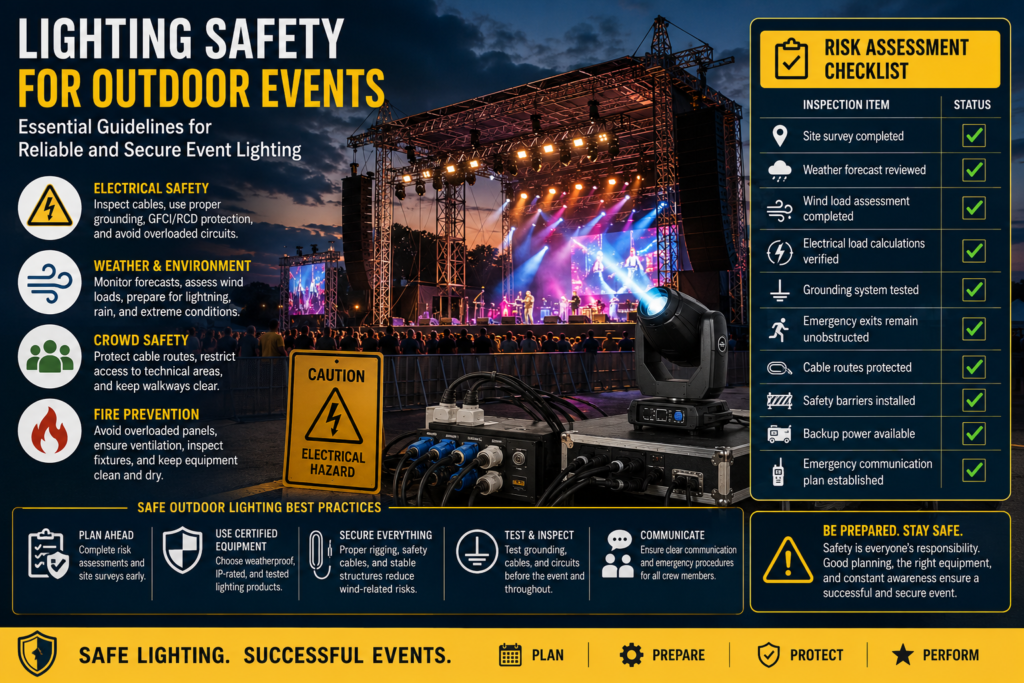
Why Lighting Safety Matters for Outdoor Events
Every successful outdoor event depends on much more than impressive performances, stunning stage designs, and creative visual effects. Behind every memorable concert, festival, sporting event, or cultural celebration is a carefully planned lighting system that prioritizes safety as much as appearance. Lighting safety for outdoor events is essential because outdoor environments introduce challenges that indoor venues rarely face. Rain, wind, dust, unstable terrain, changing temperatures, and large crowds all increase the risk of equipment failure and accidents.
Professional event organizers understand that even a small electrical fault or poorly secured lighting fixture can lead to injuries, property damage, expensive delays, or even complete event cancellation. Modern outdoor stage lighting systems involve high-powered fixtures, complex DMX networks, generators, power distribution units, and temporary rigging structures. Every component must work together safely to ensure uninterrupted operation throughout the event.
Industry organizations such as PLASA emphasize that weather hazards—particularly lightning—should be integrated into every event safety plan. Their guidance recommends monitoring weather continuously, protecting temporary structures, and preparing emergency shutdown procedures before audiences arrive.
From a business perspective, investing in event lighting safety also protects expensive equipment while strengthening a company’s professional reputation. Clients expect reliable productions, regulatory compliance, and well-prepared technical teams capable of managing unexpected situations without compromising public safety.
Common Lighting Hazards at Outdoor Events
Outdoor environments expose lighting systems to numerous risks that require proactive planning. Unlike permanent indoor venues, temporary outdoor installations must be assembled, tested, operated, and dismantled within tight schedules while facing unpredictable environmental conditions.
One of the most common hazards is electrical shock caused by damaged cables, poor grounding, water intrusion, or overloaded circuits. Moisture significantly increases electrical risks, making proper insulation, waterproof connectors, and Ground Fault Circuit Interrupter (GFCI) or Residual Current Device (RCD) protection essential for outdoor power systems.
Wind presents another major concern. Lighting trusses, towers, LED screens, and moving head fixtures all create additional surface area that increases wind loading. Without proper engineering calculations, safety cables, and certified rigging practices, high winds can damage equipment or even cause structural collapse.
Crowd-related hazards should never be underestimated. Poor cable routing creates trip hazards, while unrestricted public access to technical areas can expose attendees to energized equipment. Effective cable management, protective barriers, and clearly marked equipment zones significantly reduce these risks.
Fire hazards also deserve attention. Overloaded distribution panels, undersized extension cables, blocked ventilation openings, and overheating fixtures may all contribute to dangerous operating conditions. Routine inspections throughout the event help identify problems before they become emergencies.
Electrical Hazards
Electrical safety forms the foundation of every successful outdoor production. Technicians should inspect cables for cuts, crushed insulation, damaged connectors, and signs of overheating before installation. Every circuit should be properly calculated to avoid exceeding safe load limits.
Power distribution systems should include:
- Proper grounding
- GFCI/RCD protection
- Certified weatherproof connectors
- Circuit breakers
- Clearly labeled distribution panels
Routine testing with qualified electricians helps verify system integrity before public access begins.
Weather and Environmental Risks
Outdoor lighting equipment must operate under changing weather conditions that may include heavy rain, strong winds, dust, humidity, and rapid temperature fluctuations.
PLASA’s outdoor guidance highlights lightning as a significant risk requiring dedicated emergency procedures rather than simple weather monitoring alone. Event managers should define evacuation criteria, monitor weather forecasts continuously, and establish clear communication protocols between technical crews and safety personnel.
Conducting a Lighting Risk Assessment
A comprehensive lighting risk assessment should be completed long before equipment arrives onsite. This process identifies hazards, evaluates their likelihood, estimates potential consequences, and defines practical control measures.
Site surveys should examine ground conditions, drainage, access routes, audience flow, nearby trees, overhead utilities, and emergency vehicle access. Weather forecasts should be monitored during planning and throughout the event because conditions can change rapidly.
Equipment placement should balance performance with safety. Fixtures should never obstruct emergency exits or evacuation routes. Power distribution equipment should remain elevated where flooding is possible, while generators should be positioned away from audience areas with adequate ventilation.
Communication is equally important. Every crew member should understand emergency shutdown procedures, reporting protocols, and individual responsibilities during severe weather or electrical incidents.
Risk Assessment Checklist
| Inspection Item | Status |
| Site survey completed | ✓ |
| Weather forecast reviewed | ✓ |
| Wind load assessment completed | ✓ |
| Electrical load calculations verified | ✓ |
| Grounding system tested | ✓ |
| Emergency exits remain unobstructed | ✓ |
| Cable routes protected | ✓ |
| Safety barriers installed | ✓ |
| Backup power available | ✓ |
| Emergency communication plan established | ✓ |
Choosing Safe Outdoor Lighting Equipment
Selecting the right equipment is one of the most important steps in ensuring lighting safety for outdoor events. Outdoor environments are unpredictable, and lighting fixtures must perform reliably despite exposure to rain, dust, humidity, wind, and fluctuating temperatures. Unlike indoor venues, outdoor productions require equipment specifically engineered to withstand harsh environmental conditions while delivering consistent illumination throughout the event. Choosing low-quality or indoor-rated fixtures may reduce initial costs, but it significantly increases the risk of equipment failure, electrical hazards, and costly event interruptions.
Professional event organizers should always invest in professional stage lighting from reputable manufacturers that comply with recognized international safety standards. High-quality fixtures undergo rigorous testing for electrical insulation, waterproof sealing, heat dissipation, vibration resistance, and long-term durability. Certified products also provide greater confidence that lighting systems will continue operating safely during demanding outdoor productions.
Weather-resistant connectors, heavy-duty power cables, corrosion-resistant housings, and robust mounting hardware are equally important. Every connector exposed to the environment should be designed to prevent water ingress while maintaining reliable electrical connections. DMX signal cables should also use outdoor-rated connectors whenever possible to minimize communication failures caused by moisture.
Another consideration is serviceability. Professional-grade lighting fixtures are easier to inspect, clean, repair, and maintain between events. Manufacturers offering spare parts, technical documentation, firmware updates, and responsive customer support provide long-term value that extends beyond the initial purchase. For event production companies managing frequent outdoor concerts or festivals, investing in durable equipment ultimately reduces maintenance costs and downtime while improving operational reliability.
IP65 vs IP66 Comparison Table
| Feature | IP65 Lighting | IP66 Lighting |
| Dust Protection | Completely dust-tight | Completely dust-tight |
| Water Protection | Protected against water jets | Protected against powerful water jets |
| Heavy Rain | Suitable | Excellent |
| Outdoor Concerts | Recommended | Highly Recommended |
| Festivals | Suitable | Excellent |
| Permanent Outdoor Installations | Good | Better |
| Cleaning Resistance | Moderate | High |
| Overall Outdoor Performance | Very Good | Excellent |
For most concerts, festivals, and public events, IP65 lighting offers excellent protection against rain and dust. However, installations exposed to severe weather, coastal environments, or prolonged outdoor use often benefit from IP66 lighting, which provides enhanced protection against more powerful water exposure.
Electrical Safety Best Practices
Electrical systems represent the backbone of every outdoor lighting installation, making electrical safety one of the highest priorities during event planning. Every lighting fixture, dimmer, LED wall, moving head, and controller depends on a reliable power distribution network. Even a minor wiring error can create dangerous conditions that threaten both personnel and audiences.
One of the first principles of safe electrical design is proper load calculation. Each circuit should operate well below its maximum capacity to prevent overheating and nuisance breaker trips. Production electricians should calculate anticipated loads before installation while leaving sufficient capacity for startup current and unexpected power demands. Overloaded circuits not only increase fire risk but also reduce the reliability of the entire lighting system.
Grounding is another essential safety measure. Every metal truss, power distribution box, generator frame, and lighting fixture should be correctly grounded to minimize shock hazards. Residual Current Devices (RCDs) or Ground Fault Circuit Interrupters (GFCIs) should protect outdoor circuits because they automatically disconnect power when leakage currents indicate potential electrical faults. These protective devices have saved countless lives by interrupting dangerous conditions within milliseconds.
Power distribution equipment should always remain dry, elevated above standing water, and protected from accidental public access. Cables should be inspected before every event for crushed insulation, exposed conductors, damaged connectors, or signs of overheating. Temporary repairs using electrical tape should never replace damaged cables; defective equipment must be removed from service immediately.
Generators require additional attention. Fuel should be stored safely, exhaust gases directed away from public areas, and generators protected from rain without restricting ventilation. Qualified electricians should verify generator grounding, voltage stability, and synchronization whenever multiple generators are used. These precautions significantly improve both equipment reliability and overall event safety planning.
Safe Rigging and Fixture Installation
Rigging safety is often overlooked until an accident occurs, yet improperly installed lighting equipment presents one of the most serious hazards at outdoor events. Modern lighting fixtures are becoming larger and heavier, while production designs increasingly utilize tall trusses, lighting towers, roof systems, and suspended LED displays. Every suspended component must be engineered, installed, and inspected using recognized professional standards.
Before installation begins, technicians should calculate total loads including fixtures, cabling, clamps, accessories, and dynamic forces created by moving lights. Wind loading must also be included because outdoor structures experience additional forces during adverse weather conditions. Even moderate wind speeds can dramatically increase structural stress on temporary installations.
Each lighting fixture should be secured using approved clamps matched to the truss diameter and weight rating. In addition to primary mounting hardware, independent safety cables should always be installed. Safety cables provide secondary protection if the primary clamp fails, preventing fixtures from falling onto performers or audiences.
Inspection procedures should continue throughout the event. Vibration from moving fixtures, changing weather, and repeated operation can gradually loosen mounting hardware. Technical crews should conduct scheduled inspections before audience entry, during scheduled production breaks, and immediately following severe weather events. Documented inspection records demonstrate professionalism while helping identify recurring maintenance issues that require long-term attention.
Professional rigging teams also understand the importance of restricting access beneath suspended loads during installation and dismantling. Clearly marked exclusion zones reduce unnecessary risks while allowing technicians to complete their work efficiently and safely.
Weather Protection Strategies
Weather is perhaps the most unpredictable factor affecting outdoor event lighting safety. Forecasts provide valuable guidance, but conditions can change within minutes. Event organizers must therefore prepare for a wide range of environmental scenarios rather than relying solely on favorable predictions.
Rain is among the most obvious threats. Although modern waterproof stage lights are designed to withstand moisture, power connectors, distribution equipment, and temporary electrical installations still require careful protection. Elevated cable routing, weatherproof junction boxes, and waterproof connector systems reduce the likelihood of water intrusion causing electrical faults.
Wind management requires continuous monitoring throughout the event. As wind speeds increase, temporary structures experience greater loading forces that may exceed design limits. Event managers should establish predefined wind thresholds that trigger operational changes, partial shutdowns, or complete evacuation when necessary.
Extreme temperatures introduce additional challenges. High temperatures may reduce fixture performance, accelerate electronic wear, and increase cooling requirements. Cold weather can affect batteries, LCD displays, and cable flexibility. Proper ventilation, scheduled equipment inspections, and manufacturer-recommended operating limits help minimize weather-related failures.
Lightning presents one of the highest-risk scenarios for outdoor events. When lightning approaches, technical crews should immediately suspend rigging work, disconnect equipment when appropriate, and follow established evacuation procedures. Rapid decision-making supported by reliable weather monitoring systems significantly improves public safety while reducing equipment damage.
Weather Response Checklist
| Weather Condition | Recommended Action |
| Light Rain | Monitor equipment, inspect connectors |
| Heavy Rain | Suspend non-essential operations if necessary |
| Strong Winds | Inspect trusses, monitor wind loads |
| Severe Winds | Lower structures or evacuate if thresholds are exceeded |
| Lightning | Shut down operations and evacuate exposed areas |
| Flooding | Disconnect affected circuits and relocate equipment |
| Extreme Heat | Improve ventilation and monitor fixture temperatures |
| Extreme Cold | Inspect cables and electronic components frequently |
Preparing for changing weather conditions is not simply a technical responsibility—it is a core element of professional event management. By combining quality equipment, continuous monitoring, documented emergency procedures, and trained personnel, organizers can greatly reduce operational risks while delivering safe, reliable, and memorable outdoor events.
Cable Management and Crowd Safety
Proper cable management is one of the most overlooked aspects of lighting safety for outdoor events, yet it has a direct impact on public safety, equipment reliability, and operational efficiency. Outdoor productions often require hundreds of meters of power, DMX, network, and audio cables connecting lighting fixtures, LED screens, control consoles, generators, and distribution panels. Without a well-organized cable plan, these connections can quickly become trip hazards, suffer accidental damage, or create electrical risks.
A professional cable management strategy begins during the event design phase. Technicians should identify cable routes that avoid audience walkways, emergency exits, loading zones, and high-traffic areas. Where cables must cross pedestrian routes, heavy-duty cable protectors should be installed to shield both the cables and the public. These protectors reduce the risk of trips while preventing vehicles or equipment carts from crushing electrical lines.
Cables should never be left loosely coiled on the ground, exposed to standing water, or stretched under excessive tension. Instead, they should be secured using approved fastening methods that prevent movement without damaging insulation. Power cables and data cables should also be separated whenever practical to reduce electromagnetic interference that may disrupt DMX lighting control or network communication.
Restricted technical zones provide another important layer of protection. Barricades, safety fencing, and clearly visible warning signs help prevent unauthorized access to generators, dimmer racks, and power distribution equipment. During large concerts or festivals, dedicated technical security personnel should monitor these areas continuously.
Routine inspections are equally important. Throughout the event, technicians should check for damaged cable jackets, loose connectors, overheating, or shifting cable covers caused by heavy pedestrian traffic. Addressing small issues immediately helps prevent larger safety incidents later in the production.
Emergency Lighting and Backup Planning
Even the most carefully planned outdoor event must prepare for unexpected failures. Severe weather, power interruptions, equipment malfunction, or accidental cable damage can all affect the lighting system without warning. A comprehensive emergency lighting and backup strategy ensures that these situations remain manageable rather than becoming major safety incidents.
Emergency lighting serves two primary purposes: protecting people and supporting emergency response. Exit routes, evacuation paths, medical stations, and assembly points should remain illuminated even if the main lighting system fails. Battery-powered emergency fixtures, uninterruptible power supplies (UPS), and dedicated emergency circuits provide valuable redundancy for these critical areas.
Backup power is equally essential for outdoor productions. Many professional events rely on redundant generators configured so that one unit can immediately support critical systems if another generator experiences a fault. This redundancy minimizes performance interruptions while maintaining communication systems, emergency lighting, and essential production equipment.
Clear communication procedures should accompany every backup plan. Technical crews, stage managers, security personnel, medical teams, and event coordinators should understand their responsibilities during power failures. Regular emergency drills help teams respond quickly under pressure while reducing confusion during actual incidents.
Incident documentation is another important practice. Every electrical fault, generator issue, or emergency shutdown should be recorded after the event. These records provide valuable insights that improve future event planning and reduce the likelihood of recurring problems.
Lighting Safety for Festivals and Large Events
Large-scale festivals present unique challenges that extend beyond standard outdoor lighting installations. Multi-stage productions, thousands of attendees, extensive power distribution networks, and continuously changing weather conditions require a much higher level of planning, coordination, and operational oversight.
One of the biggest concerns is power management. Festivals often operate dozens or even hundreds of lighting fixtures simultaneously across multiple performance areas. Accurate electrical load calculations, balanced distribution systems, and properly sized generators become critical for maintaining reliable operation. Any overload or distribution failure can affect multiple stages at once, leading to significant disruptions.
Crowd density introduces another layer of complexity. Emergency exits must remain clearly illuminated and accessible throughout the event. Technical equipment should be positioned outside public circulation areas whenever possible, with secure barriers preventing unauthorized access. Event organizers should also coordinate closely with security teams to ensure technical zones remain protected during peak attendance.
Operational monitoring should continue throughout the festival rather than ending after installation. Dedicated technical supervisors should inspect lighting systems, rigging structures, power distribution equipment, and weather conditions at scheduled intervals. Modern monitoring software can also provide real-time alerts for electrical faults, temperature changes, or abnormal power consumption.
Large events often involve multiple contractors working together. Clear communication, standardized safety procedures, and regular coordination meetings help ensure that lighting technicians, audio engineers, rigging crews, and production managers maintain consistent safety standards across the entire venue.
Lighting Maintenance and Inspection Procedures
Routine maintenance is one of the most effective ways to improve the reliability and lifespan of professional lighting equipment. Even premium stage lighting equipment requires regular inspection to identify wear, contamination, loose components, or environmental damage before these issues affect event operations.
Pre-event inspections should include a complete visual examination of lighting fixtures, cables, connectors, trusses, clamps, and power distribution systems. Technicians should verify that waterproof seals remain intact, cooling fans operate correctly, and electrical connectors are clean and free from corrosion. Damaged components should be repaired or replaced before installation rather than during the event.
Daily inspections become particularly important during multi-day festivals. Dust, moisture, vibration, and continuous operation gradually affect equipment performance. Cleaning fixture lenses, checking mounting hardware, confirming DMX communication, and testing safety devices help maintain consistent lighting quality throughout the production.
Post-event maintenance is equally valuable. Equipment should be cleaned, dried, and carefully inspected before storage. Moisture trapped inside cases or connectors can lead to corrosion and long-term reliability issues if not addressed promptly. Maintenance records also provide useful information for scheduling future servicing and identifying components approaching the end of their service life.
A structured preventive maintenance program not only improves safety but also reduces repair costs and minimizes unexpected equipment failures during important productions.
Maintenance Inspection Checklist
| Inspection Item | Frequency |
| Inspect power cables | Before every event |
| Test GFCI/RCD protection | Before every event |
| Check waterproof seals | Before installation |
| Inspect safety cables and clamps | Daily during events |
| Clean fixture lenses | After every event |
| Verify DMX connections | Before show operation |
| Test backup generators | Before every event |
| Inspect truss connections | Before audience entry |
| Check grounding systems | Before energizing equipment |
| Record maintenance activities | After every event |
Common Outdoor Lighting Safety Mistakes
Many outdoor lighting incidents occur not because of equipment failure but because of preventable human errors. Recognizing these common mistakes allows event organizers to strengthen their planning processes and significantly reduce operational risks.
Using indoor lighting fixtures outdoors remains one of the most frequent problems. Indoor fixtures lack the environmental protection required for rain, humidity, and dust exposure, making them unsuitable for outdoor installations. Even light moisture can damage internal electronics or create electrical hazards.
Ignoring IP ratings is another common oversight. Selecting equipment without considering environmental conditions increases the likelihood of water ingress and equipment failure. Professional planners should always match fixture protection ratings to the expected operating environment.
Improper grounding continues to cause avoidable electrical accidents. Every distribution panel, generator, truss, and lighting fixture should be grounded according to applicable electrical standards. Skipping this step exposes technicians and audiences to unnecessary shock hazards.
Poor cable management creates both safety and operational problems. Exposed cables increase trip hazards while also becoming vulnerable to vehicle traffic, equipment movement, and accidental disconnection. Investing in cable protection systems provides significant safety benefits at relatively low cost.
Another frequent mistake is failing to prepare for severe weather. Many events monitor weather forecasts but lack clearly defined response procedures. Establishing shutdown criteria, evacuation plans, and communication protocols before the event begins ensures that technical teams can respond quickly when conditions deteriorate.
Finally, skipping routine inspections often allows small defects to develop into major failures. Regular preventive maintenance remains one of the simplest and most cost-effective methods of improving both safety and equipment reliability.
Future Trends in Outdoor Event Lighting Safety
The future of lighting safety for outdoor events is being shaped by intelligent technology, automation, and data-driven decision-making. Modern event organizers are no longer relying solely on manual inspections and visual checks. Instead, they are adopting smart monitoring systems that continuously track equipment performance, environmental conditions, and electrical health in real time. These innovations not only improve safety but also reduce downtime, maintenance costs, and operational risks.
One of the most significant developments is the integration of IoT-enabled outdoor lighting systems. Smart fixtures equipped with sensors can monitor internal temperature, humidity, power consumption, fan performance, and operating hours. If abnormal conditions are detected, technicians receive instant alerts before equipment failure occurs. This proactive approach allows maintenance teams to address potential problems before they affect the event.
Artificial Intelligence (AI) is also transforming event safety. AI-powered monitoring platforms can analyze electrical loads, identify unusual power fluctuations, predict component failures, and even recommend preventive maintenance schedules. Combined with advanced weather forecasting services, these systems help event managers make informed decisions regarding equipment shutdowns, evacuation planning, and resource allocation.
Wireless power monitoring is becoming increasingly common during large festivals and concerts. Instead of manually checking multiple distribution panels, technicians can monitor power quality, voltage levels, current consumption, and circuit status remotely from a centralized dashboard. This improves response times while reducing the need for personnel to access potentially hazardous electrical areas.
Remote diagnostics are another valuable advancement. Many professional lighting manufacturers now provide fixtures capable of transmitting operational data directly to maintenance software. Firmware updates, fault logs, and performance reports can be reviewed without removing equipment from service, minimizing downtime between events.
Sustainability is influencing safety as well. Energy-efficient LED technology produces less heat, reducing cooling requirements and lowering fire risks. Battery-powered backup systems have become more reliable, while hybrid generator solutions help maintain critical lighting functions during unexpected power interruptions.
As these technologies continue to mature, future outdoor productions will become safer, more efficient, and easier to manage. Companies investing in intelligent monitoring and predictive maintenance today will be better prepared to deliver reliable event lighting solutions for years to come.
Conclusion
Successful outdoor events depend on much more than creative lighting designs and impressive visual effects. A safe lighting system protects audiences, performers, technicians, and valuable equipment while ensuring the event continues without unnecessary interruptions. From careful planning and thorough lighting risk assessments to selecting waterproof stage lights, implementing proper electrical protection, and following professional rigging practices, every stage of the project contributes to overall safety.
Weather preparedness remains one of the most important responsibilities for event organizers. Continuous monitoring, documented emergency procedures, backup power systems, and trained technical personnel help minimize risks associated with rain, wind, lightning, and other environmental challenges. Regular inspections before, during, and after each event further improve equipment reliability and reduce unexpected failures.
Investing in high-quality professional stage lighting, certified electrical components, and experienced installation teams is not simply a technical decision—it is a commitment to public safety, regulatory compliance, and operational excellence. By following the best practices outlined in this guide, organizers can create outdoor events that are visually impressive, technically reliable, and safe for everyone involved.
Whether planning a community festival, live concert, cultural tourism event, sporting competition, or large-scale entertainment production, prioritizing lighting safety for outdoor events will always be one of the smartest investments in long-term event success.
Frequently Asked Questions (FAQs)
1. Why is lighting safety important for outdoor events?
Lighting safety protects attendees, performers, technicians, and equipment from electrical hazards, weather-related risks, structural failures, and operational disruptions while ensuring regulatory compliance and smooth event execution.
2. What IP rating is best for outdoor stage lighting?
For most outdoor events, IP65-rated fixtures provide excellent protection against dust and water jets. For harsher environments or permanent installations, IP66-rated fixtures offer even greater resistance to powerful water exposure.
3. How can electrical shock risks be reduced?
Electrical shock risks can be minimized by using proper grounding systems, GFCI/RCD protection, weatherproof connectors, certified cables, regular inspections, and correctly sized power distribution equipment.
4. Why are waterproof stage lights necessary?
Waterproof fixtures prevent moisture from entering electrical components, reducing the risk of equipment failure, short circuits, and electrical hazards during rain or high-humidity conditions.
5. How often should outdoor lighting equipment be inspected?
Professional lighting equipment should be inspected before installation, before every event, during multi-day events, after severe weather, and again before storage following event completion.