
Introduction
The tourism industry is becoming increasingly experience-driven, and lighting has evolved into one of the most powerful tools for creating unforgettable destinations. From illuminated heritage buildings and interactive museums to theme parks, waterfronts, and cultural festivals, modern LED lighting helps attractions stand out while encouraging visitors to stay longer and engage more deeply.
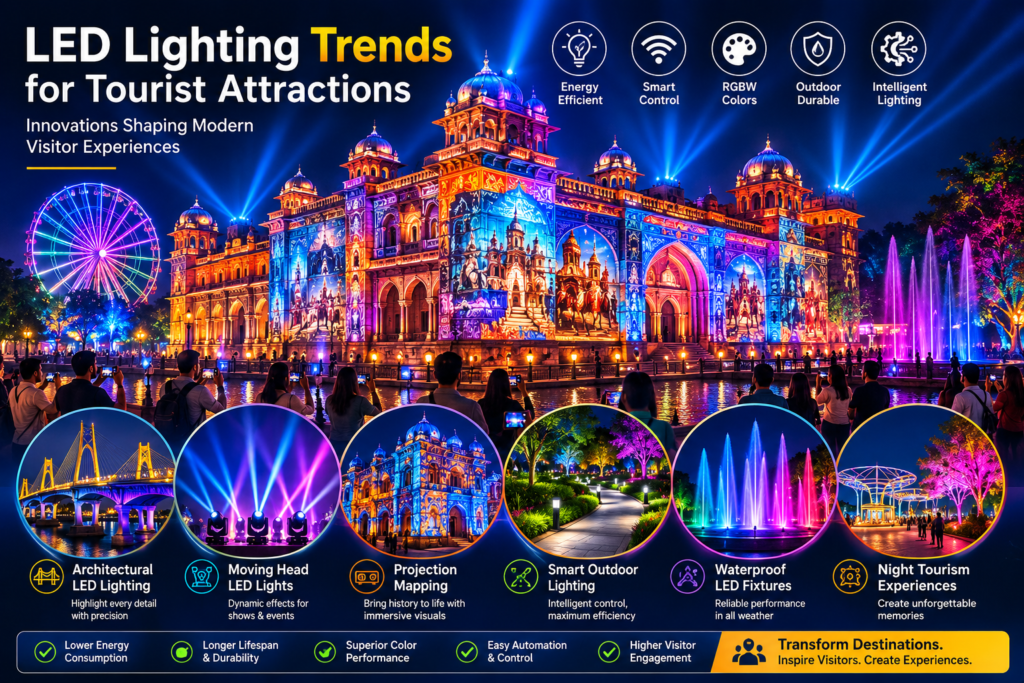
Today’s LED lighting trends for tourist attractions focus on more than simple illumination. Advanced technologies such as smart lighting systems, RGBW color control, projection mapping, and intelligent stage lighting create immersive environments that transform ordinary spaces into memorable nighttime experiences. These innovations not only improve visual appeal but also support sustainable tourism by reducing energy consumption, lowering maintenance costs, and extending operating hours.
Whether developing a cultural tourism destination, upgrading a public landmark, or designing an outdoor entertainment venue, choosing the right LED lighting solution is essential for attracting visitors and strengthening destination identity. This guide explores the latest trends shaping the future of LED lighting for tourist attractions and explains how professional lighting systems can deliver exceptional visitor experiences while supporting long-term operational efficiency.
Why LED Lighting Is Transforming Tourist Attractions
Modern tourism destinations demand lighting that is efficient, reliable, and visually impressive. Compared with traditional lighting technologies, LED systems provide greater flexibility while significantly reducing operating costs.
Key advantages include:
- Lower energy consumption
- Long operational lifespan
- Minimal maintenance requirements
- Superior brightness and color consistency
- Excellent RGBW color mixing
- Environmentally friendly operation
- Smart automation capabilities
- Enhanced visitor engagement
For tourism developers, these benefits translate into reduced operating expenses and greater creative freedom. Dynamic lighting scenes can highlight architectural features, guide visitor movement, support seasonal events, and create immersive storytelling experiences that encourage repeat visits.
Professional architectural LED lighting, LED landscape lighting, and outdoor LED lighting also improve safety by illuminating pathways, entrances, bridges, and public gathering areas without compromising aesthetics.
If you’re planning a cultural tourism or nighttime attraction project, explore our Cultural Tourism Lighting Series for professional solutions designed to transform heritage sites, theme parks, museums, and public spaces into immersive destinations. From intelligent lighting control and dynamic RGBW effects to architectural illumination and outdoor performance lighting, our systems help create memorable visitor experiences while delivering reliable performance and energy efficiency. Modern cultural tourism lighting combines storytelling with advanced LED technology to enhance destination appeal and support sustainable night tourism development.
Trend #1: Smart LED Lighting Systems
Smart lighting has become one of the fastest-growing LED lighting trends for tourist attractions. Rather than relying on manual operation, intelligent lighting networks automatically adjust brightness, colors, and lighting schedules based on programmed scenes or real-time environmental conditions.
Key Features
- Cloud-based management
- Remote monitoring
- IoT connectivity
- Automated scheduling
- Energy monitoring
- AI-assisted optimization
- Wireless control
- Centralized management
For large tourism destinations, operators can control thousands of fixtures from a single platform. Lighting scenes for festivals, holidays, concerts, and daily operations can be scheduled months in advance, improving operational efficiency while reducing labor requirements.
Benefits
- Lower maintenance costs
- Improved energy efficiency
- Faster troubleshooting
- Consistent lighting quality
- Flexible programming
- Better visitor experiences
As smart cities continue to evolve, intelligent lighting systems are becoming a key component of modern tourism infrastructure.
Trend #2: RGBW and Full-Color LED Lighting
Traditional single-color lighting is rapidly being replaced by RGBW LED lighting, which combines red, green, blue, and dedicated white LEDs to deliver vibrant colors alongside high-quality white illumination.
Unlike standard RGB fixtures, RGBW technology provides cleaner whites, smoother color transitions, and greater flexibility for architectural and entertainment applications.
Why RGBW Matters
RGBW lighting enables designers to:
- Highlight architectural details
- Match seasonal themes
- Create dynamic event lighting
- Enhance cultural performances
- Produce realistic white illumination
- Improve photographic appearance
Historic landmarks, museums, theme parks, and waterfront attractions all benefit from the ability to change lighting scenes instantly without replacing fixtures.
Practical Applications
RGBW systems are commonly used for:
- Heritage building illumination
- Public monuments
- Bridges
- Outdoor stages
- Cultural festivals
- Interactive fountains
- Tourist plazas
Because colors can be programmed through DMX lighting control or smart lighting systems, operators can easily refresh attractions throughout the year while maintaining a consistent visual identity.
Trend #3: Interactive LED Lighting Experiences
Visitors increasingly expect attractions to be interactive rather than purely visual. Interactive LED lighting transforms guests into active participants, creating memorable experiences that encourage social sharing and repeat visits.
Modern interactive systems respond to:
- Motion sensors
- Foot traffic
- Touch panels
- Mobile applications
- Sound activation
- Gesture recognition
For example, illuminated pathways may change color as visitors walk through them, while public plazas can feature responsive lighting installations that react to movement or music.
Benefits
Interactive lighting helps attractions:
- Increase visitor engagement
- Encourage longer visits
- Improve educational experiences
- Enhance cultural storytelling
- Create shareable social media content
This approach is particularly valuable for museums, science centers, children’s attractions, and urban public spaces where participation enhances the overall experience.
Trend #4: Projection Mapping and LED Integration
Projection mapping has transformed how cultural tourism destinations tell stories. By combining high-brightness projectors with synchronized LED stage lighting, attractions can create breathtaking multimedia presentations that bring architecture and history to life.
Projection mapping allows designers to project animations, historical scenes, artistic visuals, and branded content directly onto buildings, monuments, castles, museums, or natural landscapes.
Common Applications
- Heritage storytelling
- Historical reenactments
- Sound and light shows
- National celebrations
- Theme park attractions
- Cultural festivals
- Live entertainment
When synchronized with intelligent lighting, laser effects, audio systems, and special effects, projection mapping creates immersive experiences that captivate audiences and increase nighttime tourism.
Professional stage lighting, moving head LED lights, and programmable control systems ensure seamless transitions between projected visuals and dynamic lighting effects, delivering a polished and memorable show.
Trend Summary Table
| Trend | Key Benefit | Ideal Application |
| Smart LED Lighting Systems | Automated control and energy savings | Smart tourism destinations, public spaces |
| RGBW LED Lighting | Dynamic colors and accurate white light | Heritage sites, museums, landmarks |
| Interactive LED Lighting | Increased visitor engagement | Parks, museums, interactive pathways |
| Projection Mapping Integration | Immersive visual storytelling | Historic buildings, festivals, outdoor performances |
Trend #5: Sustainable and Energy-Efficient Lighting
Sustainability has become a top priority for governments, tourism developers, and attraction operators. One of the most significant LED lighting trends for tourist attractions is the adoption of energy-efficient lighting systems that reduce environmental impact while maintaining exceptional visual performance.
Modern LED fixtures consume significantly less electricity than traditional metal halide or halogen lighting. They also generate less heat, last longer, and require fewer replacements, making them ideal for large-scale tourism projects.
Key Sustainability Features
- High-efficiency LED chips
- Smart dimming technology
- Adaptive brightness control
- Solar-powered lighting integration
- Low carbon emissions
- Reduced maintenance requirements
- Long operating lifespan
These features help attractions lower operating costs while supporting green building certifications and sustainable tourism initiatives.
Ideal Applications
- National parks
- Heritage villages
- Public gardens
- Eco-tourism destinations
- Outdoor museums
- Scenic walking trails
By combining smart lighting systems with energy-efficient fixtures, operators can maximize performance while minimizing electricity consumption.
Trend #6: Waterproof Outdoor LED Lighting
Tourist attractions operate in diverse weather conditions, making durable outdoor fixtures essential. Waterproof outdoor LED lighting is designed to withstand rain, dust, humidity, and temperature fluctuations without compromising performance.
Professional outdoor lighting fixtures typically feature IP65, IP66, or higher protection ratings, ensuring reliable operation throughout the year.
Benefits of Waterproof Fixtures
- Reliable all-weather performance
- Reduced maintenance costs
- Longer equipment lifespan
- Improved visitor safety
- Consistent lighting quality
Common Applications
- Outdoor stages
- Amphitheaters
- Bridges
- Parks
- Water features
- Theme parks
- Walking trails
- Public plazas
For fountains and water shows, specialized waterproof fixtures deliver dramatic reflections and synchronized lighting effects while maintaining long-term durability.
Trend #7: Intelligent Moving Head LED Fixtures
Entertainment has become a major attraction for tourism destinations, increasing demand for intelligent moving head LED lights.
Unlike fixed lighting fixtures, moving heads provide dynamic movement, color changes, zoom, gobos, and beam effects from a single fixture.
Popular Fixture Types
Beam Lights
Beam fixtures produce narrow, high-intensity beams that create dramatic sky effects and long-distance visibility.
Ideal for:
- Outdoor concerts
- Theme parks
- Festivals
- Landmark celebrations
Wash Lights
Wash fixtures deliver wide, even illumination for stages, landscapes, buildings, and public gathering areas.
Best suited for:
- Cultural performances
- Architectural lighting
- Public squares
- Amphitheaters
Spot Lights
Spot fixtures project sharp patterns, logos, textures, and precise highlights.
Applications include:
- Museums
- Heritage monuments
- Live performances
- Product launches
- Tourist events
Hybrid Fixtures
Hybrid moving heads combine beam, wash, and spot capabilities into a single fixture, offering maximum flexibility while reducing equipment requirements.
Why They Matter
Using DMX lighting control, operators can synchronize hundreds of fixtures with:
- Music
- Projection mapping
- Lasers
- Water shows
- Pyrotechnics
- Multimedia presentations
This creates immersive entertainment experiences that keep visitors engaged throughout the evening.
Trend #8: Architectural LED Lighting
Architectural lighting has become one of the defining elements of successful tourism destinations.
Instead of simply illuminating buildings, modern architectural LED lighting highlights textures, colors, historical details, and unique design features that create memorable nighttime landmarks.
Frequently Illuminated Structures
- Heritage buildings
- Museums
- Cathedrals
- Bridges
- Observation towers
- Government buildings
- Public monuments
- Waterfront developments
Architectural lighting also strengthens destination branding by making landmarks instantly recognizable in photographs, promotional videos, and social media content.
Design Recommendations
Consider:
- Appropriate beam angles
- Balanced brightness
- Warm or cool color temperatures
- Minimal light pollution
- Respect for historical architecture
Thoughtful lighting design enhances visual appeal without overwhelming the original character of historic structures.
Trend #9: Immersive Night Tourism Experiences
Night tourism continues to grow worldwide as destinations seek new ways to attract visitors after sunset.
Modern LED lighting for tourist attractions plays a central role in creating vibrant evening experiences that generate additional revenue while extending visitor stays.
Popular nighttime attractions include:
- Light festivals
- Interactive art installations
- Sound and light shows
- Projection mapping events
- Outdoor concerts
- Cultural performances
- Illuminated gardens
- Waterfront entertainment
These attractions encourage visitors to explore destinations during evening hours, benefiting hotels, restaurants, retail businesses, and local communities.
Creating Immersive Experiences
Successful projects often combine:
- RGBW LED lighting
- Intelligent moving lights
- Architectural illumination
- Projection mapping
- Laser effects
- Surround sound
- Interactive installations
The result is a multi-sensory experience that leaves a lasting impression.
Trend #10: Data-Driven Lighting Management
As tourism projects become more sophisticated, operators increasingly rely on data to improve efficiency and reduce operational costs.
Modern lighting platforms collect valuable performance information, allowing maintenance teams to make informed decisions.
Key Monitoring Capabilities
- Energy consumption
- Fixture status
- Temperature monitoring
- Runtime analysis
- Failure alerts
- Remote diagnostics
- Predictive maintenance
- Usage analytics
Instead of waiting for equipment failures, maintenance teams receive early warnings, helping reduce downtime and protect visitor experiences.
For large tourism destinations, this proactive approach significantly lowers long-term operating costs.
Trend Comparison Table
| Trend | Key Benefit | Ideal Application |
| Smart LED Lighting Systems | Automated control and efficiency | Smart tourism destinations |
| RGBW LED Lighting | Dynamic color flexibility | Heritage sites and museums |
| Interactive LED Lighting | Visitor participation | Parks and public spaces |
| Projection Mapping | Visual storytelling | Historic landmarks |
| Sustainable Lighting | Reduced operating costs | Eco-tourism projects |
| Waterproof LED Fixtures | Reliable outdoor performance | Parks and festivals |
| Moving Head LED Lights | Dynamic entertainment | Concerts and cultural events |
| Architectural LED Lighting | Landmark enhancement | Bridges and heritage buildings |
| Night Tourism Lighting | Increased visitor engagement | Light festivals and attractions |
| Data-Driven Management | Predictive maintenance | Large tourism complexes |
How to Choose the Right LED Lighting for Tourist Attractions
Selecting the right lighting system requires balancing creative goals with technical performance. Consider the following factors before investing in a lighting solution:
- Project objectives: Define whether the focus is architectural enhancement, entertainment, safety, or immersive storytelling.
- Venue type: Indoor museums, outdoor parks, heritage sites, and theme parks have different lighting needs.
- IP rating: Choose IP65 or IP66 fixtures for most outdoor installations, and higher ratings where fixtures are exposed to water.
- Brightness and beam angle: Match output and beam spread to viewing distances and architectural features.
- Control system: Ensure compatibility with DMX lighting control, smart lighting systems, and future automation.
- Scalability: Select a system that can grow with future attractions or expansions.
- Maintenance: Favor high-quality fixtures with long lifespans and accessible servicing.
- Budget: Consider total cost of ownership rather than only the initial purchase price.
- Sustainability: Prioritize energy-efficient fixtures that reduce electricity use and support environmental goals.
A well-planned lighting strategy delivers better performance, lower operating costs, and a more engaging visitor experience.
Common Mistakes to Avoid
Even the best lighting equipment cannot compensate for poor planning. Avoid these common pitfalls:
- Choosing low-quality fixtures with inconsistent performance.
- Ignoring IP ratings for outdoor installations.
- Over-lighting attractions, which can reduce visual impact and waste energy.
- Using outdated or incompatible control systems.
- Failing to integrate lighting with architecture and landscape design.
- Neglecting routine maintenance and inspections.
- Planning systems without room for future expansion or technology upgrades.
Investing in professional lighting design and high-quality equipment helps ensure reliable operation and long-term success.
Future of LED Lighting in Tourism
The future of LED lighting trends for tourist attractions will be shaped by smarter, more connected technologies. Artificial intelligence, wireless control networks, and digital twins will allow operators to optimize lighting performance in real time, improving both visitor experiences and operational efficiency.
Emerging innovations include:
- AI-powered lighting optimization
- Digital twin technology for predictive planning
- Augmented reality integration
- Wireless mesh lighting networks
- Human-centric lighting concepts
- Carbon-neutral lighting solutions
- Deeper integration with smart city infrastructure
As these technologies mature, lighting will continue to play a central role in creating immersive, sustainable, and memorable tourism destinations.
Conclusion
The latest LED lighting trends for tourist attractions demonstrate how advanced lighting technologies are transforming cultural tourism, entertainment venues, and public spaces. From smart lighting systems and RGBW fixtures to projection mapping, architectural illumination, and intelligent moving head lights, modern solutions help destinations attract more visitors while improving operational efficiency.
By investing in energy-efficient, programmable, and scalable lighting systems, tourism developers can create immersive experiences that strengthen destination identity and encourage repeat visits. Partnering with an experienced professional stage lighting manufacturer ensures every project benefits from reliable equipment, expert design support, and customized solutions tailored to the unique needs of cultural tourism and entertainment projects.