
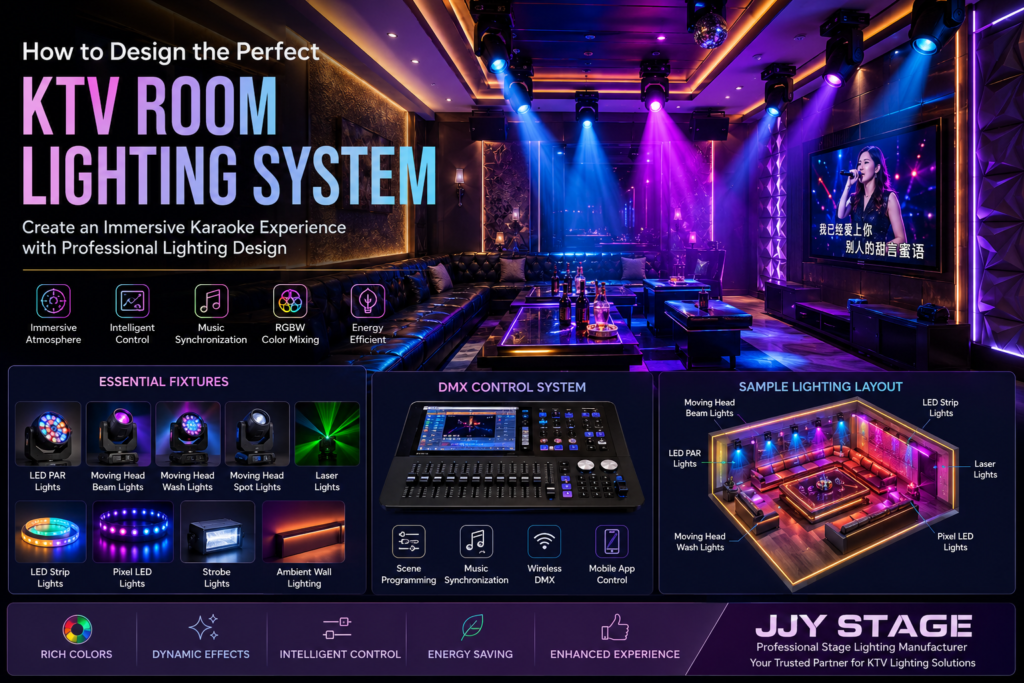
How to Design the Perfect KTV Room Lighting System: A Complete Guide for Modern Entertainment Venues
Introduction
Walk into any successful karaoke venue, and one element immediately shapes the experience before a single song begins—the lighting. Whether guests are celebrating birthdays, hosting corporate gatherings, or enjoying a night out with friends, a professionally designed KTV room lighting system transforms an ordinary private room into an immersive entertainment space. Dynamic lighting effects, synchronized colors, intelligent beam movements, and carefully balanced ambient illumination work together to create excitement, comfort, and memorable moments.
Modern customers expect far more than quality audio equipment. They want visually engaging environments that encourage interaction, social media sharing, and longer stays. Lighting has become one of the most effective tools for influencing mood, enhancing room aesthetics, and elevating the overall customer experience. A thoughtfully designed lighting system can also strengthen a venue’s brand identity while helping operators maximize customer satisfaction and repeat business.
Designing an effective KTV room lighting system requires more than installing colorful LED fixtures. Successful projects combine intelligent fixture selection, strategic lighting layouts, DMX control systems, RGBW technology, music synchronization, and energy-efficient lighting solutions to deliver consistent performance across every room.
This comprehensive guide explores everything venue owners, architects, AV integrators, and lighting designers need to know about planning professional KTV room lighting, selecting the right equipment, avoiding common design mistakes, and creating immersive entertainment spaces that stand out in today’s competitive hospitality market.
Looking for professional stage lighting solutions? Explore our complete guide to discover how moving head lights, LED PAR lights, beam lights, wash lights, and intelligent DMX control systems can transform concerts, theaters, KTV venues, clubs, and live events with stunning visual effects and reliable performance.
How to Design the Perfect KTV Room Lighting System
A professional karaoke venue succeeds when lighting, sound, interior design, and technology work together seamlessly. Unlike traditional room lighting that focuses primarily on visibility, entertainment lighting creates atmosphere, supports musical performances, and adapts instantly to different moods and events.
Whether you are building a new venue or renovating an existing one, understanding the principles of professional lighting design will help you create rooms that guests remember long after the music ends.
What Is a KTV Room Lighting System?
A KTV room lighting system is an integrated collection of intelligent lighting fixtures, controllers, and programming designed specifically for karaoke entertainment venues. Rather than providing simple illumination, these systems create dynamic visual experiences that complement music, performances, and customer interaction.
Professional systems typically include:
- LED PAR lights
- Moving head beam lights
- Moving head wash lights
- Spot lights
- LED strip lighting
- Pixel LED fixtures
- Laser effects
- DMX controllers
- Intelligent automation software
Unlike standard residential or commercial lighting, karaoke room lighting is designed to change continuously throughout each performance. Colors shift with the rhythm, beams sweep across the room, wall lighting enhances architectural details, and scene presets instantly transform the atmosphere for different occasions.
Key Objectives of a Professional KTV Lighting System
- Create immersive entertainment experiences
- Enhance customer engagement
- Improve room aesthetics
- Support music performances
- Increase social media appeal
- Encourage longer customer stays
- Differentiate premium VIP rooms
- Strengthen venue branding
The result is a highly flexible entertainment room lighting solution capable of adapting to every customer and every song.
Why Lighting Design Matters in KTV Rooms
Lighting is no longer considered a decorative feature—it is an essential business investment. Today’s guests expect premium visual experiences comparable to high-end nightclubs, luxury lounges, and immersive entertainment venues.
1. Creates Emotional Atmosphere
Lighting directly influences mood.
Soft warm lighting creates relaxation.
Vivid RGB colors generate excitement.
Moving beams increase energy.
Dynamic lighting transitions make every song feel like a live concert.
The ability to change atmosphere instantly gives operators tremendous flexibility.
2. Improves Customer Experience
Guests spend considerable time inside private karaoke rooms.
Comfortable, balanced lighting prevents eye fatigue while maintaining excitement.
Well-designed private room lighting keeps customers engaged without becoming overwhelming.
3. Encourages Longer Visits
Studies across the hospitality industry consistently show that enjoyable environments encourage customers to remain longer.
More time inside the room often means:
- Additional food orders
- Beverage purchases
- Extended booking hours
- Higher overall revenue
Lighting becomes part of the customer retention strategy.
4. Builds Brand Identity
Luxury venues often distinguish themselves through signature lighting designs.
Examples include:
- Customized color palettes
- Dynamic ceiling effects
- Branded entrance lighting
- Interactive wall illumination
- VIP-exclusive lighting scenes
Professional lighting reinforces a venue’s identity long after guests leave.
5. Enhances Social Media Appeal
Modern customers frequently photograph and record their karaoke experiences.
Visually striking lighting increases the likelihood of:
- Instagram posts
- TikTok videos
- Facebook shares
- Online reviews
- Organic word-of-mouth marketing
Every shared photo effectively promotes the venue.
6. Supports Premium Pricing
Luxury lighting allows operators to position VIP rooms as premium experiences.
Rooms featuring intelligent lighting systems often justify higher hourly rates because customers perceive greater value and exclusivity.
Essential Lighting Fixtures for a KTV Room
A successful KTV room lighting system combines multiple fixture types, each serving a specific purpose. Layering different lighting effects creates depth, flexibility, and immersive visual experiences.
LED PAR Lights
LED PAR lights form the foundation of most LED KTV lighting installations.
Primary Functions
- General room illumination
- Color washing
- Wall lighting
- Ceiling lighting
- Stage lighting
Best Placement
- Ceiling corners
- Around performance areas
- Along wall perimeters
Advantages
- Low power consumption
- Long operating life
- Smooth dimming
- Rich RGBW color mixing
- Minimal maintenance
Moving Head Beam Lights
Moving Head Beam Light produce narrow, concentrated shafts of light that create dramatic movement throughout the room.
Ideal Applications
- Performance moments
- Fast-paced songs
- Dance sequences
- VIP entertainment
- Club-style environments
Best Placement
- Ceiling trusses
- Rear corners
- Above stage areas
Beam fixtures instantly elevate the visual impact of any karaoke performance.
Moving Head Wash Lights
Wash lights deliver broad, even illumination with soft edges.
They are excellent for:
- Mood lighting
- Ambient lighting
- Background color effects
- Group performances
Unlike beam lights, wash fixtures prioritize coverage over intensity.
Moving Head Spot Lights
Spot Lights fixtures combine movement with precise projection.
They can produce:
- Gobo patterns
- Logo projections
- Focused performer lighting
- Dynamic visual effects
These fixtures are particularly effective in luxury VIP room lighting designs.
LED Strip Lights
LED strip lighting adds architectural depth without drawing attention to the fixtures themselves.
Popular installation areas include:
- Ceiling coves
- Furniture edges
- Wall recesses
- Under seating
- Behind televisions
- Around mirrors
Hidden LED strips produce elegant indirect illumination while supporting dynamic RGB effects.
Laser Lights
Laser fixtures introduce sharp, animated graphics and aerial effects.
Common uses include:
- Dance music
- Party scenes
- Electronic music
- Special celebrations
- High-energy performances
Because laser beams are highly visible, proper positioning and safety compliance are essential.
Pixel LED Lights
Pixel LED systems allow every LED segment to operate independently.
This enables advanced effects such as:
- Pixel chasing
- Animated graphics
- Color waves
- Dynamic patterns
- Music visualization
Pixel lighting is becoming increasingly popular in premium karaoke venues seeking immersive experiences.
Strobe Lights
Strobes create brief flashes of high-intensity light.
They are best used sparingly during:
- Chorus drops
- Dance sequences
- Celebration moments
- DJ performances
Excessive strobe usage should be avoided to maintain guest comfort.
Ambient Wall Lighting
Ambient wall lighting provides the visual balance that ties the entire lighting design together.
Rather than creating dramatic effects, it adds depth, warmth, and sophistication to the room.
Popular techniques include:
- Backlit decorative panels
- Textured wall illumination
- Hidden RGBW coves
- Accent niches
- Decorative architectural lighting
Ambient lighting prevents the room from feeling overly dark while complementing intelligent effects.
How to Plan the Lighting Layout
Even the highest-quality fixtures cannot deliver impressive results without a well-planned layout. Proper positioning ensures balanced illumination, dynamic effects, and comfortable visibility while avoiding glare or dark spots.
A successful KTV room lighting system should layer multiple types of lighting rather than relying on a single fixture category.
1. Ceiling Lighting
The ceiling serves as the primary location for intelligent lighting fixtures.
Recommended installations include:
- Moving head beam lights in opposing corners
- LED PAR lights for overall color washes
- Recessed RGBW lighting around ceiling features
- Hidden LED strip lights inside coves
- Pixel LED elements for animated ceiling effects
This layered approach creates depth while allowing programmable lighting scenes for different music styles.
2. Wall Lighting
Walls provide valuable opportunities for indirect illumination and architectural enhancement.
Effective wall lighting options include:
- Vertical LED strips
- RGBW wall washers
- Decorative backlit panels
- Accent lighting around mirrors and displays
- Textured wall grazing effects
Balanced wall lighting helps rooms feel larger and more inviting.
3. Stage or Performance Area
If the room includes a designated singing area, it should receive focused lighting without overpowering the rest of the space.
Recommended fixtures include:
- Moving head spot lights for performer highlighting
- LED PAR lights for smooth front illumination
- Wash lights for even color coverage
- Beam lights for dramatic performance moments
The goal is to ensure singers remain visible while maintaining a concert-like atmosphere.
4. Seating Area
Guests spend much of their time seated, so lighting should be comfortable while still supporting the room’s entertainment atmosphere.
Use:
- Soft indirect RGBW lighting
- Hidden LED strips beneath seating
- Low-glare wall lighting
- Adjustable dimming scenes for relaxation between songs
Avoid placing high-intensity beam fixtures directly above seating positions.
5. Accent Lighting
Accent lighting draws attention to premium design features such as:
- Decorative wall textures
- Display shelves
- VIP signage
- Artwork
- Beverage counters
These details add depth and reinforce a high-end visual identity.
6. Hidden LED Strip Lighting
Concealed LED strips are one of the most versatile elements in modern private room lighting.
Ideal locations include:
- Ceiling coves
- Behind televisions
- Under furniture
- Along steps
- Behind acoustic panels
- Around mirrors
Hidden lighting creates elegant indirect illumination while eliminating visible glare.
7. Fixture Spacing
Proper spacing prevents uneven brightness and overlapping effects.
General recommendations include:
| Fixture Type | Suggested Placement |
| LED PAR Lights | Evenly distributed around the ceiling perimeter |
| Moving Head Beam Lights | Opposite room corners for full coverage |
| Wash Lights | Positioned to overlap softly without creating hotspots |
| LED Strip Lights | Continuous architectural lines with no visible gaps |
| Pixel LEDs | Symmetrical layouts for balanced animations |
| Laser Lights | Mounted above eye level with clear projection paths |
Sample Lighting Layout Recommendation
The following layout works well for a medium-sized private karaoke room (approximately 25–35 m²):
| Area | Recommended Fixtures |
| Ceiling | 4 RGBW LED PAR Lights + 2 Moving Head Beam Lights |
| Performance Zone | 2 Moving Head Spot Lights + 2 Wash Lights |
| Wall Features | RGBW Wall Washers + Hidden LED Strip Lights |
| Furniture | Under-seat LED Strips + Accent Lighting |
| Decorative Effects | Pixel LED Lighting + 1 Laser Light |
| Control System | DMX512 Controller with Scene Presets and Music Synchronization |
This balanced configuration provides flexibility for relaxed lounge scenes, energetic performances, and immersive party modes without overcrowding the room with fixtures.
Choosing Between RGB and RGBW Lighting
Selecting the right color-mixing technology is one of the most important decisions when designing a professional KTV room lighting system. While both RGB and RGBW fixtures create vibrant visual effects, they serve different purposes depending on the venue’s design goals.
In the next section, we’ll compare RGB and RGBW lighting in detail with a practical comparison table, followed by DMX lighting control, intelligent programming, installation best practices, and fixture recommendations based on room size.
Choosing Between RGB and RGBW Lighting
Color quality is one of the defining characteristics of any professional KTV room lighting system. While both RGB and RGBW fixtures are widely used in entertainment venues, they offer different performance advantages depending on the room’s purpose, desired atmosphere, and budget.
For modern karaoke rooms, RGBW lighting has become the preferred choice because it provides richer color mixing and a dedicated white LED for natural illumination. However, RGB fixtures remain a cost-effective solution for projects where vibrant color effects are the primary objective.
Understanding RGB Lighting
RGB lighting combines three primary LED colors:
- Red
- Green
- Blue
By mixing these colors at different intensities, RGB fixtures can create millions of colors suitable for party environments, concerts, and nightclub-style effects.
Advantages of RGB Lighting
- Lower equipment cost
- Excellent saturated colors
- Ideal for music-driven effects
- Energy efficient
- Widely available
- Easy DMX programming
Limitations
RGB fixtures generate white light by mixing red, green, and blue LEDs. While acceptable for many applications, this white often appears slightly bluish or lacks the natural appearance required for comfortable room illumination.
Understanding RGBW Lighting
RGBW fixtures include an additional dedicated white LED.
Instead of mixing colors to imitate white, they produce genuine white illumination while maintaining full RGB color capabilities.
Professional RGBW lighting offers:
- Better color accuracy
- Cleaner pastel colors
- Brighter output
- More realistic skin tones
- Superior ambient lighting
- Greater flexibility
For luxury VIP room lighting, RGBW has become the industry standard.
Which Is Better for KTV Rooms?
The answer depends on the room’s function.
For budget-focused karaoke rooms, RGB fixtures can produce impressive entertainment effects.
For premium venues, hotel karaoke suites, and luxury entertainment spaces, RGBW provides significantly better visual quality, especially when guests are taking photos or videos.
RGB vs RGBW Comparison Table
| Feature | RGB Lighting | RGBW Lighting |
| Color Mixing | Excellent | Excellent |
| White Light Quality | Simulated | True White LED |
| Brightness | High | Higher |
| Mood Lighting | Very Good | Excellent |
| Photography Appearance | Good | Excellent |
| Energy Efficiency | Excellent | Excellent |
| Fixture Cost | Lower | Higher |
| Best For | Budget KTV Rooms | Premium & VIP Rooms |
Expert Recommendation
If you’re investing in a new KTV room lighting system, RGBW fixtures provide better long-term value due to their versatility, improved customer experience, and professional appearance.
Why DMX Lighting Control Is Essential
Lighting fixtures are only as effective as the control system behind them.
Professional karaoke venues rely on DMX lighting systems to coordinate every fixture, automate lighting scenes, synchronize with music, and create immersive visual experiences. Without intelligent control, even expensive lighting equipment cannot deliver its full potential.
What Is DMX512?
DMX512 (Digital Multiplex) is the global standard communication protocol used in entertainment lighting.
It allows a single controller to communicate with hundreds of intelligent fixtures simultaneously.
A DMX system can control:
- LED PAR lights
- Moving head beam lights
- Wash lights
- Spot lights
- Laser lights
- Pixel LED systems
- Fog machines
- Strobe lights
Each fixture receives its own address, enabling precise control over brightness, color, movement, speed, and special effects.
Benefits of DMX Lighting Control
1. Scene Programming
Instead of adjusting fixtures manually, operators can create pre-programmed lighting scenes.
Examples include:
- Welcome Mode
- Romantic Mode
- Party Mode
- Rock Concert
- Birthday Celebration
- Slow Ballads
- Dance Party
- VIP Experience
With a single button press, the room instantly changes atmosphere.
2. Music Synchronization
Modern controllers analyze music beats and automatically synchronize lighting.
Effects include:
- Color changes
- Beam movement
- Strobe timing
- Pixel animations
- Laser sequences
Music-synchronized lighting dramatically enhances customer engagement by making every performance feel like a live show.
3. Automation
Automation reduces staff workload and ensures consistent lighting quality.
Automatic schedules can include:
- Room startup sequences
- Standby lighting
- Song transitions
- Closing routines
- Energy-saving shutdown modes
4. Intelligent Fixture Control
DMX enables advanced control over moving fixtures, including:
- Pan movement
- Tilt movement
- Zoom
- Focus
- Color wheels
- Gobos
- Prism effects
- Dimming
These features create professional-quality lighting shows even in compact private rooms.
5. Wireless DMX
Many modern venues now choose wireless DMX solutions.
Benefits include:
- Reduced cabling
- Faster installation
- Easier renovations
- Cleaner ceiling design
- Flexible fixture placement
Wireless DMX is especially useful when upgrading existing karaoke venues where running new cables is difficult.
6. Mobile App Integration
Advanced intelligent lighting systems can also be managed through tablets or smartphones.
Operators can:
- Select scenes
- Adjust colors
- Change brightness
- Trigger effects
- Monitor fixtures
- Update programming
This flexibility improves operational efficiency and simplifies maintenance.
How DMX Improves Customer Experience
A professional DMX lighting system creates seamless transitions that keep guests immersed throughout their visit.
Instead of static lighting, customers experience:
- Smooth color fades
- Dynamic beam movements
- Interactive music effects
- Automatic mood changes
- Customized room themes
The result is a premium entertainment environment that encourages repeat visits and positive reviews.
Creating Dynamic Lighting Effects
Today’s guests expect more than colorful lights—they want an immersive, interactive experience. Dynamic lighting transforms an ordinary karaoke room into a miniature concert venue by responding to music, movement, and programmed scenes.
Beat Synchronization
Sound-activated lighting uses audio input or built-in microphones to detect rhythm and tempo.
Common beat-based effects include:
- Color changes on bass hits
- Moving beams following rhythm
- Strobe bursts during choruses
- Laser pulses with electronic music
- Pixel animations matching song tempo
This synchronization creates excitement without requiring manual operation.
Color Transitions
Smooth color fades help set different moods throughout the evening.
Examples:
- Warm amber for relaxed conversations
- Deep blue for romantic songs
- Vibrant magenta for pop music
- Dynamic rainbow effects for celebrations
- Gold and white for VIP experiences
Avoid rapid, random color changes, which can feel chaotic and reduce visual comfort.
Moving Beam Effects
Moving head beam lights add motion and depth.
Popular beam effects include:
- Crossing beams
- Circular sweeps
- Fan patterns
- Spiral movements
- Audience scanning (within safe design limits)
- Aerial effects enhanced by haze machines
These effects are ideal for energetic songs and party scenes.
Wash Lighting
Wash lights provide broad, even illumination that fills the room with rich color.
Applications include:
- Background ambiance
- Dance lighting
- Stage coverage
- Mood transitions
- Architectural highlighting
Combining wash lighting with beam fixtures creates balanced visual layers.
Laser Effects
Laser fixtures add precision graphics and high-energy visuals.
Typical uses:
- Starfield effects
- Tunnel animations
- Geometric patterns
- Dance sequences
- Celebration scenes
Laser effects should always comply with local safety regulations and be positioned to avoid direct eye exposure.
Pixel Mapping
Pixel LED lighting enables individual control of each LED segment.
Creative applications include:
- Flowing color waves
- Chasing effects
- Audio visualizers
- Animated borders
- Custom branding animations
Pixel mapping is particularly effective in luxury KTV venues seeking a distinctive visual identity.
Scene Presets
Programming multiple lighting scenes allows staff or guests to switch between atmospheres instantly.
Recommended presets include:
- Welcome Scene
- Relax Mode
- Pop Concert
- Rock Performance
- Romantic Night
- Dance Party
- Birthday Celebration
- VIP Luxury
- Closing Scene
Preset scenes simplify operation while ensuring a consistent customer experience.
Interactive Lighting
The latest intelligent lighting systems can respond not only to music but also to user interaction.
Emerging features include:
- Motion sensors
- Touchscreen scene selection
- Voice-triggered effects
- Mobile app customization
- AI-assisted lighting recommendations
Interactive lighting enhances personalization and keeps entertainment experiences fresh and engaging.
Choosing Fixtures Based on Room Size
One of the most common mistakes in designing a KTV room lighting system is using the same lighting configuration for every room. Lighting should be scaled to the room’s dimensions, ceiling height, interior design, and intended customer experience. A compact karaoke room requires a different approach than a luxury VIP suite or a large entertainment lounge.
Small KTV Rooms (10–20 m²)
Smaller rooms benefit from simple, well-balanced lighting that creates energy without overwhelming the space.
Recommended Fixtures:
- 2–4 RGBW LED PAR Lights
- 1–2 LED Strip Light Zones
- 1 Small Laser Light (optional)
- Ambient Wall Lighting
- Compact DMX Controller
Design Tips:
- Use indirect lighting to make the room appear larger.
- Avoid installing too many moving fixtures, which can create visual clutter.
- Prioritize RGBW fixtures for versatile mood lighting.
Medium Private Rooms (20–35 m²)
Medium-sized rooms offer more flexibility and can accommodate intelligent lighting effects suitable for family gatherings, corporate events, and private parties.
Recommended Fixtures:
- 4 RGBW LED PAR Lights
- 2 Moving Head Beam Lights
- 2 Moving Head Wash Lights
- LED Strip Lighting
- Pixel LED Accents
- DMX512 Controller
Design Tips:
- Create layered lighting by combining ambient, accent, and effect lighting.
- Program multiple lighting scenes for different music genres and occasions.
- Ensure even coverage across the seating and performance areas.
Luxury VIP Rooms (35–60 m²)
VIP rooms should deliver a premium entertainment experience with sophisticated lighting effects and intelligent control.
Recommended Fixtures:
- 6–8 RGBW LED PAR Lights
- 4 Moving Head Beam Lights
- 2–4 Moving Head Spot Lights
- 2 Moving Head Wash Lights
- Pixel LED Lighting
- Laser Effects
- Hidden LED Strip Lighting
- Wireless DMX System
Design Tips:
- Use programmable lighting scenes tailored to different moods.
- Integrate lighting with the room’s architectural features.
- Include interactive controls or touchscreen interfaces for guest customization.
Large Entertainment Suites (60 m² and Above)
Large suites often host corporate events, celebrations, and group entertainment, requiring more powerful and flexible lighting systems.
Recommended Fixtures:
- 8–12 RGBW LED PAR Lights
- 4–6 Moving Head Beam Lights
- 4 Wash Lights
- 4 Spot Lights
- Pixel LED Ceiling Features
- Multiple Laser Fixtures
- Advanced DMX Controller with Scene Automation
Design Tips:
- Divide the room into lighting zones for greater control.
- Synchronize lighting with audio and video systems.
- Plan for future expansion by leaving spare DMX channels and power capacity.
Room Size vs. Fixture Recommendation Table
| Room Size | LED PAR Lights | Beam Lights | Wash Lights | Spot Lights | LED Strips | Laser Lights | DMX Controller |
| Small (10–20 m²) | 2–4 | Optional | Optional | No | ✔ | Optional | Basic |
| Medium (20–35 m²) | 4 | 2 | 2 | Optional | ✔ | ✔ | Standard DMX512 |
| VIP (35–60 m²) | 6–8 | 4 | 2–4 | 2–4 | ✔ | ✔ | Advanced Wireless DMX |
| Large (60+ m²) | 8–12 | 4–6 | 4 | 4 | ✔ | Multiple | Professional Intelligent Controller |
Common KTV Lighting Design Mistakes
Even high-quality fixtures can fail to deliver impressive results if the lighting system is poorly designed. Avoiding these common mistakes will improve performance, reduce maintenance, and create a more enjoyable customer experience.
1. Installing Too Many Fixtures
More lights do not necessarily create a better atmosphere. Overcrowding the ceiling can produce excessive brightness and visual confusion.
Solution: Focus on layered lighting with carefully selected fixtures rather than quantity.
2. Poor Beam Angles
Incorrect beam positioning can create dark spots or direct glare for guests.
Solution: Aim moving heads and PAR lights to provide even coverage while avoiding direct eye exposure.
3. Excessive Brightness
Lighting that is too bright can make guests uncomfortable and reduce the immersive feel of the room.
Solution: Use dimmable RGBW fixtures and pre-programmed brightness levels for different activities.
4. Choosing Low-Quality Fixtures
Cheap lighting equipment often suffers from inconsistent color output, noisy motors, short lifespans, and unreliable performance.
Solution: Invest in professional-grade fixtures from trusted manufacturers that offer quality control, technical support, and reliable warranties.
5. Poor Cable Management
Visible or tangled cables affect both aesthetics and maintenance efficiency.
Solution:
- Route cables through conduits or cable trays.
- Label all DMX and power cables.
- Keep signal and power cables organized to simplify servicing.
6. Ignoring Ventilation
Entertainment lighting generates heat, especially moving head fixtures and high-output LEDs.
Solution: Ensure adequate airflow around fixtures and avoid enclosing them in tight ceiling spaces without ventilation.
7. Weak Controller Selection
An entry-level controller may not support advanced scene programming, automation, or future expansion.
Solution: Choose a scalable DMX controller with sufficient channels, scene storage, and integration capabilities.
8. Poor Color Coordination
Random color combinations can make a room feel chaotic rather than immersive.
Solution: Develop a consistent color strategy aligned with the venue’s interior design and brand identity.
Installation Best Practices
Professional installation is essential for achieving safe, reliable, and visually impressive results.
Fixture Mounting
- Use certified mounting brackets and hardware.
- Verify ceiling load capacity.
- Secure fixtures with safety cables where required.
- Allow enough clearance for moving head rotation.
Ceiling Design
Coordinate lighting placement with HVAC systems, speakers, sprinklers, and decorative ceiling features to avoid conflicts and maintain a clean appearance.
DMX Wiring
- Use high-quality DMX512 cables.
- Follow proper addressing procedures.
- Terminate the DMX line correctly to minimize signal interference.
- Separate DMX cables from high-voltage power cables whenever possible.
Cable Management
Organized cabling improves both safety and maintenance.
Best practices include:
- Label every cable.
- Use cable trays or conduits.
- Bundle cables neatly with reusable ties.
- Leave service loops for future maintenance.
Ventilation
Maintain sufficient airflow around fixtures to prevent overheating and extend equipment lifespan.
Safety
Always comply with local electrical codes and safety regulations.
Key considerations include:
- Proper grounding
- Circuit protection
- Fire-resistant materials
- Emergency power planning
- Routine safety inspections
Testing
Before opening the venue:
- Test each fixture individually.
- Verify DMX communication.
- Check scene programming.
- Confirm music synchronization.
- Inspect beam alignment and brightness levels.
Maintenance
Regular maintenance helps preserve performance and reduce downtime.
Schedule routine tasks such as:
- Cleaning lenses and filters
- Inspecting fans
- Updating firmware
- Checking DMX connections
- Replacing worn cables
KTV Lighting Installation Checklist
✔ Verify ceiling structure and load capacity
✔ Install certified mounting hardware
✔ Route and label all power and DMX cables
✔ Configure DMX addresses
✔ Test every fixture
✔ Program lighting scenes
✔ Synchronize lighting with audio
✔ Check ventilation
✔ Perform safety inspection
✔ Train staff on system operation
Energy-Efficient KTV Lighting Solutions
Energy efficiency is increasingly important for entertainment venues seeking to reduce operating costs without sacrificing performance.
Modern LED technology offers significant advantages over traditional lighting systems.
Benefits of LED Technology
- Lower power consumption
- Longer lifespan (often 30,000–50,000 hours)
- Reduced heat generation
- Lower maintenance costs
- Instant on/off operation
- High color consistency
Smart Dimming
Using programmable dimming allows venues to reduce energy usage during quieter periods while maintaining the desired atmosphere.
Motion and Occupancy Sensors
Sensors can automatically activate or reduce lighting based on room occupancy, helping minimize unnecessary energy consumption.
RGBW Efficiency
RGBW fixtures provide excellent flexibility by delivering both vibrant colors and efficient white lighting from a single fixture, reducing the need for separate white-light luminaires.
Reduced Maintenance Costs
High-quality LED fixtures require fewer lamp replacements and less routine maintenance than traditional lighting technologies, lowering long-term ownership costs.
Future Trends in KTV Lighting
Entertainment lighting continues to evolve, offering new ways to create memorable customer experiences.
AI-Powered Lighting
Artificial intelligence can analyze music, room occupancy, and user preferences to automatically generate dynamic lighting scenes.
Wireless DMX
Wireless systems reduce installation complexity and make future upgrades more flexible.
IoT-Enabled Lighting
Connected lighting systems allow remote monitoring, diagnostics, and maintenance from a central platform.
Interactive Lighting
Touch panels, mobile apps, and gesture controls enable guests to personalize their lighting environment.
Voice Control
Integration with voice assistants and smart control platforms is becoming more common in premium entertainment venues.
Advanced Pixel Mapping
Higher-resolution pixel lighting enables sophisticated animations, branded visual effects, and immersive architectural displays.
Projection Integration
Combining lighting with projection mapping creates multi-dimensional visual experiences that enhance themed rooms and special events.
Frequently Asked Questions (FAQs)
- What is a KTV room lighting system?
A KTV room lighting system is a combination of intelligent lighting fixtures, DMX controllers, and programmed effects designed to create immersive karaoke experiences. - Which lights are best for karaoke rooms?
RGBW LED PAR lights, moving head beam lights, wash lights, LED strip lights, and pixel LED fixtures are among the most effective options. - How many lights does a KTV room need?
The number depends on room size. Small rooms may require 4–6 fixtures, while luxury VIP rooms often use 12 or more. - Are RGBW lights better than RGB?
Yes. RGBW fixtures provide more accurate white light, smoother color mixing, and greater versatility for both ambient and performance lighting. - What is DMX lighting?
DMX512 is the industry-standard control protocol that allows multiple intelligent lighting fixtures to operate in sync from a central controller. - Can KTV lighting synchronize with music?
Yes. Modern DMX systems can synchronize lighting effects with music using sound activation or programmed timelines. - What beam angle works best for karaoke rooms?
Narrow beams (5°–15°) are ideal for dramatic effects, while wider beams (25°–60°) are better for ambient wash lighting. - How much does a professional KTV lighting system cost?
Costs vary depending on room size, fixture selection, control systems, and customization. Premium installations require a higher investment but deliver superior performance and longevity. - Are LED lights energy-efficient?
Yes. Professional LED fixtures consume less power, produce less heat, and have significantly longer lifespans than conventional lighting. - How do I choose the right lighting system?
Consider room size, customer experience goals, fixture quality, DMX compatibility, energy efficiency, and future expansion. Working with an experienced manufacturer ensures a tailored solution.
Conclusion
A thoughtfully designed KTV room lighting system is more than a collection of fixtures—it is a strategic investment in customer experience, operational efficiency, and long-term business success. By selecting the right combination of RGBW lighting, intelligent moving heads, LED strips, laser effects, and DMX control, venue owners can create immersive environments that keep guests engaged and encourage repeat visits.
Every karaoke venue has unique requirements, from compact private rooms to luxurious VIP suites. Successful lighting design begins with understanding room layout, selecting professional-grade equipment, and implementing reliable control systems that deliver consistent, high-quality performance.
Transform Your Entertainment Venue with JJY Stage
Whether you’re developing a new karaoke venue, renovating existing private rooms, or designing a luxury entertainment complex, JJY Stage provides complete lighting solutions tailored to your project.
We offer:
- Customized KTV room lighting system design
- Intelligent DMX lighting control solutions
- Professional moving head, LED PAR, beam, wash, and laser lights
- OEM/ODM manufacturing services
- Project consultation and technical support
- End-to-end entertainment lighting solutions for karaoke venues, hotels, clubs, bars, and hospitality projects
Partner with JJY Stage to create immersive, energy-efficient, and visually stunning KTV environments that leave a lasting impression on every guest.