
Introduction
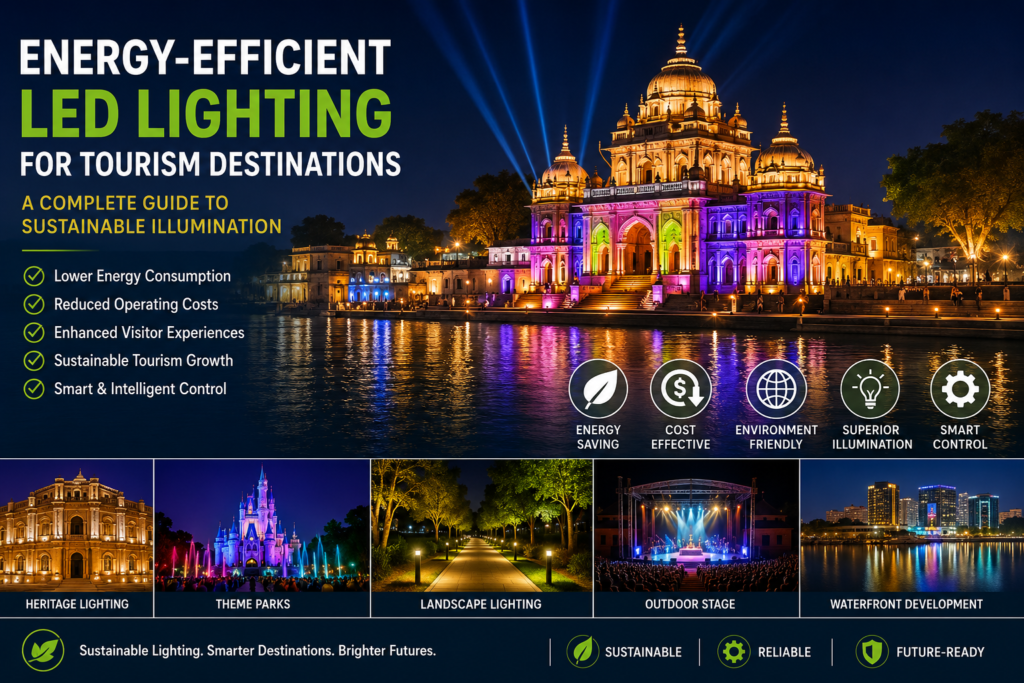
As tourism evolves into a more experience-driven industry, destinations are under increasing pressure to create memorable environments while reducing operational costs and environmental impact. Visitors now expect more than scenic landscapes and cultural attractions; they seek immersive nighttime experiences, beautifully illuminated landmarks, interactive public spaces, and vibrant entertainment venues. At the same time, governments, tourism authorities, architects, and developers are prioritizing sustainable infrastructure that aligns with global energy-efficiency and carbon-reduction goals.
This shift has made energy-efficient LED lighting for tourism destinations an essential investment rather than an optional upgrade. Modern LED lighting systems consume significantly less electricity than traditional lighting technologies while delivering superior brightness, color quality, and design flexibility. Whether illuminating a historic monument, enhancing a waterfront promenade, or creating spectacular lighting shows in a theme park, LEDs help destinations reduce energy consumption without compromising visual impact.
Professional LED lighting for tourism also supports longer operating hours, safer public environments, and more engaging visitor experiences. Intelligent control systems, RGBW technology, waterproof outdoor fixtures, and automated scheduling further improve efficiency while simplifying maintenance.
This guide explores how energy-efficient LED lighting for tourism destinations contributes to sustainable tourism, lowers lifecycle costs, enhances architectural beauty, and helps tourism operators build future-ready attractions that remain competitive for years to come.
Why Energy-Efficient Lighting Matters for Tourism Destinations
Lighting influences almost every aspect of a tourism destination. It improves safety, enhances architectural features, guides visitor movement, and transforms ordinary spaces into memorable nighttime attractions. However, traditional lighting systems often consume excessive energy, require frequent maintenance, and generate high operating costs.
As tourism infrastructure expands, energy efficiency has become a strategic priority for governments, developers, and destination managers.
Rising Energy Costs
Tourism destinations frequently operate lighting systems for 8–16 hours every day. Large-scale installations—including hotels, heritage sites, parks, public squares, and entertainment venues—may use hundreds or even thousands of fixtures.
Replacing conventional lighting with energy-efficient LED lighting can significantly reduce electricity consumption, helping organizations manage rising utility costs while improving budget efficiency.
Supporting Sustainability Goals
Many countries have introduced sustainability initiatives aimed at reducing greenhouse gas emissions and improving energy performance across public infrastructure.
Installing sustainable lighting solutions enables tourism destinations to:
- Reduce electricity consumption
- Lower carbon emissions
- Improve environmental performance
- Meet green building certifications
- Support sustainable tourism initiatives
These benefits contribute to stronger environmental stewardship while enhancing the destination’s public image.
Creating Better Visitor Experiences
High-quality illumination enhances both safety and aesthetics. Properly designed architectural LED lighting highlights building details, while landscape LED lighting emphasizes gardens, pathways, bridges, and natural features.
Well-planned lighting also encourages visitors to stay longer, explore additional attractions, and participate in evening events, increasing tourism revenue.
Extending Nighttime Tourism
Night tourism has become one of the fastest-growing sectors of the travel industry. Illuminated attractions allow destinations to operate beyond daylight hours and generate additional income through:
- Cultural festivals
- Outdoor performances
- Heritage tours
- Night markets
- Waterfront entertainment
- Seasonal events
- Light and sound shows
Professional LED lighting makes these experiences more attractive while minimizing energy consumption.
Improving Destination Competitiveness
Cities and attractions compete globally for visitors. Creative lighting design helps destinations stand out by creating iconic nighttime landmarks that are highly shareable on social media.
Modern cultural tourism lighting enhances branding, encourages repeat visits, and strengthens the destination’s identity.
What Makes LED Lighting Energy-Efficient?
LED technology converts a much higher percentage of electrical energy into visible light compared with halogen or metal-halide fixtures. Less energy is wasted as heat, resulting in lower electricity consumption and improved operational efficiency.
High Luminous Efficacy
Modern LEDs produce more lumens per watt, meaning they generate brighter illumination while using significantly less power.
Benefits include:
- Higher brightness
- Lower electricity usage
- Better illumination uniformity
- Reduced operating costs
Lower Power Consumption
One of the primary advantages of energy-efficient LED lighting for tourism destinations is its ability to provide exceptional lighting performance with considerably lower wattage.
For large tourism projects, this reduction translates into substantial annual energy savings.
Reduced Heat Generation
Unlike traditional fixtures, LEDs emit very little heat. Lower operating temperatures offer several advantages:
- Improved safety
- Reduced cooling loads in indoor spaces
- Longer component lifespan
- Increased system reliability
Long Operating Life
Professional LED fixtures typically last between 50,000 and 100,000 hours, depending on product quality and operating conditions.
Longer service life means:
- Fewer replacements
- Lower maintenance expenses
- Reduced labor costs
- Minimal operational disruption
Instant Start Performance
LED fixtures reach full brightness immediately after being switched on.
This feature is particularly valuable for:
- Outdoor stage lighting
- Theme parks
- Live performances
- Cultural events
- Emergency lighting
Smooth Dimming Capabilities
Unlike many traditional lighting systems, LEDs support precise dimming without sacrificing efficiency.
Integrated DMX lighting control and smart automation allow operators to adjust brightness according to:
- Visitor traffic
- Event schedules
- Ambient light levels
- Seasonal programs
Minimal Maintenance Requirements
Because LEDs are more durable and have fewer replacement cycles, maintenance teams spend less time servicing fixtures.
This is especially beneficial for installations located on:
- High towers
- Bridges
- Heritage buildings
- Scenic mountains
- Waterfront structures
Why LEDs Outperform Traditional Halogen and Metal-Halide Lighting
Traditional lighting technologies were once the standard for tourism infrastructure, but they have several limitations:
- Higher electricity consumption
- Shorter lifespan
- Frequent bulb replacements
- Significant heat generation
- Longer warm-up times
- Higher maintenance costs
- Limited lighting control options
In contrast, professional LED lighting systems deliver consistent brightness, excellent color rendering, intelligent control compatibility, and dramatically improved energy efficiency, making them the preferred choice for modern tourism destinations.
Benefits of Energy-Efficient LED Lighting
Upgrading to energy-efficient LED lighting for tourism destinations delivers long-term financial, operational, and environmental benefits.
Lower Electricity Bills
LED fixtures use substantially less power while maintaining high illumination levels. For destinations operating extensive outdoor lighting, this can translate into meaningful annual savings.
Extended Fixture Lifespan
The long operational life of professional LED products reduces replacement frequency and minimizes maintenance interruptions.
Reduced Maintenance Costs
Fewer replacements and greater reliability lower labor requirements, equipment rental costs, and operational downtime.
Superior Lighting Quality
Modern LEDs provide:
- High color rendering
- Uniform illumination
- Consistent brightness
- Precise beam control
- Dynamic RGBW color mixing
These qualities improve the visual appeal of tourism destinations while enhancing visitor comfort.
Reduced Carbon Emissions
Lower energy consumption directly contributes to reduced greenhouse gas emissions, supporting sustainability initiatives and helping destinations meet environmental targets.
Improved Operational Reliability
LED fixtures are designed to withstand demanding outdoor environments. Waterproof models with IP65 or IP66 ratings offer dependable performance in rain, humidity, dust, and changing weather conditions.
Enhanced Visitor Comfort
Well-designed lighting improves visibility, minimizes glare, and creates welcoming public spaces. Visitors can safely navigate pathways, appreciate architectural details, and enjoy nighttime attractions with greater comfort.
Applications of LED Lighting in Tourism Destinations
The flexibility of modern LED technology allows designers to create immersive lighting experiences across a wide range of tourism environments.
| Tourism Application | Recommended LED Fixture | Key Benefit |
| Heritage Sites | Architectural LED Wall Washers | Protects structures while enhancing historic details |
| Historical Landmarks | RGBW Architectural Lighting | Dynamic façade illumination and storytelling |
| Theme Parks | Moving Head LED Lights & Beam Lights | Interactive entertainment and attractions |
| Museums | Precision LED Spotlights | Accurate color rendering for exhibits |
| Public Squares | Smart LED Flood Lights | Safe, energy-efficient public lighting |
| Scenic Viewpoints | Landscape LED Lighting | Highlights natural scenery with minimal energy use |
| Outdoor Theaters | Professional LED Stage Lighting | Flexible performance lighting and visual effects |
| Waterfront Developments | Waterproof IP66 LED Fixtures | Reliable operation in humid environments |
| Hotels & Resorts | Architectural & Landscape LEDs | Improved guest experience and ambience |
| Walking Trails | Low-Power Pathway Lighting | Enhanced safety with reduced energy consumption |
| Festival Venues | RGBW Stage Lighting & Outdoor Wash Lights | Vibrant event lighting with intelligent control |
Selecting the right fixture for each application ensures optimal performance, efficient energy use, and an engaging visitor experience while supporting long-term sustainability goals.
Smart LED Lighting Technologies
Modern tourism destinations require more than efficient light sources—they need intelligent lighting ecosystems that optimize energy use, simplify management, and create memorable visitor experiences. Today’s smart LED lighting combines advanced hardware with intelligent control software to deliver maximum efficiency without compromising creativity.
Whether managing a heritage district, theme park, waterfront promenade, or outdoor performance venue, smart lighting technologies allow operators to adjust illumination in real time based on visitor activity, weather conditions, and event schedules.
Smart Lighting Control Systems
A centralized lighting control system enables operators to manage thousands of fixtures from a single interface. Instead of manually switching lights on or off, administrators can create automated lighting scenes, monitor fixture status, and adjust brightness remotely.
Benefits include:
- Reduced energy waste
- Simplified maintenance
- Consistent lighting performance
- Faster troubleshooting
- Flexible event programming
For large tourism projects, centralized control also minimizes labor costs and improves operational efficiency.
DMX Lighting Control
DMX lighting control remains the industry standard for professional entertainment and architectural lighting. It allows precise control of brightness, color, beam movement, effects, and synchronized lighting shows.
DMX is ideal for:
- Outdoor stage lighting
- Cultural festivals
- Architectural façade lighting
- Musical fountain shows
- Theme park attractions
- Interactive tourism experiences
By integrating DMX controllers with energy-efficient LED fixtures, operators can create immersive visual storytelling while keeping electricity consumption low.
Motion Sensors
Not every tourism area requires full illumination throughout the night. Motion sensors automatically increase brightness when visitors are nearby and reduce output when spaces are unoccupied.
Typical applications include:
- Walking trails
- Parking areas
- Scenic pathways
- Public parks
- Observation decks
This adaptive approach improves safety while preventing unnecessary energy consumption.
Daylight Sensors
Outdoor lighting should respond naturally to changing environmental conditions. Daylight sensors automatically activate fixtures at dusk and switch them off when sufficient natural light is available.
Advantages include:
- Lower electricity costs
- Longer fixture lifespan
- Fully automated operation
- Reduced manual intervention
Remote Monitoring
Professional LED lighting systems now support cloud-based monitoring, enabling facility managers to oversee installations from virtually anywhere.
Remote monitoring provides:
- Real-time fault detection
- Power consumption reports
- Fixture health diagnostics
- Performance analytics
- Maintenance alerts
Instead of waiting for failures, maintenance teams can proactively service equipment before problems affect visitors.
IoT Integration
The Internet of Things (IoT) is transforming tourism infrastructure. Connected lighting systems communicate with sensors, security systems, weather stations, and building management platforms to optimize energy use automatically.
For example, lighting can:
- Dim during low visitor traffic
- Brighten during performances
- Adjust colors for festivals
- Respond to weather conditions
- Coordinate with multimedia shows
This interconnected approach creates smarter and more sustainable destinations.
Wireless Controls
Wireless communication technologies eliminate much of the cabling traditionally required for lighting installations. This is particularly valuable for:
- Heritage sites
- Temporary festivals
- Historic buildings
- Landscape lighting
- Remote attractions
Wireless systems simplify installation while reducing infrastructure costs.
Automated Scheduling
Tourism destinations often follow predictable operating hours. Automated scheduling ensures lighting activates only when needed.
Schedules can be programmed for:
- Daily opening hours
- Seasonal tourism
- Holiday celebrations
- Weekend events
- Cultural festivals
Automation minimizes unnecessary power usage and ensures consistent visitor experiences.
Adaptive Brightness
Adaptive lighting dynamically adjusts output according to real-time conditions.
Examples include:
- Reduced brightness after midnight
- Increased illumination during major events
- Weather-responsive lighting levels
- Crowd-density adjustments
- Emergency lighting overrides
This intelligent approach balances energy savings with visitor comfort and safety.
Choosing the Right LED Lighting Fixtures
Selecting the right fixture is essential for achieving the desired visual effect while maximizing energy efficiency. Different tourism environments require different beam angles, power levels, protection ratings, and control capabilities.
Beam Lights
LED beam lights produce concentrated, high-intensity light that travels long distances with exceptional visibility.
Best applications:
- Theme parks
- Outdoor concerts
- Cultural festivals
- Landmark lighting
- Tourism events
Advantages:
- Dramatic visual effects
- Long projection distance
- High brightness
- Low energy consumption
Wash Lights
Wash lights deliver wide, even illumination across large surfaces.
Ideal for:
- Building façades
- Outdoor stages
- Performance venues
- Public squares
- Event spaces
Benefits include:
- Uniform lighting
- Smooth color blending
- Flexible RGBW effects
- Excellent coverage
Flood Lights
Flood lights are designed for broad-area illumination and enhanced visibility.
Common applications include:
- Parking areas
- Parks
- Waterfronts
- Sports facilities
- Scenic viewpoints
Professional LED flood lights provide high lumen output while consuming significantly less electricity than conventional metal-halide fixtures.
Architectural LED Lighting
Architectural lighting highlights the unique features of buildings and landmarks without overwhelming their original character.
Suitable for:
- Heritage buildings
- Museums
- Government buildings
- Bridges
- Hotels
- Resorts
Well-designed architectural lighting enhances visual identity and encourages nighttime tourism.
Landscape LED Lighting
Landscape lighting enhances outdoor environments by illuminating gardens, trees, pathways, sculptures, and water features.
Benefits include:
- Improved safety
- Enhanced aesthetics
- Better navigation
- Increased visitor engagement
Landscape lighting also supports year-round tourism by making outdoor attractions accessible after sunset.
Waterproof LED Fixtures (IP65/IP66)
Outdoor tourism infrastructure faces constant exposure to rain, humidity, dust, and temperature changes.
Professional waterproof fixtures with IP65 or IP66 protection are recommended for:
- Waterfront developments
- Coastal attractions
- Outdoor theaters
- Theme parks
- Public squares
- Landscape installations
These fixtures deliver dependable performance while reducing maintenance requirements.
RGBW LED Lighting
Unlike standard RGB fixtures, RGBW technology includes a dedicated white LED, allowing more accurate white light and smoother pastel colors.
Advantages include:
- Better color rendering
- Greater flexibility
- More natural illumination
- Improved event lighting
- Higher efficiency for mixed-color applications
RGBW fixtures are widely used in:
- Cultural tourism lighting
- Architectural illumination
- Festivals
- Interactive attractions
- Entertainment venues
Moving Head LED Lights
Moving head fixtures combine pan, tilt, zoom, color mixing, gobos, and beam effects within a single intelligent luminaire.
Applications include:
- Night tourism shows
- Outdoor performances
- Theme parks
- Multimedia presentations
- Cultural celebrations
Modern moving head LEDs consume significantly less power than traditional discharge fixtures while delivering superior creative possibilities.
LED Lighting vs Traditional Lighting
| Feature | LED Lighting | Traditional Lighting |
| Energy Consumption | Uses up to 70–80% less electricity | High electricity consumption |
| Lifespan | 50,000–100,000 hours | Typically 2,000–15,000 hours |
| Maintenance | Minimal replacements and servicing | Frequent lamp replacements and maintenance |
| Heat Generation | Very low heat output | Produces significant heat |
| Brightness | High luminous efficacy with consistent performance | Brightness declines over time |
| Color Quality | Excellent color rendering with RGBW options | Limited color accuracy and flexibility |
| Environmental Impact | Lower carbon emissions and reduced waste | Higher energy use and greater environmental impact |
| Operating Cost | Lower total cost of ownership | Higher long-term operating costs |
| Best Applications | Tourism attractions, architectural lighting, outdoor events, heritage sites, theme parks | Older installations with limited lighting control |
For most tourism projects, LED technology offers superior performance across every major category, making it the preferred long-term investment.
Sustainable Lighting Design Best Practices
Installing energy-efficient LED lighting for tourism destinations is only part of the solution. Long-term success depends on thoughtful planning, intelligent controls, and ongoing maintenance.
Develop a Lighting Master Plan
A comprehensive lighting master plan ensures every area of a destination is illuminated according to its purpose.
A well-designed plan considers:
- Visitor movement
- Architectural focal points
- Safety requirements
- Environmental sensitivity
- Future expansion
This approach avoids unnecessary fixtures while improving overall efficiency.
Minimize Light Pollution
Responsible lighting design preserves the natural night environment and protects nearby wildlife and communities.
Strategies include:
- Shielded fixtures
- Precise beam angles
- Directional lighting
- Warm color temperatures where appropriate
- Reduced upward light spill
Select Appropriate Fixture Placement
Correct fixture positioning maximizes illumination while reducing energy waste.
Consider:
- Mounting height
- Beam spread
- Viewing angles
- Maintenance accessibility
- Landscape integration
Proper placement often allows fewer fixtures to achieve better lighting performance.
Implement Smart Control Systems
Combining LEDs with intelligent controls significantly improves energy efficiency.
Recommended technologies include:
- DMX controllers
- Motion sensors
- Daylight sensors
- Scheduling software
- Remote monitoring
- IoT integration
Automation ensures lighting operates only when required.
Monitor Energy Performance
Continuous energy monitoring helps identify inefficiencies before they become expensive.
Track:
- Electricity consumption
- Fixture operating hours
- Maintenance history
- Energy savings
- System performance
Regular analysis supports ongoing optimization.
Integrate Renewable Energy
Where practical, tourism destinations can combine LED lighting with renewable energy systems such as solar power.
Benefits include:
- Lower utility costs
- Reduced carbon footprint
- Greater energy independence
- Improved sustainability ratings
Establish Preventive Maintenance
Preventive maintenance extends fixture lifespan and maintains lighting quality.
Routine tasks include:
- Cleaning lenses
- Inspecting seals
- Updating firmware
- Testing controls
- Checking electrical connections
Proactive maintenance reduces unexpected failures during peak tourism seasons.
Design for Future Scalability
Tourism destinations continue to evolve. Lighting systems should accommodate future expansion without requiring complete replacement.
Scalable systems allow operators to:
- Add new attractions
- Upgrade software
- Expand control networks
- Introduce new lighting effects
- Integrate emerging technologies
This future-ready approach protects long-term investment.
Best Practices Checklist
Before implementing an energy-efficient LED lighting for tourism destinations project, verify that you have:
✔ Conducted an energy audit
✔ Developed a comprehensive lighting master plan
✔ Selected high-efficacy LED fixtures
✔ Specified IP65/IP66-rated outdoor luminaires where required
✔ Integrated DMX or smart lighting controls
✔ Installed motion and daylight sensors
✔ Minimized light pollution with proper beam angles
✔ Planned for preventive maintenance
✔ Monitored energy consumption after installation
✔ Designed the system with future scalability in mind
Following this checklist helps ensure lower operating costs, improved sustainability, and a consistently high-quality visitor experience.
Common Mistakes That Reduce Energy Efficiency
Even the most advanced energy-efficient LED lighting for tourism destinations can fail to deliver expected savings if the system is poorly designed or managed. Avoiding common mistakes during planning, installation, and operation helps maximize efficiency, reduce maintenance costs, and extend the lifespan of lighting assets.
1. Over-Lighting Public Spaces
A common misconception is that brighter lighting automatically creates a better visitor experience. Excessive illumination often wastes electricity, creates glare, and contributes to light pollution.
Solution:
- Conduct professional lighting calculations before installation.
- Use the recommended illuminance levels for each application.
- Install dimmable LED fixtures that can adjust output based on activity and time of day.
2. Choosing the Wrong Beam Angle
Beam angle determines how light is distributed across an area. Selecting an inappropriate beam angle may require additional fixtures to compensate for uneven coverage, increasing both installation and operating costs.
Solution:
- Use narrow beams for monuments, towers, and architectural accents.
- Choose medium beams for pathways and landscapes.
- Select wide beams for building façades, public squares, and performance stages.
3. Ignoring Smart Lighting Controls
Many projects install efficient LED fixtures but continue operating them at full brightness throughout the night. Without intelligent controls, significant energy-saving opportunities are lost.
Solution:
Integrate:
- DMX lighting control
- Motion sensors
- Daylight sensors
- Automated scheduling
- Adaptive dimming
- Remote monitoring
These technologies optimize energy use while maintaining safety and visual quality.
4. Using Outdated Fixtures
Older metal-halide, sodium vapor, or halogen fixtures consume considerably more electricity than modern LED alternatives. They also require frequent lamp replacements and longer maintenance periods.
Solution:
Replace aging equipment with professional LED lighting systems featuring high luminous efficacy, long service life, and intelligent control compatibility.
5. Poor Maintenance Practices
Dust, moisture, insects, and environmental contaminants reduce fixture performance over time. Neglecting routine inspections can lead to lower brightness, higher energy consumption, and premature equipment failure.
Solution:
Implement a preventive maintenance schedule that includes:
- Cleaning optical lenses
- Inspecting waterproof seals
- Tightening electrical connections
- Updating fixture firmware
- Testing lighting control systems
6. Incorrect Fixture Placement
Improper positioning often creates dark spots or overlapping light, forcing operators to install more fixtures than necessary.
Solution:
Design the lighting layout using photometric simulations and professional lighting design software to ensure optimal coverage and uniformity.
7. Lack of Energy Monitoring
Without tracking electricity usage, operators cannot accurately measure savings or identify inefficient equipment.
Solution:
Install energy monitoring systems that record:
- Power consumption
- Operating hours
- Fixture health
- Energy trends
- Maintenance history
Regular reporting supports continuous optimization and informed investment decisions.
Future Trends in Energy-Efficient Tourism Lighting
The next generation of LED lighting for tourism destinations combines artificial intelligence, automation, renewable energy, and connected infrastructure to create smarter, more sustainable attractions.
AI-Powered Lighting Management
Artificial intelligence is enabling lighting systems to analyze visitor traffic, weather conditions, and event schedules in real time.
AI can automatically:
- Optimize brightness
- Reduce unnecessary energy consumption
- Predict maintenance needs
- Improve operational efficiency
- Enhance visitor experiences
This minimizes manual intervention while maximizing energy savings.
Predictive Maintenance
Instead of waiting for fixtures to fail, predictive maintenance uses sensors and analytics to identify components approaching the end of their service life.
Benefits include:
- Reduced downtime
- Lower maintenance costs
- Improved reliability
- Longer equipment lifespan
This approach is particularly valuable for large tourism destinations with hundreds of lighting fixtures.
Solar-Powered LED Lighting Systems
Many parks, walking trails, scenic viewpoints, and remote attractions are adopting solar-powered LED lighting to reduce dependence on the electrical grid.
When paired with battery storage and smart controls, solar lighting offers:
- Lower operating costs
- Reduced carbon emissions
- Reliable off-grid operation
- Simplified installation in remote areas
Human-Centric Lighting
Lighting design is increasingly focused on visitor well-being rather than illumination alone.
Human-centric lighting considers:
- Comfortable brightness
- Appropriate color temperature
- Circadian rhythm support
- Reduced glare
- Improved visual comfort
These factors help create welcoming environments that encourage visitors to stay longer.
Digital Twin Technology
Digital twins are virtual models of physical infrastructure that simulate system performance before changes are implemented.
For tourism lighting, digital twins allow planners to:
- Test fixture layouts
- Predict energy consumption
- Optimize lighting scenes
- Evaluate maintenance strategies
- Improve long-term planning
Wireless Lighting Networks
Wireless communication technologies simplify installation while improving scalability.
Advantages include:
- Reduced cabling
- Faster deployment
- Lower infrastructure costs
- Easier future expansion
- Flexible control integration
Wireless systems are especially valuable for heritage sites where extensive wiring may not be practical.
Adaptive Lighting
Adaptive lighting continuously adjusts brightness based on real-world conditions.
Examples include:
- Increasing illumination during festivals
- Reducing output during quiet hours
- Responding to weather changes
- Enhancing emergency situations
This dynamic approach improves both energy efficiency and visitor safety.
Smart City Integration
Many tourism destinations are becoming part of broader smart city initiatives.
Connected LED lighting systems can integrate with:
- Public security systems
- Traffic management
- Environmental monitoring
- Tourism information platforms
- Emergency response networks
This creates a more efficient, connected, and resilient tourism infrastructure.
Measuring ROI of LED Lighting Investments
Investing in energy-efficient LED lighting for tourism destinations delivers measurable financial and operational benefits over the lifetime of the project. While the initial investment may be higher than replacing traditional fixtures with similar technologies, the long-term savings often result in an attractive return on investment (ROI).
Key Factors That Influence ROI
Energy Savings
LED fixtures consume significantly less electricity than conventional lighting, leading to immediate reductions in monthly utility bills.
Maintenance Savings
Long fixture lifespans reduce:
- Lamp replacement costs
- Labor expenses
- Equipment rental
- Service interruptions
These savings become increasingly significant in large-scale tourism projects.
Lower Total Cost of Ownership (TCO)
When evaluating lighting investments, decision-makers should consider the total cost of ownership rather than purchase price alone.
TCO includes:
- Equipment costs
- Installation
- Electricity consumption
- Maintenance
- Replacement parts
- Operational downtime
Professional LED systems typically offer a much lower lifetime cost than traditional lighting.
Visitor Experience
High-quality lighting enhances:
- Nighttime attractions
- Safety
- Wayfinding
- Photography opportunities
- Visitor satisfaction
- Social media engagement
Although these benefits are less tangible, they contribute to increased tourism revenue and destination competitiveness.
Sustainability Metrics
Many organizations also measure ROI through environmental performance indicators, including:
- Reduced carbon emissions
- Lower electricity usage
- Energy efficiency improvements
- Green building certifications
- Progress toward sustainability targets
These metrics demonstrate a destination’s commitment to responsible tourism.
Sample ROI Calculation
| Item | Traditional Lighting | LED Lighting Upgrade |
| Number of Fixtures | 200 | 200 |
| Average Fixture Power | 400 W | 150 W |
| Operating Hours per Day | 10 | 10 |
| Annual Energy Consumption | 292,000 kWh | 109,500 kWh |
| Estimated Annual Electricity Cost | $43,800 | $16,425 |
| Annual Energy Savings | — | $27,375 |
| Estimated Annual Maintenance Cost | $12,000 | $3,500 |
| Annual Maintenance Savings | — | $8,500 |
| Total Annual Savings | — | $35,875 |
| Estimated Upgrade Cost | — | $90,000 |
| Approximate Payback Period | — | 2.5 Years |
Note: Actual savings depend on fixture specifications, operating hours, local electricity rates, maintenance practices, and project size. A professional lighting audit provides the most accurate ROI assessment for each tourism destination.
Frequently Asked Questions (FAQ)
1. Why is LED lighting more energy-efficient than traditional lighting?
LED fixtures convert a higher percentage of electricity into visible light while producing very little heat. Compared with halogen or metal-halide fixtures, they consume significantly less power, last much longer, and require less maintenance, making them ideal for tourism destinations.
2. How much energy can tourism destinations save by switching to LED lighting?
Depending on the existing lighting system and operating hours, destinations can typically reduce lighting energy consumption by 50–80% after upgrading to professional LED lighting systems combined with smart lighting controls.
3. Are LED lights suitable for heritage sites and historical landmarks?
Yes. Architectural LED lighting provides excellent color rendering, precise beam control, and low heat generation, allowing historical structures to be illuminated without compromising their architectural integrity.
4. What IP rating is recommended for outdoor tourism lighting?
For most outdoor applications, IP65 or IP66 rated fixtures are recommended. These fixtures are protected against rain, dust, and harsh environmental conditions commonly found in tourism destinations.
5. Can LED lighting reduce maintenance costs?
Absolutely. Professional LED fixtures typically operate for 50,000–100,000 hours, reducing lamp replacements, labor costs, and maintenance interruptions compared with conventional lighting technologies.
6. What is smart LED lighting?
Smart LED lighting combines energy-efficient fixtures with intelligent control systems such as DMX controllers, motion sensors, daylight sensors, scheduling software, wireless connectivity, and remote monitoring to optimize performance and energy consumption.
7. Are RGBW LED fixtures energy-efficient?
Yes. Modern RGBW LED fixtures deliver dynamic color effects while maintaining excellent energy efficiency. The dedicated white LED also produces more accurate white light than standard RGB fixtures.
8. How long do professional LED lighting fixtures last?
High-quality professional LED fixtures generally last between 50,000 and 100,000 operating hours, depending on environmental conditions, operating schedules, and maintenance practices.
9. How do I choose the right LED lighting system for a tourism destination?
Selection depends on several factors, including project goals, installation environment, beam angle, waterproof rating, lighting controls, color requirements, and maintenance expectations. Working with an experienced lighting manufacturer ensures the most suitable solution.
10. What are the benefits of LED lighting for cultural tourism?
Energy-efficient LED lighting enhances visitor experiences, extends nighttime operations, reduces operating costs, supports sustainability initiatives, improves safety, and creates visually engaging attractions that strengthen a destination’s identity.
Conclusion
Modern tourism destinations must balance exceptional visitor experiences with responsible resource management. Investing in energy-efficient LED lighting for tourism destinations enables operators to reduce electricity consumption, lower maintenance costs, improve sustainability performance, and create memorable nighttime environments that attract visitors throughout the year.
From heritage landmarks and cultural tourism attractions to theme parks, resorts, waterfronts, and outdoor performance venues, professional LED lighting systems provide the flexibility, reliability, and efficiency needed for long-term success. When combined with smart lighting controls, DMX automation, and thoughtful lighting design, these systems deliver measurable financial returns while supporting environmental goals and enhancing destination competitiveness.
As sustainable tourism continues to grow worldwide, choosing high-quality LED lighting is no longer just an upgrade—it’s a strategic investment in the future of tourism infrastructure.
Contact Us for Professional LED Lighting Solutions
Whether you’re planning a new tourism destination or upgrading an existing attraction, our experienced team can help you design customized energy-efficient LED lighting systems that deliver exceptional performance and long-term value.
We provide:
- Professional LED stage lighting
- Architectural LED lighting
- Landscape lighting solutions
- Cultural tourism lighting systems
- Waterproof outdoor LED fixtures
- RGBW entertainment lighting
- Intelligent DMX lighting controls
- Complete OEM and ODM manufacturing services
Contact our lighting specialists today to discuss your project and discover how customized LED lighting solutions can improve sustainability, reduce operating costs, and create unforgettable visitor experiences.