
Lighting plays an essential role in creating memorable live events. Whether you are organizing a concert, managing a theater production, planning a corporate event, or operating a professional event venue, the right lighting can completely transform the audience experience. It highlights performers, creates atmosphere, supports visual storytelling, and makes every moment more engaging.
However, choosing the right stage lighting equipment requires more than selecting bright lights or attractive colors. You need to consider the event type, venue size, lighting effects, control systems, energy efficiency, and long-term reliability.
With so many options available, finding the right professional stage lighting equipment can feel challenging. This guide explains the important factors to consider when selecting lighting solutions for different live events.
Understand Your Event’s Lighting Requirements
Before purchasing stage lighting systems, identify the specific requirements of your event. Different productions need different lighting arrangements.
For example:
- Concerts and music festivals: Require powerful moving head lights, beam effects, LED wash lights, and dynamic color transitions.
- Theater performances: Benefit from follow spotlights, profile lights, and adjustable lighting that highlights performers and supports storytelling.
- Corporate events: Usually require balanced stage illumination, presentation spotlights, and professional lighting for speakers.
- Weddings and celebrations: Often use colorful LED lights, decorative lighting effects, and ambient illumination.
- Nightclubs and entertainment venues: Need moving head lights, strobe effects, and synchronized lighting systems.
Understanding your event requirements helps you select suitable equipment without spending money on unnecessary fixtures.
Choose the Right Types of Professional Stage Lights
Different lighting fixtures serve different purposes. A professional stage lighting setup often combines several types of equipment to achieve balanced and visually appealing results.
LED Stage Lights
LED stage lights are popular because they offer energy efficiency, long operating life, and flexible color control. They are suitable for concerts, theaters, studios, and event venues.
LED fixtures can produce different colors and lighting effects, making them useful for creating customized stage environments.
Moving Head Lights
Moving head lights provide dynamic lighting effects through motorized pan and tilt movements. They can direct beams across the stage, audience, and surrounding areas.
These lights are especially useful for concerts, live performances, nightclubs, and large entertainment events.
Beam Lights
Beam lights produce narrow, concentrated beams that create dramatic visual effects. They are commonly used in concerts, festivals, and high-energy stage productions.
Their focused output makes them effective for aerial effects, synchronized lighting sequences, and highlighting specific stage areas.
PAR Lights and Wash Lights
PAR lights and wash fixtures provide broad illumination across performers and stage backgrounds. They are useful when you need consistent lighting coverage rather than concentrated beams.
They also help lighting designers create different moods through color mixing and brightness adjustments.
Follow Spotlights
Follow spotlights are designed to keep performers, presenters, or speakers illuminated as they move across the stage.
They are particularly important for theatrical productions, award ceremonies, concerts, and live presentations.
Consider Brightness, Beam Angle, and Color Quality
Brightness is one of the most important factors when selecting professional stage lights. However, choosing equipment based only on wattage is not always the best approach.
Consider the following specifications:
- Light output: Check the actual luminous output and fixture performance rather than relying only on power consumption.
- Beam angle: Narrow beam angles are suitable for focused effects, while wider angles provide broader stage coverage.
- Color mixing: RGB, RGBW, and other color configurations offer different creative possibilities.
- Color rendering: High color rendering is important for theater, television, and professional video productions.
- Dimming performance: Smooth dimming allows lighting designers to create natural transitions between scenes.
For large venues, powerful fixtures with appropriate optical performance may be necessary. Smaller venues can often achieve excellent results with compact LED lighting systems.
Check Lighting Control and Compatibility
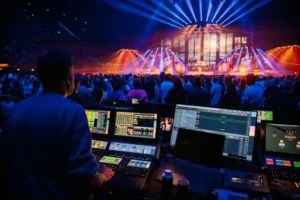
A professional lighting setup needs an effective control system. Even high-quality fixtures can deliver limited results if they cannot be controlled properly.
DMX512 is a widely used lighting control protocol that allows operators to manage brightness, colors, movement, and lighting effects.
When selecting stage lighting systems, consider:
- DMX512 compatibility.
- RDM support where required.
- Available control channels.
- Compatibility with existing lighting consoles.
- Standalone and sound-activated operating modes.
- Programming flexibility and scene control.
For larger productions, centralized control makes it easier to synchronize multiple fixtures and create complex lighting sequences.
Evaluate Energy Efficiency and Operating Costs
Energy efficiency is another important consideration, particularly for event companies and venues that operate lighting equipment regularly.
LED stage lighting is often a practical choice because it can reduce power consumption compared with many traditional lighting technologies.
When comparing equipment, evaluate:
- Power consumption.
- Expected operating life.
- Cooling and ventilation requirements.
- Maintenance costs.
- Replacement part availability.
- Overall operating efficiency.
A slightly higher initial investment may offer better long-term value when the equipment provides reliable performance and lower maintenance requirements.
Consider Venue Size and Installation Requirements
The size and layout of your venue directly influence your lighting equipment selection.
A small performance space may only require a combination of LED PAR lights, wash fixtures, and a few spotlights. Larger concert stages may need multiple moving head lights, powerful beam fixtures, and extensive lighting control systems.
Before purchasing equipment, evaluate:
- Stage dimensions and ceiling height.
- Lighting positions and mounting options.
- Truss and rigging requirements.
- Available electrical capacity.
- Indoor or outdoor operating conditions.
- Audience seating and viewing angles.
For outdoor productions, check the fixture’s IP rating and suitability for exposure to dust, moisture, and changing weather conditions.
Professional installation and proper rigging are also essential for equipment safety and reliable operation.
Prioritize Durability and Manufacturer Support
Live event lighting equipment is frequently transported, installed, operated, and dismantled. This makes durability an important purchasing consideration.
Look for fixtures with quality construction, effective cooling systems, dependable electronic components, and suitable protection for their intended environment.
It is also important to evaluate the manufacturer’s support services.
A reliable supplier should be able to provide:
- Product specifications and technical documentation.
- Installation and commissioning guidance.
- Warranty information.
- Spare parts availability.
- Technical assistance.
- Customization and OEM manufacturing options.
Working with an experienced manufacturer can make equipment sourcing easier, especially for distributors, rental companies, and large-scale event production businesses.
Build a Balanced Stage Lighting Setup
The best stage lighting setup is not necessarily the one with the highest number of fixtures. It is the one that provides the right combination of illumination, visual effects, and operational flexibility.
A balanced setup may include:
| Equipment | Primary Purpose |
| LED PAR Lights | General stage illumination |
| Moving Head Lights | Dynamic movement and effects |
| Beam Lights | Focused aerial lighting effects |
| Wash Lights | Broad and even illumination |
| Follow Spotlights | Highlighting performers |
| Lighting Controllers | Managing and synchronizing fixtures |
Combining different fixture types allows lighting designers to create more engaging productions while maintaining proper visibility across the stage.
Compare Suppliers Before Making a Purchase
Choosing the right supplier is just as important as choosing the right lighting equipment.
Professional buyers should compare manufacturers based on product quality, technical specifications, customization capabilities, production experience, and after-sales support.
If you are purchasing equipment in bulk, ask about wholesale pricing, OEM services, packaging options, production timelines, and international shipping.
For businesses building their own lighting product lines, OEM manufacturing can provide opportunities to customize products with private branding and packaging.
JJY Stage offers professional stage lighting, LED display, and audio solutions for international B2B buyers. With manufacturing experience, OEM capabilities, and technical support, the company helps event production businesses, distributors, and entertainment venues source equipment for different project requirements.
Why Choose JJY Stage for Professional Stage Lighting Equipment?
Selecting an experienced equipment manufacturer can simplify your purchasing process and support the long-term success of your event projects.
JJY Stage, operated by Shenzhen Jingjiu Yuan Electronics Co., Ltd., specializes in professional stage lighting, audio systems, and LED display solutions.
Its product range includes moving head lights, stage spotlights, LED stage lights, and other professional lighting solutions designed for concerts, theaters, entertainment venues, and live productions.
JJY Stage also provides OEM manufacturing, product customization, engineering design, installation, commissioning, and technical consulting services.
Whether you are a stage equipment distributor, event production company, rental business, or venue operator, JJY Stage can help you explore suitable equipment and customized solutions for your requirements.
Final Thoughts
Choosing the best stage lighting equipment requires careful consideration of your event requirements, venue size, fixture types, brightness, control compatibility, energy efficiency, and equipment durability.
A well-planned lighting system improves stage visibility, creates atmosphere, and helps deliver a more engaging experience for audiences.
Whether you need LED stage lights for a small venue or a complete professional lighting system for large-scale concerts, investing in the right equipment and working with a reliable manufacturer can make a significant difference.
Looking for reliable professional stage lighting equipment for your next project? Explore the lighting solutions available at JJY Stage and contact the team to discuss your product requirements, OEM options, and wholesale inquiries.
Frequently Asked Questions (FAQs)
1. What is the best stage lighting equipment for live events?
The best equipment depends on your event type and venue. Moving head lights, LED PAR lights, beam lights, wash lights, and follow spotlights are commonly used in professional live event lighting setups.
2. Are LED stage lights suitable for professional events?
Yes. LED stage lights offer energy efficiency, flexible color control, long operating life, and versatile lighting effects. They are suitable for concerts, theaters, corporate events, and entertainment venues.
3. What is the difference between beam lights and wash lights?
Beam lights produce narrow, concentrated light beams for dramatic visual effects. Wash lights provide wider illumination to cover performers, backgrounds, and larger stage areas.
4. What does DMX512 mean in stage lighting?
DMX512 is a digital communication protocol used to control stage lighting fixtures. It allows lighting operators to manage functions such as brightness, colors, movement, and special effects through compatible controllers.
5. How do I choose stage lighting equipment for a large concert?
Consider stage dimensions, fixture brightness, beam angles, movement capabilities, control compatibility, and installation requirements. Large concerts often use a combination of moving head lights, beam fixtures, LED wash lights, and professional lighting controllers.
6. What should I look for in a stage lighting manufacturer?
Look for manufacturing experience, product quality, technical support, warranty coverage, customization options, and reliable production capabilities. For bulk buyers, OEM services and export support are also important.