
Why Lighting Matters in Cultural Tourism Projects
Cultural tourism has evolved far beyond static displays and traditional sightseeing. Modern visitors expect immersive experiences that blend storytelling, architecture, entertainment, and technology into one memorable journey. Whether it is a heritage village, historical landmark, outdoor theater, cultural festival, theme park, or tourism street, lighting has become one of the most influential tools for shaping visitor experiences. Strategic lighting can transform an ordinary attraction into a captivating destination that encourages longer stays, stronger emotional engagement, and increased social media sharing.
Professional cultural tourism lighting does more than illuminate a space. It highlights architectural details, guides visitor movement, creates atmosphere, enhances safety, and supports storytelling. A well-designed lighting system can make a centuries-old building feel alive at night or turn a public square into a dynamic performance venue. As competition between tourism destinations grows, lighting design has become a key factor in attracting and retaining visitors.
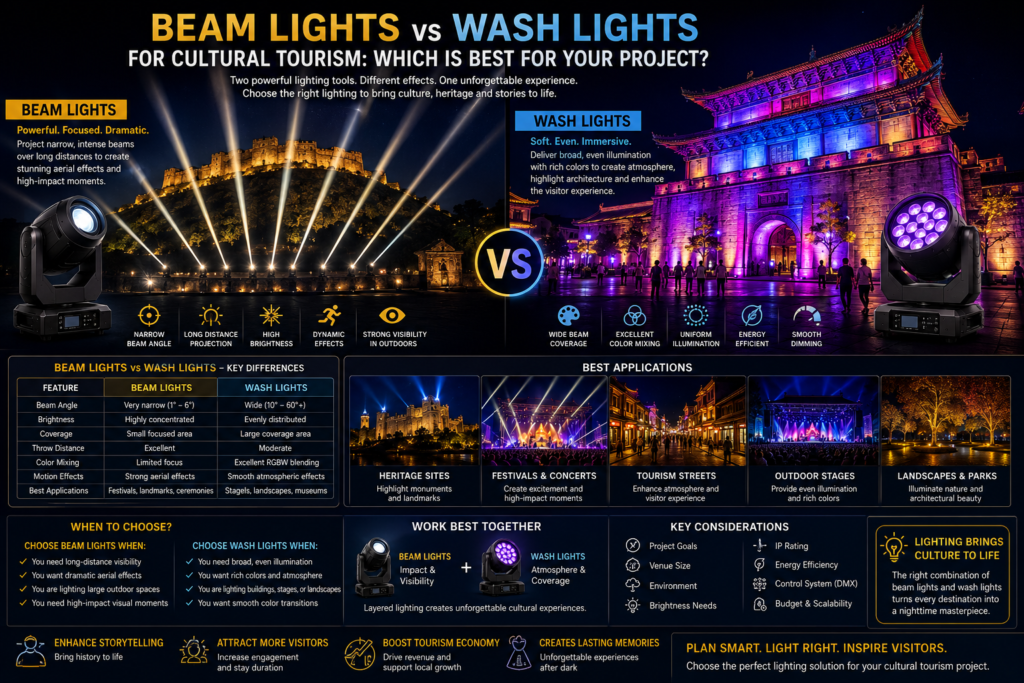
Among the most widely used fixtures in modern professional stage lighting are beam lights and wash lights. Both play important roles in cultural tourism projects, yet they serve very different purposes. Understanding the strengths, limitations, and ideal applications of each fixture type is essential for project developers, architects, lighting designers, and tourism authorities seeking the best results.
What Are Beam Lights?
Beam lights are high-intensity lighting fixtures designed to project a concentrated shaft of light over long distances. Unlike conventional fixtures that spread illumination across a broad area, beam lights focus light into a narrow beam angle, creating highly visible light columns and dramatic visual effects. Modern moving head beam lights often feature advanced optics, rotating prisms, color wheels, and intelligent movement capabilities that allow designers to create dynamic and attention-grabbing displays.
One of the defining characteristics of beam lights is their narrow beam angle. Many professional beam fixtures operate within a range of approximately 1° to 6°, allowing the light to remain focused even across large outdoor spaces. This concentrated output produces striking aerial effects that can cut through haze, fog, and atmospheric conditions with exceptional visibility.
Key Characteristics of Beam Lights
Beam lights are recognized for:
- Extremely narrow beam angles
- High brightness output
- Long projection distances
- Fast-moving effects
- Strong visibility in outdoor environments
- Dynamic aerial lighting patterns
Because of these features, beam lights are commonly selected for large-scale events, festivals, concerts, opening ceremonies, and landmark lighting installations.
Common Applications of Moving Head Beam Lights
In cultural tourism environments, beam lights are frequently used to create iconic visual moments. Designers may use them to highlight castle towers, heritage structures, mountain attractions, cultural monuments, or performance stages. Their ability to produce visible sky beams makes them especially effective for attracting attention from a distance and creating memorable nighttime experiences.
What Are Wash Lights?
Wash lights are fixtures designed to provide broad, even illumination across large areas. Rather than focusing on a single point, they spread light smoothly over stages, buildings, landscapes, and performance spaces. Modern moving head wash lights utilize advanced optical systems and RGBW LED lighting technology to deliver rich color mixing, smooth transitions, and uniform coverage.
The primary purpose of wash lighting is to create atmosphere and provide foundational illumination. Wash lights often feature beam angles ranging from 10° to 60° or even wider, depending on the fixture and zoom capabilities. This wide coverage makes them ideal for illuminating backgrounds, architectural surfaces, landscapes, and performance stages.
Core Features of Wash Lights
Wash lights typically offer:
- Wide beam coverage
- Smooth color blending
- Uniform light distribution
- RGBW LED technology
- Soft illumination
- Excellent dimming performance
These features make wash fixtures an essential component of modern LED stage lighting systems.
Applications of Moving Head Wash Lights
Wash lights are commonly used to illuminate building facades, museum exhibits, tourism streets, public plazas, and outdoor performance stages. Their ability to create vibrant color scenes helps designers establish mood, reinforce storytelling themes, and enhance visitor engagement.
Beam Lights vs Wash Lights: Key Differences
Understanding the differences between beam lights vs wash lights is crucial when designing effective tourism lighting solutions.
| Feature | Beam Lights | Wash Lights |
| Beam Angle | Very narrow (1°–6°) | Wide (10°–60°+) |
| Brightness | Highly concentrated | Evenly distributed |
| Coverage | Small focused area | Large coverage area |
| Throw Distance | Excellent | Moderate |
| Color Mixing | Limited focus | Excellent RGBW blending |
| Motion Effects | Strong aerial effects | Smooth atmospheric effects |
| Best Applications | Festivals, landmarks, ceremonies | Stages, landscapes, museums |
| Outdoor Performance | Excellent | Excellent with proper design |
| Energy Efficiency | High | Very high with LED systems |
| Cost | Generally higher for advanced effects | Varies by output and features |
The choice depends entirely on project goals. Beam lights excel at creating impact and visibility, while wash lights excel at creating atmosphere and visual consistency.
Advantages of Beam Lights
Beam lights are often chosen when visual impact is the primary objective. Their concentrated output creates dramatic effects that immediately capture attention. In large outdoor tourism attractions, visibility is often a major challenge, especially when structures span significant distances. Beam fixtures solve this issue by producing powerful shafts of light that remain visible from far away.
Long-Distance Projection and Visibility
One of the greatest strengths of beam lights is their ability to project over long distances while maintaining intensity. This makes them particularly useful for:
- Landmark highlighting
- Grand opening ceremonies
- Outdoor concerts
- Cultural festivals
- Tourism promotion events
- Nighttime destination branding
Beam lights can also create synchronized movement patterns that add excitement and energy to performances. When combined with haze or atmospheric effects, they produce stunning visual displays that enhance audience engagement and emotional impact.
Advantages of Wash Lights
Wash lights serve as the foundation of most professional lighting systems. Their ability to evenly illuminate large areas makes them indispensable for cultural attractions that require balanced visibility and immersive ambiance.
Smooth Coverage and Color Blending
One major advantage of wash fixtures is their superior color-mixing capability. Modern RGBW LED systems allow designers to produce millions of color variations with seamless transitions. This flexibility supports thematic storytelling, seasonal events, and customized visitor experiences.
Additional benefits include:
- Uniform illumination
- Reduced shadows
- Excellent landscape lighting
- Enhanced architectural presentation
- Energy-efficient operation
- Improved visitor comfort
Because wash lights create soft and welcoming environments, they are widely used for cultural storytelling installations and heritage site presentations.
Applications in Cultural Tourism Projects
Heritage Sites and Historical Buildings
Historical sites require careful lighting design that respects architectural integrity while improving visibility and visitor engagement. Beam lights can highlight towers, domes, and monuments, while wash lights provide gentle illumination across building facades. Together, they help reveal architectural details without overwhelming the site’s historical character.
Theme Parks and Cultural Festivals
Theme parks often rely on dynamic lighting experiences to maintain excitement throughout the visitor journey. Beam lights create dramatic effects during performances and parades, while wash lights establish immersive environments throughout themed zones. The combination enhances entertainment value and encourages repeat visits.
Museums, Tourism Streets, and Public Squares
Museums and tourism districts typically prioritize visual comfort and storytelling. Wash lights are commonly used to illuminate exhibits, pathways, and landscapes. Beam fixtures may be added for special events, promotional activities, or focal-point attractions that require additional visual emphasis.
When Should You Choose Beam Lights?
Beam lights are ideal when your project requires strong visual impact and long-distance visibility. They perform exceptionally well in large outdoor environments where lighting effects must remain visible across significant distances.
Choose beam lights for:
- Large outdoor venues
- Opening ceremonies
- Cultural festivals
- Concert productions
- Landmark illumination
- Tourism destination branding
- Nighttime attraction marketing
Projects that aim to create memorable visual spectacles often benefit significantly from beam lighting technology.
When Should You Choose Wash Lights?
Wash lights are the preferred option when the goal is broad illumination, immersive atmosphere, and color-rich storytelling. They help create comfortable viewing environments while supporting architectural and landscape aesthetics.
Choose wash lights for:
- Museums
- Indoor exhibitions
- Heritage displays
- Landscape lighting
- Tourism streets
- Cultural storytelling experiences
- Stage performances
- Ambient lighting applications
Wash fixtures are particularly effective when visitors need to appreciate details, textures, and colors within an attraction.
Can Beam Lights and Wash Lights Work Together?
Absolutely. In fact, many successful cultural tourism projects combine both fixture types to achieve the best possible results.
Layered Lighting Design
Professional designers often use wash lights as the foundation layer and beam lights as the accent layer. Wash fixtures establish atmosphere, color, and visibility, while beam fixtures add movement, excitement, and focal points.
Benefits of combining both include:
- Enhanced depth and dimension
- Improved storytelling
- Dynamic visitor experiences
- Better audience engagement
- Greater visual flexibility
Using DMX lighting control systems, designers can synchronize beam and wash fixtures into cohesive lighting scenes. Intelligent programming enables color harmony, smooth transitions, and immersive experiences that evolve throughout the evening.
How to Choose the Right Lighting Fixture
Selecting the right fixture involves evaluating both technical and operational requirements.
Technical and Budget Considerations
Consider the following factors:
| Selection Factor | Importance |
| Project Objectives | Defines fixture requirements |
| Venue Size | Determines coverage needs |
| Indoor vs Outdoor Use | Influences fixture specifications |
| IP Rating | Essential for weather protection |
| Brightness Requirements | Impacts visibility |
| Beam Angle | Affects coverage and intensity |
| Energy Efficiency | Reduces operating costs |
| Maintenance | Influences long-term ownership |
| Budget | Determines system scope |
| Scalability | Supports future expansion |
| Control Systems | Enables advanced programming |
Projects with flexible budgets often achieve the best results through a balanced combination of beam and wash fixtures.
Common Mistakes to Avoid
Many lighting projects encounter avoidable issues during planning and installation.
Common mistakes include:
- Using beam lights for full-stage illumination.
- Using wash lights for long-distance projection.
- Ignoring environmental IP ratings.
- Poor fixture placement.
- Inadequate DMX programming.
- Overlooking maintenance access.
- Failing to consider future expansion.
Avoiding these mistakes can significantly improve performance, reliability, and return on investment.
Future Trends in Cultural Tourism Lighting
The future of cultural tourism lighting is becoming increasingly intelligent, interactive, and sustainable. Advanced control systems now allow lighting installations to adapt in real time based on visitor behavior, weather conditions, and event schedules.
Emerging trends include:
- AI-assisted lighting control
- Interactive visitor-triggered effects
- Advanced RGBW LED systems
- Projection mapping integration
- Laser-enhanced experiences
- Cloud-based monitoring
- Sustainable energy-efficient lighting
- Smart tourism infrastructure
As technology continues to evolve, lighting will play an even greater role in creating immersive tourism destinations that attract visitors and strengthen cultural storytelling.
Discover how Cultural Tourism Lighting transforms heritage sites, museums, theme parks, and public attractions into immersive nighttime experiences. Learn how LED lighting, projection mapping, intelligent controls, and architectural lighting work together to enhance storytelling, attract more visitors, and create unforgettable cultural destinations after dark.
Conclusion
When evaluating beam lights vs wash lights, the best choice depends on your project’s goals. Beam lights excel at creating dramatic visual effects, long-distance visibility, and high-impact experiences. Wash lights provide smooth coverage, excellent color mixing, and immersive atmosphere. Both fixtures offer valuable benefits for cultural tourism attractions, heritage sites, festivals, museums, and outdoor performance venues.
Many of today’s most successful tourism destinations combine beam lights and wash lights within a unified lighting strategy. This layered approach delivers both spectacle and atmosphere, helping attractions create memorable visitor experiences while maximizing operational flexibility. Working with an experienced professional stage lighting manufacturer ensures that your project receives the ideal combination of fixtures, controls, and design expertise.
Frequently Asked Questions
1. What is the difference between beam lights and wash lights?
Beam lights create narrow, concentrated beams for dramatic effects, while wash lights provide wide, even illumination across larger areas.
2. Which lighting is better for outdoor cultural tourism?
Both are valuable. Beam lights provide visibility and impact, while wash lights create atmosphere and architectural illumination.
3. Can beam lights and wash lights be used together?
Yes. Combining both creates layered lighting designs with greater depth, flexibility, and visual appeal.
4. Are beam lights suitable for heritage sites?
Yes. Beam lights can highlight architectural features and landmarks when used thoughtfully.
5. What beam angle is best for stage lighting?
The ideal beam angle depends on the application. Beam fixtures typically use narrow angles, while wash fixtures use wider coverage angles.
6. Are wash lights energy-efficient?
Modern LED wash lights are highly energy-efficient and offer excellent color performance.
7. How do moving head lights improve performances?
They provide dynamic movement, programmable effects, and greater creative flexibility.
8. Which lighting fixture is best for festivals?
Most festivals use a combination of beam lights and wash lights for maximum impact.
9. What is the role of DMX in beam and wash lighting?
DMX enables centralized control, synchronization, and programming of lighting effects.
10. How do I choose the right stage lighting fixture?
Evaluate project goals, venue size, environmental conditions, brightness requirements, and budget before selecting fixtures.