
Introduction
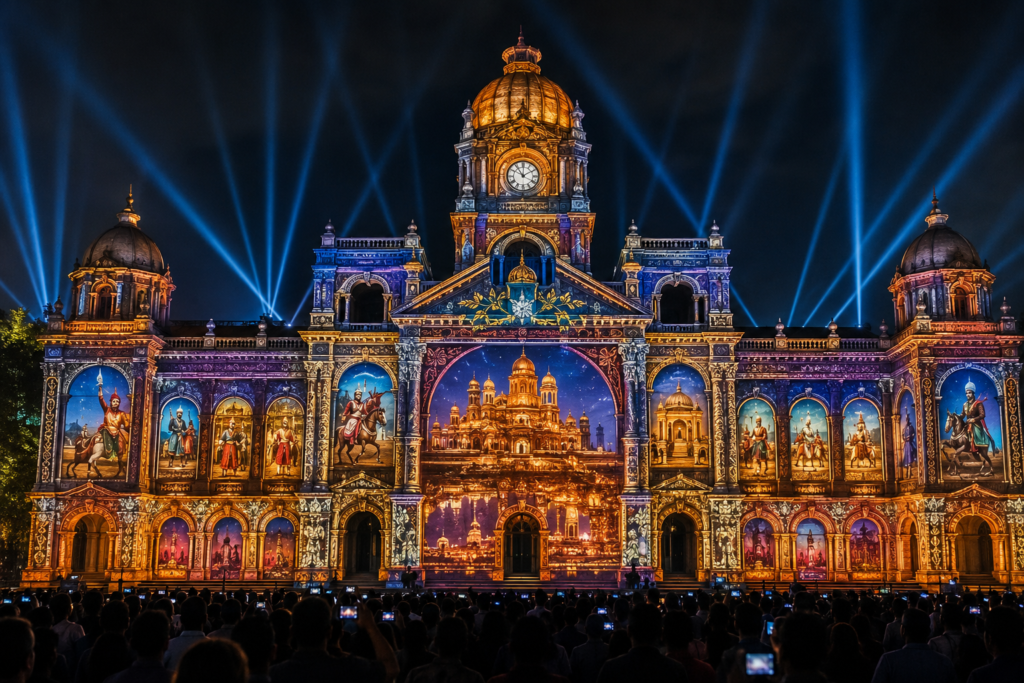
Historical buildings are more than architectural landmarks—they are living records of culture, identity, and tradition. As cultural tourism continues to evolve, destinations are looking for innovative ways to present history in a more engaging and memorable format without compromising the integrity of heritage sites. One technology that has transformed the visitor experience is projection mapping for historical buildings.
Unlike conventional architectural lighting, projection mapping combines high-brightness projectors, digital animation, synchronized audio, and intelligent lighting control to transform historic façades into immersive storytelling canvases. Detailed visual effects can be projected directly onto castles, museums, temples, churches, monuments, and government buildings, allowing visitors to experience history through light, motion, and sound rather than static displays.
One of the greatest advantages of projection mapping for historical buildings is that it is completely non-invasive. Since no permanent physical modifications are required, conservation authorities can preserve the original architecture while introducing dynamic multimedia experiences for modern audiences. This makes projection mapping an ideal solution for heritage conservation projects, cultural tourism developments, nighttime attractions, and seasonal festivals.
Today, governments, tourism departments, architects, museum operators, and lighting designers are increasingly integrating architectural projection mapping, intelligent stage lighting, and multimedia technologies to create unforgettable cultural experiences that boost tourism, extend visitor stays, and strengthen local economies.
A beam moving head light is a powerful stage lighting fixture designed to produce sharp, concentrated beams that create dramatic aerial effects for concerts, theaters, cultural tourism projects, and outdoor events. With fast pan and tilt movement, high brightness, and DMX control, beam moving head lights integrate seamlessly with projection mapping and multimedia shows, adding depth, movement, and visual impact to any professional lighting design.
What Is Projection Mapping?
Projection mapping is an advanced visual display technology that projects digital content precisely onto three-dimensional surfaces instead of flat screens. Using specialized software, projectors are calibrated to match the exact geometry of a building, allowing animations and graphics to interact naturally with architectural features.
Instead of simply displaying a video, projection mapping turns the building itself into part of the visual presentation. Windows may appear to open, walls can seem to crumble or rebuild, statues can come to life, and historical scenes can unfold directly across the façade.
How Projection Mapping Differs from Traditional Projection
Traditional projection simply displays rectangular images on flat surfaces, making it suitable for presentations, cinemas, and indoor displays.
Projection mapping, however:
- Uses precise 3D building measurements
- Aligns content with architectural details
- Creates realistic optical illusions
- Supports interactive multimedia storytelling
- Integrates with lighting, lasers, and audio systems
- Produces highly immersive visitor experiences
Because every projection is custom-designed for a specific structure, the audience experiences visuals that appear naturally embedded within the building itself.
2D vs. 3D Projection Mapping
| Feature | 2D Projection Mapping | 3D Projection Mapping |
| Surface | Flat or simple | Complex architectural façades |
| Visual Depth | Limited | Highly realistic depth effects |
| Building Interaction | Basic | Full architectural integration |
| Content Complexity | Moderate | Advanced animations and illusions |
| Viewer Experience | Standard | Fully immersive |
For heritage attractions, 3D projection mapping delivers significantly greater visual impact by incorporating windows, columns, arches, domes, sculptures, and decorative stonework into the storytelling.
Core Technologies Behind Projection Mapping
Modern projection mapping technology combines multiple professional systems, including:
- High-lumen laser projectors
- Projection mapping software
- Media servers
- 3D modeling applications
- Edge blending technology
- Geometric correction
- DMX lighting control
- Audio synchronization
- Network-based show control
These technologies work together to ensure every animation aligns perfectly with the building while remaining synchronized with lighting and sound.
Why Projection Mapping Is Ideal for Historical Architecture
Historical landmarks often feature intricate architectural details that naturally enhance visual storytelling. Projection mapping allows designers to emphasize these unique features without physically altering or covering them.
Key advantages include:
- No drilling or permanent installation
- Temporary and reversible setup
- Preservation of original materials
- Flexible seasonal content
- Easy updates for different events
- Compatibility with conservation requirements
As a result, projection mapping has become one of the most effective digital storytelling tools for heritage conservation and cultural tourism.
How Projection Mapping Works
Creating a successful projection mapping for historical buildings project requires careful planning, technical precision, and collaboration between architects, conservation specialists, AV engineers, lighting designers, and content creators. Every stage of the workflow is designed to protect the building while delivering a seamless visual experience.
Step 1: Site Survey
The process begins with a detailed site inspection. Engineers assess the building’s dimensions, façade materials, surrounding environment, and potential projector locations. They also evaluate ambient lighting, visitor viewing areas, power availability, and weather exposure.
A comprehensive site survey helps identify any physical or environmental constraints before installation begins.
Step 2: Building Measurement and 3D Scanning
Accurate measurements are essential for precise projection alignment. Teams typically use:
- LiDAR scanning
- Drone photogrammetry
- Laser distance meters
- CAD drawings
- High-resolution photography
These tools capture every architectural feature, ensuring the projected content fits the building perfectly.
Step 3: 3D Modeling
The collected data is converted into a detailed digital model of the structure. Designers recreate windows, columns, arches, roofs, statues, and decorative elements within specialized 3D software.
This virtual model serves as the foundation for all animation and projection design.
Step 4: Content Creation
Creative teams develop visual content that complements the building’s history and architecture. Instead of generic animations, they produce custom sequences that reflect local culture, historical events, legends, or artistic themes.
Common content elements include:
- Historical reconstructions
- Animated architectural transformations
- Cultural storytelling
- Artistic visual effects
- Interactive multimedia scenes
- Seasonal celebrations
The goal is to enhance the audience’s understanding of the site while creating an emotionally engaging experience.
Step 5: Projection Alignment
Once projectors are installed, technicians carefully align each image with the building’s physical features. Even slight misalignment can reduce visual quality, making precise calibration essential.
Step 6: Edge Blending
Large historical buildings often require multiple projectors. Edge blending merges overlapping projections into a single seamless image without visible borders or brightness differences.
Step 7: Geometric Correction
Historic façades are rarely flat. Advanced geometric correction compensates for irregular surfaces, curved walls, towers, balconies, and decorative stonework to maintain accurate image proportions.
Step 8: System Calibration
Before the show opens, technicians calibrate:
- Brightness
- Color accuracy
- Contrast
- Focus
- Frame synchronization
- Audio timing
- Lighting cues
This ensures consistent performance throughout the presentation.
Step 9: Live Playback and Show Control
The final show is managed through a central media server that synchronizes projection content with:
- DMX-controlled stage lighting
- Architectural lighting
- Laser systems
- Audio playback
- Special effects
- Interactive sensors (if used)
Automation enables scheduled performances with minimal operator intervention while maintaining reliable show quality.
Projection Mapping Workflow
| Stage | Purpose | Key Technologies |
| Site Survey | Assess building conditions and environment | Laser measurement, photography, drones |
| Building Measurement | Capture accurate dimensions | LiDAR, CAD, photogrammetry |
| 3D Modeling | Create a digital replica of the façade | 3D modeling software |
| Content Design | Develop visual storytelling animations | Motion graphics, video mapping software |
| Projection Alignment | Match visuals to architectural features | Projection mapping software |
| Edge Blending | Combine multiple projectors seamlessly | Media servers, blending tools |
| Geometric Correction | Adjust for uneven building surfaces | Warp and correction software |
| System Calibration | Optimize image quality and synchronization | Color calibration, DMX control |
| Live Playback | Deliver synchronized multimedia shows | Media server, audio, lighting, automation |
Benefits of Projection Mapping for Historical Buildings
The growing adoption of projection mapping for historical buildings is driven by its ability to transform heritage sites into engaging nighttime attractions without compromising their historical value. Unlike permanent renovations or structural additions, projection mapping is completely reversible, allowing destinations to modernize visitor experiences while respecting conservation standards.
For governments, tourism authorities, museums, and cultural organizations, it offers a powerful way to increase public engagement, extend visiting hours, and create memorable multimedia events.
Increased Visitor Engagement
Traditional sightseeing often relies on static displays or guided tours. Projection mapping adds movement, color, and storytelling, making historical narratives more engaging for visitors of all ages.
Dynamic visual effects encourage audiences to connect emotionally with the site’s history, leading to longer visits and higher visitor satisfaction.
Key Advantages
- Creates memorable nighttime attractions
- Appeals to families and younger audiences
- Encourages repeat visits
- Makes history easier to understand
- Enhances educational experiences
Powerful Cultural Storytelling
Every historical building has a unique story. Through architectural projection mapping, these stories can be presented using animation, music, narration, and synchronized lighting.
Examples include:
- Ancient civilizations
- Local legends
- National independence movements
- Cultural traditions
- Famous historical figures
- Architectural evolution
Instead of simply reading information panels, visitors experience history unfolding directly on the building itself.
Supports Nighttime Tourism
Many heritage sites experience lower visitor numbers after sunset. Projection mapping transforms these locations into vibrant evening destinations.
Benefits include:
- Extended operating hours
- Increased hotel occupancy
- More local business activity
- Evening entertainment opportunities
- Reduced daytime crowding
For cities focused on cultural tourism, nighttime multimedia shows help generate additional economic value while showcasing local heritage.
Minimal Physical Impact
One of the greatest strengths of heritage building projection mapping is that it requires no permanent changes to the structure.
Unlike traditional renovations:
- No drilling into historic walls
- No repainting
- No permanent fixtures
- No damage to original materials
After the event, equipment can be removed, leaving the building exactly as it was before installation.
Flexible Content Updates
Projection mapping content can be updated whenever needed without replacing hardware.
Organizations can create different shows for:
- National holidays
- Cultural festivals
- Seasonal celebrations
- Educational programs
- Tourism campaigns
- Anniversary events
This flexibility allows the same building to offer fresh visitor experiences throughout the year.
Energy-Efficient Technology
Modern laser projectors consume less power than older projection systems while providing brighter, sharper images and longer operating life.
Additional sustainability benefits include:
- Long laser light source lifespan
- Lower maintenance requirements
- Reduced lamp replacement
- Improved energy efficiency
- Better environmental performance
These advantages align well with sustainable tourism initiatives and green public infrastructure projects.
Strong Social Media Appeal
Projection mapping naturally creates highly shareable visual content. Visitors frequently capture and post photos and videos of immersive light shows on social media platforms, increasing organic promotion for the destination.
This user-generated content helps:
- Raise destination awareness
- Attract new visitors
- Strengthen tourism branding
- Support digital marketing campaigns
Temporary Yet High-Impact Installations
Because shows are software-driven, projection mapping can be installed for:
- Weekend festivals
- National celebrations
- Museum exhibitions
- Heritage anniversaries
- Tourism launches
- Public events
Temporary installations allow organizers to deliver premium experiences without permanent infrastructure changes.
Equipment Needed for Projection Mapping
A successful projection mapping for historical buildings project depends on selecting professional-grade equipment that delivers reliable performance, precise alignment, and outstanding image quality in outdoor environments.
Each component plays a critical role in creating a seamless multimedia presentation.
High-Lumen Laser Projectors
The projector is the heart of any mapping system.
Outdoor heritage sites typically require projectors ranging from 20,000 to over 50,000 lumens, depending on:
- Building size
- Projection distance
- Ambient lighting
- Desired brightness
- Weather conditions
Laser projectors are preferred because they offer:
- Higher brightness
- Longer lifespan
- Excellent color consistency
- Lower maintenance
- Instant startup
- Reliable outdoor performance
Projection Lenses
Different buildings require different throw distances.
Professional lenses include:
- Ultra-short throw
- Short throw
- Standard throw
- Long throw
Choosing the correct lens ensures the projected image fills the façade accurately without distortion.
Media Servers
Media servers manage all playback and synchronization.
Their responsibilities include:
- Video playback
- Edge blending
- Geometric correction
- Multi-projector synchronization
- Show scheduling
- Backup management
- Real-time control
For large cultural tourism projects, redundant media servers provide uninterrupted operation if one system fails.
Projection Mapping Software
Specialized software is used to align digital content precisely with the building’s architecture.
Common capabilities include:
- 3D mapping
- Surface calibration
- Content warping
- Projection alignment
- Animation preview
- Multi-projector control
Professional software significantly improves accuracy and reduces setup time.
DMX Lighting Controllers
Projection mapping becomes even more immersive when synchronized with intelligent lighting.
DMX controllers coordinate:
- Moving head fixtures
- Wash lights
- Beam lights
- LED architectural lighting
- Pixel lighting
- Special effects
This synchronization ensures lighting changes occur precisely alongside projected visuals.
Professional Audio Systems
High-quality sound enhances storytelling by adding narration, music, and environmental effects.
Audio systems typically include:
- Digital mixers
- Networked amplifiers
- Line-array speakers
- Subwoofers
- Delay speakers for large venues
- Audio processors
Perfect synchronization between sound and visuals is essential for a truly immersive experience.
Moving Head Lights
Moving Head Lights add motion and dramatic effects that complement projected content.
They can:
- Highlight architectural features
- Create aerial beam effects
- Follow performers
- Produce dynamic transitions
- Enhance key storytelling moments
Waterproof Stage Lighting
Outdoor heritage sites often operate in unpredictable weather conditions.
IP-rated fixtures provide:
- Rain protection
- Dust resistance
- Reliable long-term performance
- Reduced maintenance
- Improved operational safety
Waterproof Stage Lighting is particularly important for permanent tourism installations.
Network Infrastructure
Modern multimedia systems rely on robust communication networks.
Typical infrastructure includes:
- Fiber-optic connections
- Ethernet switches
- Art-Net and sACN protocols
- Timecode synchronization
- Wireless monitoring
- Remote diagnostics
Reliable networking ensures every projector, lighting fixture, and media server operates in perfect harmony.
Backup Power and Redundancy
Large-scale cultural attractions cannot afford unexpected downtime.
Professional installations often include:
- UPS systems
- Backup generators
- Redundant media servers
- Spare projectors
- Emergency networking equipment
These safeguards help maintain uninterrupted performances during public events.
Applications of Projection Mapping in Cultural Tourism
The versatility of projection mapping makes it suitable for a wide range of cultural tourism destinations. By combining light, animation, and storytelling, organizations can create engaging experiences that celebrate history while attracting modern audiences.
Common applications include:
- Heritage Sites: Revive historical events through immersive visual storytelling.
- Museums: Extend exhibitions onto building façades for engaging nighttime experiences.
- Historical Landmarks: Highlight architectural details with dynamic façade projections.
- Castles and Fortresses: Recreate battles, royal ceremonies, and legends.
- Temples and Religious Sites: Present cultural narratives while respecting sacred spaces.
- Churches and Cathedrals: Showcase stained glass, architecture, and historical milestones.
- Government Buildings: Celebrate national events and commemorate important anniversaries.
- Public Squares: Host outdoor multimedia shows during civic celebrations.
- Cultural Festivals: Enhance festivals with synchronized projection, lighting, and sound.
- Light Festivals: Create visually striking attractions that draw local and international visitors.
- Theme Parks: Integrate projection mapping into immersive rides and nighttime spectaculars.
- Memorial Sites: Deliver respectful visual tributes and educational presentations.
These applications demonstrate how projection mapping for historical buildings can enrich cultural tourism, encourage heritage appreciation, and create unforgettable visitor experiences.
Projection Mapping vs. Traditional Architectural Lighting
Although both technologies enhance buildings after dark, they serve different purposes. Projection mapping for historical buildings focuses on immersive storytelling and dynamic visuals, while traditional architectural lighting emphasizes permanent illumination and architectural enhancement.
| Feature | Projection Mapping | Traditional Architectural Lighting |
| Dynamic Content | Animated visuals, videos, and interactive effects | Static lighting scenes |
| Storytelling | Excellent for historical narratives and cultural presentations | Limited storytelling capability |
| Installation Impact | Temporary and non-invasive | Often involves permanent fixture installation |
| Flexibility | Content can be updated anytime | Lighting design changes require hardware adjustments |
| Visitor Engagement | Highly immersive multimedia experience | Primarily enhances appearance |
| Cost | Higher initial setup but reusable content | Lower initial cost for simple installations |
| Maintenance | Requires projector and media server maintenance | Mainly fixture cleaning and lamp replacement |
| Best Applications | Heritage sites, museums, festivals, tourism attractions | Permanent façade lighting, monuments, public buildings |
In many projects, the most effective solution combines both approaches. Permanent architectural lighting enhances the building every night, while projection mapping delivers special shows during festivals, tourism seasons, and cultural events.
Best Practices for Projection Mapping on Historical Buildings
A successful projection mapping for historical buildings project balances technical performance with heritage preservation. Following industry best practices helps protect valuable architecture while delivering a memorable visitor experience.
Follow Heritage Conservation Guidelines
Before installation, consult conservation authorities, architects, and heritage specialists. Equipment placement should avoid damaging historic materials, and all installations should be fully reversible.
Control Brightness Carefully
Excessive brightness can reduce image quality and distract from architectural details. Select projector brightness based on:
- Building size
- Viewing distance
- Ambient lighting
- Surface color
- Local regulations
Balanced illumination produces a more natural and comfortable viewing experience.
Choose Appropriate Colors
Historical buildings often feature natural stone, brick, or aged materials. Content should complement rather than overpower these textures.
Use:
- Warm tones for historical storytelling
- Vibrant colors for festivals and celebrations
- High contrast for detailed architectural projections
- Consistent color calibration across multiple projectors
Optimize Projection Angles
Correct projector positioning minimizes distortion and shadowing. Whenever possible:
- Avoid extreme projection angles
- Maintain clear sightlines
- Prevent audience obstruction
- Reduce keystone correction requirements
Protect Equipment from the Environment
Outdoor systems should include:
- Weatherproof projector enclosures
- IP-rated stage lighting
- Ventilation systems
- Dust protection
- Temperature monitoring
- Secure mounting structures
Optimize Multimedia Content
Projection content should be designed specifically for the building rather than adapting standard videos.
High-quality shows typically include:
- Architecture-aware animations
- Local cultural themes
- Smooth transitions
- Balanced pacing
- Readable text and graphics
Consider Audience Viewing Distance
Viewing angles affect image clarity and immersion. Designers should evaluate:
- Standing areas
- Seating locations
- Crowd flow
- Accessibility
- Emergency exits
Follow Safety Regulations
Ensure compliance with local regulations covering:
- Electrical safety
- Temporary structures
- Fire prevention
- Public crowd management
- Emergency access
Schedule Preventive Maintenance
Routine inspections improve reliability by checking:
- Projector alignment
- Lens cleanliness
- Network connectivity
- Audio synchronization
- Lighting fixtures
- Backup systems
Common Challenges and How to Overcome Them
Historic buildings present unique technical challenges, but careful planning and modern technology help overcome these obstacles.
| Challenge | Practical Solution |
| Uneven building surfaces | Use detailed 3D scans and geometric correction software. |
| Ambient lighting interference | Increase projector brightness, adjust show timing, and reduce nearby lighting where possible. |
| Weather conditions | Install weatherproof enclosures and IP-rated lighting fixtures. |
| Limited projector placement | Use interchangeable projection lenses and creative mounting solutions. |
| Keystone distortion | Position projectors correctly and apply advanced warping tools. |
| Synchronization issues | Use professional media servers with timecode and DMX synchronization. |
| Equipment maintenance | Establish preventive maintenance schedules and remote monitoring. |
| Power distribution | Design dedicated electrical circuits with backup power systems. |
| Regulatory approvals | Engage conservation authorities and local agencies early in the planning process. |
Addressing these challenges during the design phase reduces project risks and ensures smooth long-term operation.
Integrating Projection Mapping with Stage Lighting
Projection mapping delivers stunning visuals, but combining it with intelligent stage lighting solutions creates a truly immersive multimedia experience.
A synchronized system allows light, video, sound, and special effects to work together, transforming historical buildings into dynamic storytelling environments.
LED Stage Lighting
LED fixtures provide energy-efficient illumination while complementing projected visuals. They can highlight architectural details before, during, and after projection sequences.
Moving Head Lights
Moving head fixtures introduce motion and dramatic beam effects that enhance key moments in the show, direct audience attention, and create depth around the building.
Beam Lights
Beam lights produce narrow, high-intensity shafts of light that add excitement during climactic scenes, festivals, and opening ceremonies.
Wash Lights
Wash fixtures evenly illuminate walls, towers, landscapes, and performance areas, helping create smooth transitions between projection scenes.
Laser Lighting
Laser systems add aerial graphics, atmospheric effects, and geometric patterns that extend the visual experience beyond the building façade.
DMX Synchronization
Using DMX lighting control, all lighting fixtures can be synchronized with:
- Projection playback
- Music
- Narration
- Laser effects
- Special effects equipment
Precise timing ensures every visual element supports the story.
Professional Audio Systems
High-quality audio strengthens emotional engagement by combining narration, orchestral music, ambient sounds, and synchronized sound effects with projection content.
Interactive Technologies
Modern installations increasingly incorporate:
- Motion sensors
- Touch interfaces
- Mobile applications
- Real-time audience participation
- AI-driven visual responses
These technologies create personalized experiences that encourage visitors to interact with the heritage site.
Future Trends in Projection Mapping
Projection mapping continues to evolve as new technologies improve realism, interactivity, and operational efficiency.
Emerging trends include:
- AI-assisted content creation for faster animation workflows.
- Real-time interactive mapping that responds to audience movement.
- 8K projection systems delivering exceptional image clarity.
- Holographic visual effects that enhance depth and realism.
- Drone-integrated multimedia shows combining aerial choreography with façade projections.
- Augmented reality (AR) experiences that extend storytelling beyond the building.
- Cloud-based show management for remote monitoring and content updates.
- Smart tourism platforms integrating ticketing, analytics, and multimedia attractions.
- Sustainable projection systems featuring energy-efficient laser projectors and intelligent power management.
These innovations will help cultural destinations deliver increasingly engaging and environmentally responsible visitor experiences.
Frequently Asked Questions (FAQs)
1. What is projection mapping?
Projection mapping is a technology that projects digital content onto three-dimensional surfaces, accurately aligning visuals with architectural features to create immersive multimedia experiences.
2. How does projection mapping work on historical buildings?
It begins with surveying and 3D modeling the building, followed by custom content creation, projector calibration, edge blending, geometric correction, and synchronized playback.
3. Does projection mapping damage heritage structures?
No. It is a non-invasive technology that requires no permanent modifications, making it suitable for heritage conservation projects.
4. What equipment is required for projection mapping?
Typical systems include high-lumen laser projectors, media servers, projection mapping software, DMX controllers, audio systems, stage lighting, networking equipment, and backup power.
5. How bright should projectors be for outdoor historical buildings?
Brightness depends on building size and ambient light, but large outdoor façades often require projectors ranging from 20,000 to 50,000+ lumens.
6. Can projection mapping be combined with stage lighting?
Yes. Integrating projection mapping with LED fixtures, moving head lights, beam lights, wash lights, lasers, and synchronized audio creates a more immersive multimedia show.
7. Is projection mapping suitable for permanent tourist attractions?
Yes. Many destinations operate permanent nighttime projection shows while regularly updating digital content for seasonal events and special celebrations.
8. What software is used for projection mapping?
Professional projection mapping software supports 3D modeling, warping, geometric correction, edge blending, content playback, and multi-projector synchronization.
9. How much maintenance does a projection mapping system require?
Routine maintenance includes cleaning projector lenses, checking alignment, testing synchronization, inspecting networking equipment, and updating software.
10. How do I choose the right projection mapping solution?
Consider the site’s architecture, conservation requirements, viewing distance, projector brightness, environmental conditions, and work with experienced projection mapping and stage lighting specialists.
Conclusion
Projection mapping for historical buildings has become one of the most innovative tools for cultural tourism, allowing destinations to preserve architectural heritage while delivering unforgettable multimedia experiences. By combining high-performance projection technology, intelligent stage lighting, synchronized audio, and creative storytelling, historical landmarks can engage modern audiences without permanent structural changes.
Whether enhancing castles, museums, temples, public squares, or UNESCO-recognized heritage sites, projection mapping supports education, tourism growth, and cultural preservation through immersive visual storytelling. Working with experienced professionals ensures every project is carefully planned, technically reliable, and respectful of conservation principles.