
Introduction
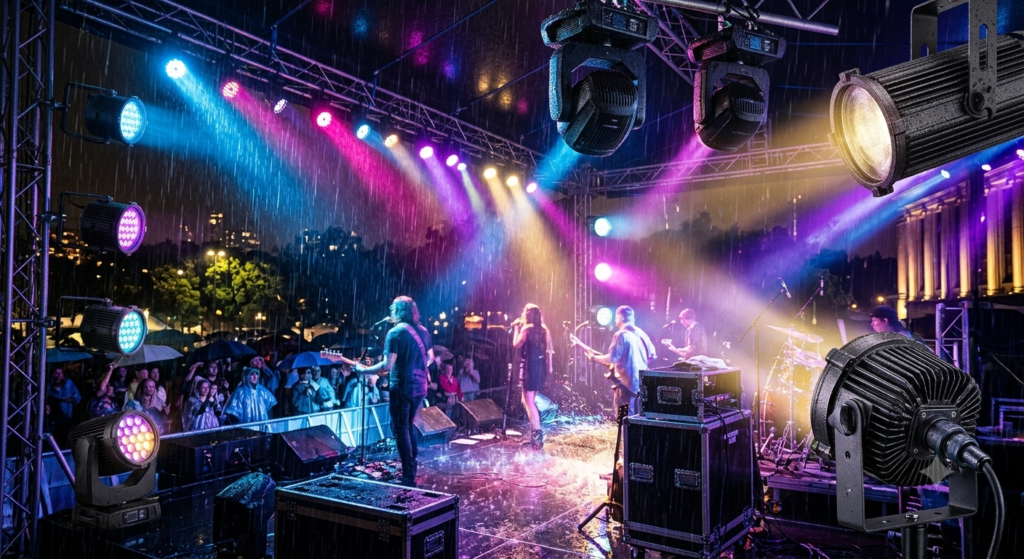
Outdoor entertainment has evolved dramatically over the past decade. Concerts, cultural festivals, tourism attractions, sporting events, theme parks, and architectural lighting projects increasingly demand lighting systems that perform flawlessly regardless of changing weather conditions. A sudden rain shower or humid evening should never interrupt a live performance or compromise audience safety. This is why waterproof stage lights have become a standard investment for professional event organizers and lighting designers.
Unlike traditional indoor fixtures, waterproof lighting is engineered to withstand rain, dust, moisture, and temperature fluctuations while maintaining reliable performance. Their sealed construction protects sensitive electronic components, allowing them to deliver consistent brightness, vibrant colors, and smooth movement even in challenging outdoor environments.
Whether you manage a touring concert, permanent outdoor venue, or seasonal festival, understanding waterproof stage lighting will help you make smarter purchasing decisions. This guide explains everything from IP ratings and fixture types to installation best practices and future technology trends.
What Is Cultural Tourism Lighting? Cultural tourism lighting is used to illuminate heritage sites, historical monuments, museums, temples, castles, and cultural landmarks, enhancing their beauty while preserving their historical character. It improves visitor safety, creates immersive nighttime experiences, and highlights architectural details that attract tourists. Discover how cultural tourism lighting transforms iconic destinations into memorable attractions after sunset.
What Are Waterproof Stage Lights?
Waterproof stage lights are professional lighting fixtures specifically designed for outdoor environments where exposure to rain, humidity, dust, and harsh weather is expected. Unlike indoor fixtures, these lights feature sealed housings, waterproof cable connections, corrosion-resistant materials, and specialized cooling systems that protect internal electronics from environmental damage.
The biggest difference between waterproof and standard indoor fixtures lies in their enclosure design. Indoor lights often rely on open ventilation for cooling, making them vulnerable to moisture and dust. Outdoor fixtures, by contrast, use sealed enclosures and weather-resistant gaskets that prevent water ingress while maintaining efficient thermal performance.
Modern waterproof LED stage lights are commonly built using:
- Aluminum die-cast housings
- Stainless steel hardware
- Waterproof power connectors
- Waterproof DMX connectors
- UV-resistant coatings
- Tempered glass lenses
- Silicone sealing gaskets
These components work together to extend equipment lifespan while reducing maintenance costs.
How They Differ from Indoor Fixtures
Indoor lighting is optimized for climate-controlled venues such as theaters, conference halls, churches, and television studios. Waterproof fixtures are designed for far more demanding conditions including:
- Heavy rainfall
- High humidity
- Coastal environments
- Snow
- Dust storms
- Large outdoor festivals
- Permanent architectural installations
Because of this rugged construction, waterproof fixtures generally have longer service lives in demanding environments.
Common Outdoor Applications
Waterproof fixtures are widely used for:
- Outdoor concerts
- Music festivals
- Stadiums
- Theme parks
- Heritage sites
- Public squares
- Cultural tourism attractions
- Landscape lighting
- Building façade illumination
- Outdoor theaters
- Holiday displays
- Fountain and water shows
Understanding IP Ratings
Whenever you purchase outdoor lighting, the first specification to examine is the IP rating (Ingress Protection rating). This internationally recognized classification indicates how effectively a fixture resists dust and water.
The IP code contains two numbers:
- The first digit measures protection against solid particles such as dust.
- The second digit measures protection against liquids.
A higher number represents stronger protection.
IP Rating Comparison
| IP Rating | Dust Protection | Water Protection | Typical Applications |
| IP54 | Limited dust protection | Splash resistant | Covered outdoor areas |
| IP65 | Dust tight | Water jets | Outdoor stages |
| IP66 | Dust tight | Powerful water jets | Concert touring |
| IP67 | Dust tight | Temporary immersion | Extreme environments |
| IP68 | Dust tight | Continuous immersion | Underwater installations |
Which IP Rating Is Best?
For most outdoor stage lighting, IP65 is considered the industry standard. It offers complete dust protection while resisting rain and water jets encountered during normal outdoor use.
Projects in coastal regions or locations with frequent severe weather often benefit from IP66 stage lights, which provide even greater protection against heavy rain and powerful water exposure.
Meanwhile, IP67 and IP68 are generally reserved for specialized installations where fixtures may experience temporary or continuous immersion in water.
Key Features of Waterproof Stage Lights
Professional weatherproof stage lighting incorporates far more than waterproof housing. Manufacturers carefully engineer every component to maximize durability, efficiency, and lighting performance.
Waterproof Housing
A sealed enclosure prevents rainwater, humidity, insects, and airborne contaminants from reaching internal electronics. Silicone gaskets and waterproof connectors maintain enclosure integrity over years of outdoor use.
Corrosion Resistance
Outdoor fixtures often face harsh environments including salt air, pollution, and UV exposure. Premium fixtures use marine-grade coatings, stainless steel fasteners, and anodized aluminum to resist corrosion.
High-Brightness LED Technology
Modern LEDs deliver exceptional brightness while consuming significantly less electricity than traditional discharge lamps. Benefits include:
- Reduced energy consumption
- Lower heat generation
- Longer operating life
- Better color consistency
- Instant start-up
Many professional fixtures exceed 50,000 hours of LED lifespan under normal operating conditions.
Intelligent DMX Control
Professional lighting systems integrate seamlessly with DMX512 control protocols, allowing operators to synchronize hundreds of fixtures during concerts and theatrical productions.
Advanced fixtures may support:
- RDM communication
- Art-Net
- sACN
- Wireless DMX
- Pixel mapping
These capabilities simplify installation while expanding creative possibilities.
RGBW Color Mixing
Many waterproof fixtures utilize RGBW LEDs rather than simple RGB chips. Adding a dedicated white LED enables:
- Better pastel colors
- Improved color accuracy
- Higher white light output
- Greater flexibility for theatrical productions
Thermal Management
Keeping electronics cool inside a sealed enclosure presents a unique engineering challenge. Manufacturers solve this through:
- Heat pipes
- Large aluminum heat sinks
- Intelligent fan systems
- Passive cooling designs
- Temperature monitoring
Effective thermal management ensures consistent brightness without overheating.
Types of Waterproof Stage Lights
Outdoor productions require different fixture types depending on venue size, audience distance, and creative goals.
Waterproof Moving Head Lights
These intelligent fixtures rotate both horizontally and vertically, creating dynamic lighting effects throughout a performance.
They are commonly used for:
- Stadium concerts
- Touring productions
- Music festivals
- Opening ceremonies
- Television broadcasts
Modern waterproof moving head lights combine beam, spot, and wash capabilities within a single fixture, reducing the number of lights required on large productions.
Waterproof Beam Lights
Beam fixtures produce extremely narrow, high-intensity light beams capable of projecting long distances.
They excel during:
- Concert finales
- Outdoor festivals
- Searchlight effects
- Large arena shows
Their concentrated beams remain visible even in atmospheric haze, creating dramatic visual impact.
Waterproof Wash Lights
Wash fixtures generate wide, even illumination suitable for:
- Stage backdrops
- Building facades
- Landscapes
- Trees
- Architectural structures
Their smooth color blending makes them ideal for creating immersive environments.
Waterproof PAR Lights
PAR fixtures remain one of the industry’s most versatile lighting tools.
Typical uses include:
- Stage front lighting
- Truss lighting
- Decorative uplighting
- Small outdoor performances
- Corporate events
LED PAR lights provide excellent color mixing while maintaining low energy consumption.
Waterproof Flood Lights
Flood fixtures illuminate expansive outdoor spaces including:
- Parking areas
- Festival grounds
- Sports venues
- Public plazas
Their broad beam angles maximize coverage while minimizing the number of fixtures required.
Waterproof Profile Lights
Profile fixtures feature precision optics and framing shutters, allowing lighting designers to shape beams accurately for theatrical performances, architectural highlights, and special presentations.
Outdoor Architectural Fixtures
Architectural lighting fixtures permanently illuminate bridges, monuments, hotels, museums, and commercial buildings. These fixtures prioritize longevity, energy efficiency, and consistent performance throughout years of continuous outdoor operation.
Benefits of Waterproof Stage Lights
Investing in waterproof stage lights is about much more than protecting equipment from rain. It is about ensuring every outdoor event runs smoothly, safely, and professionally, regardless of changing weather conditions. Event organizers and production companies often spend months planning concerts, festivals, or public celebrations, making lighting reliability a critical part of overall event success. A fixture failure caused by moisture can disrupt performances, increase repair costs, and even create safety risks for performers and technicians.
One of the greatest advantages is consistent performance in unpredictable weather. Professional IP65 stage lights and IP66 stage lights are engineered to withstand rain, humidity, dust, and temperature fluctuations without compromising brightness, color consistency, or beam quality. Unlike indoor fixtures that require emergency covers or rapid removal during rain, waterproof fixtures are designed to remain operational throughout changing conditions. This reliability gives lighting designers greater confidence when programming complex shows because they know the equipment is built for outdoor use.
Another major benefit is reduced maintenance. Waterproof housings keep moisture, insects, and airborne dust away from sensitive internal components. As a result, lenses remain cleaner, electronic boards experience less corrosion, and cooling systems maintain their efficiency over a longer period. Fewer repairs mean less downtime and lower ownership costs, which is particularly important for rental companies and touring productions that rely on equipment availability.
Energy efficiency is another compelling reason to choose modern waterproof LED stage lights. LED technology consumes significantly less electricity than older discharge lamps while producing higher-quality light output and richer colors. Lower energy consumption reduces operating expenses and allows larger lighting systems to run on smaller power supplies, making installation easier for temporary outdoor venues. Combined with LED lifespans that often exceed 50,000 hours, waterproof fixtures deliver an impressive return on investment over many years of service.
Safety also improves considerably. Waterproof connectors, sealed cable entries, and durable enclosures reduce the likelihood of electrical faults caused by moisture. For venues hosting thousands of spectators, minimizing electrical hazards is just as important as achieving outstanding visual effects. Whether illuminating a music festival, a heritage landmark, or a sporting event, professional waterproof lighting provides the confidence that both performance quality and public safety remain uncompromised.
Applications of Waterproof Stage Lights
The versatility of outdoor stage lighting makes it suitable for a wide variety of industries and environments. While concerts remain the most recognizable application, today’s waterproof fixtures are equally valuable in tourism, architecture, public infrastructure, and entertainment venues. Advances in LED technology and intelligent lighting control have expanded their role far beyond traditional stage productions.
Outdoor concerts are perhaps the most demanding application. Lighting systems must operate for hours while exposed to rain, humidity, wind, and dust. Waterproof moving heads, beam lights, and wash fixtures create dramatic visual experiences that enhance live performances without requiring weather-related interruptions. Touring artists increasingly specify weather-resistant fixtures because outdoor performances often continue despite light rain, helping organizers avoid costly delays.
Music festivals present additional challenges because equipment frequently remains installed for several days or even weeks. During this time, fixtures experience repeated exposure to sunlight, dew, dust, and changing temperatures. Professional weatherproof stage lighting minimizes maintenance requirements throughout the event while delivering consistent performance night after night.
Cultural Tourism Lighting attractions have also become major users of waterproof lighting systems. Historic buildings, ancient city walls, scenic mountains, and heritage villages now feature sophisticated nighttime illumination designed to attract visitors after sunset. Carefully programmed RGBW fixtures transform architectural landmarks into immersive storytelling experiences while maintaining the durability required for permanent outdoor installations.
Theme parks rely heavily on waterproof lighting because attractions operate year-round in nearly every weather condition. Roller coasters, parade routes, water rides, and entertainment stages all benefit from lighting systems capable of resisting moisture while delivering vibrant colors and synchronized effects. Intelligent lighting integrated with audio and multimedia creates memorable visitor experiences that encourage repeat attendance.
Other important applications include:
- Outdoor theaters
- Sporting events
- Public celebrations
- Government ceremonies
- Landscape lighting
- Architectural façade lighting
- Water fountain shows
- Holiday decorations
- Hotel and resort entertainment
- Cruise terminals
- Permanent entertainment venues
Architects increasingly specify waterproof fixtures for commercial buildings because they combine aesthetic appeal with long-term reliability. Hotels, museums, shopping centers, airports, and bridges often require continuous illumination throughout the year. Properly selected waterproof fixtures provide dependable operation while minimizing maintenance costs over decades of service.
How to Choose the Right Waterproof Stage Lights
Selecting the right waterproof stage lights requires balancing technical specifications with practical project requirements. Rather than focusing solely on brightness or price, buyers should evaluate how each fixture will perform within the intended environment and production style. A thoughtful purchasing decision reduces maintenance expenses while maximizing creative flexibility for future events.
The first consideration is venue size. Small outdoor performances may require only waterproof PAR lights or compact wash fixtures, whereas large concert stages demand high-output moving heads capable of projecting beams across hundreds of meters. Choosing fixtures with insufficient brightness often leads to disappointing visual results, while oversized fixtures unnecessarily increase energy consumption and transportation costs.
The required IP rating is equally important. Covered outdoor stages may operate effectively with IP54 fixtures, but open-air concerts typically require at least IP65 stage lights. Coastal installations, tropical climates, or regions with frequent heavy rainfall often benefit from IP66 stage lights, which offer greater resistance against powerful water exposure. Understanding local climate conditions helps prevent premature equipment failure.
Lighting designers should also evaluate beam angle and fixture purpose. Narrow beam lights create dramatic aerial effects, while wash fixtures illuminate broad areas with smooth color coverage. Profile fixtures provide precise beam shaping for theatrical productions, and floodlights excel at illuminating large architectural surfaces. Matching fixture type to application ensures the lighting system delivers the intended visual impact.
Color capabilities deserve careful attention as well. RGB fixtures produce millions of colors, but RGBW systems offer superior white light quality and smoother pastel shades. Productions involving television broadcasting, theatrical performances, or architectural lighting often benefit from RGBW technology because of its improved color accuracy.
Control compatibility should never be overlooked. Most professional fixtures support DMX512, but many also include advanced networking protocols such as Art-Net, sACN, or RDM. Choosing fixtures that integrate seamlessly with existing lighting infrastructure simplifies installation and future expansion.
Finally, buyers should consider long-term ownership costs rather than purchase price alone. Premium fixtures often include better thermal management, corrosion-resistant finishes, higher-quality optics, and longer warranties. Although initial costs may be higher, these advantages typically reduce maintenance expenses and extend equipment lifespan, resulting in greater value over time.
Waterproof Stage Lights vs Indoor Stage Lights
Selecting between waterproof and indoor fixtures depends entirely on the intended environment. The following comparison highlights their key differences.
| Feature | Waterproof Stage Lights | Indoor Stage Lights |
| IP Rating | IP65–IP68 | IP20–IP44 |
| Weather Resistance | Excellent | Minimal |
| Dust Protection | Fully sealed | Limited |
| Outdoor Use | Designed for permanent outdoor use | Not recommended |
| Durability | High | Moderate |
| Maintenance | Lower in outdoor environments | Higher if exposed to moisture |
| Installation | Requires waterproof connectors and mounting | Standard indoor installation |
| Cost | Higher initial investment | Lower purchase cost |
| Typical Applications | Festivals, concerts, architecture, tourism | Theaters, studios, conference halls |
Although waterproof fixtures generally cost more, they eliminate many weather-related risks associated with outdoor productions. Attempting to use indoor fixtures outdoors often results in equipment damage, electrical hazards, and expensive replacements that far exceed any initial savings.
Best Practices for Installing Waterproof Stage Lights
Even the highest-quality waterproof lighting fixtures require proper installation to achieve maximum reliability. Poor installation practices can compromise waterproof seals, reduce equipment lifespan, and create unnecessary maintenance issues. Professional installers follow established procedures that protect both the lighting system and the surrounding infrastructure.
Proper mounting is the first priority. Fixtures should be securely attached to trusses, poles, or architectural structures using hardware designed for outdoor applications. Stainless steel brackets and corrosion-resistant fasteners help prevent structural deterioration over time. Mounting positions should also allow adequate airflow around the fixture to support effective thermal management.
Cable protection is equally important. Power and DMX cables should be routed away from standing water and protected using waterproof cable glands or conduit where appropriate. Connectors must be fully engaged and sealed to maintain the fixture’s IP rating. Even a high-quality waterproof fixture can become vulnerable if paired with non-waterproof connectors or poorly protected cable joints.
Drainage should never be overlooked. Fixtures should not be positioned where rainwater can accumulate around connectors or mounting brackets. Slight downward cable loops, often called “drip loops,” help prevent water from traveling along cables into electrical connections.
Routine inspections extend equipment life considerably. Technicians should periodically examine seals, connectors, lenses, and mounting hardware for signs of wear or damage. Cleaning lenses with manufacturer-approved products preserves optical performance, while firmware updates ensure intelligent fixtures continue operating with the latest software improvements.
By combining quality equipment with proper installation and regular maintenance, organizations can expect many years of dependable outdoor lighting performance.
Common Mistakes to Avoid
Even the most advanced waterproof stage lights can underperform if they are selected, installed, or maintained incorrectly. Many equipment failures attributed to manufacturing defects are actually the result of avoidable mistakes during planning or operation. Understanding these common pitfalls helps protect your investment while ensuring reliable performance throughout the fixture’s service life.
One of the most frequent mistakes is choosing the wrong IP rating. Some buyers assume any fixture labeled “weather-resistant” is suitable for outdoor use. In reality, a fixture with an IP54 rating may perform well under a covered stage but could fail when exposed to driving rain. For most outdoor entertainment applications, IP65 stage lights represent the minimum recommended level of protection, while IP66 stage lights are better suited for harsher environments.
Another costly mistake is using indoor fixtures outdoors. Temporary plastic covers or improvised weather shields rarely provide adequate protection for sensitive electronics. Moisture can enter through ventilation openings, cable connections, or cooling fans, leading to corrosion, electrical faults, and expensive repairs.
Poor cable management is another common issue. Even when fixtures themselves are waterproof, exposed connectors or improperly sealed junctions can allow water to reach electrical systems. Always use waterproof connectors, create drip loops on cables, and avoid placing power distribution equipment where water can accumulate.
Maintenance should never be neglected. Waterproof does not mean maintenance-free. Dirt, salt deposits, pollen, and airborne contaminants gradually accumulate on lenses, seals, and cooling surfaces. Regular inspections, cleaning, and replacement of worn gaskets help preserve the fixture’s IP rating and optical performance.
Finally, many buyers focus only on purchase price rather than long-term value. Low-cost fixtures may use inferior seals, lower-grade LEDs, or poor thermal management systems. Investing in professional-quality lighting from a reputable manufacturer typically results in lower maintenance costs, better reliability, and a significantly longer service life.
Future Trends in Waterproof Stage Lighting
The outdoor entertainment industry continues to evolve, and professional stage lighting is advancing rapidly to meet growing expectations for efficiency, creativity, and sustainability. Manufacturers are introducing smarter, more durable, and more connected fixtures that deliver higher performance while reducing operating costs.
One of the most significant developments is the adoption of AI-assisted lighting control. Intelligent software can automatically optimize fixture positioning, color transitions, and movement based on programmed show cues. This technology reduces programming time while enabling more complex lighting designs for concerts, festivals, and permanent attractions.
Wireless DMX technology is also becoming increasingly popular. By eliminating many traditional signal cables, wireless systems simplify installation, reduce setup time, and improve flexibility for temporary outdoor productions. Modern wireless protocols provide reliable communication while minimizing interference, making them well suited for large-scale events.
LED technology continues to improve as well. New RGBAL, RGBW, and expanded-spectrum LED engines offer better color rendering, smoother dimming, and more accurate white light. These advancements allow lighting designers to create richer visual experiences while maintaining excellent energy efficiency.
Cloud-based monitoring is another emerging trend. Network-connected fixtures can report operating temperatures, power consumption, maintenance alerts, and firmware status remotely. This capability helps technicians identify potential issues before they result in equipment failure, reducing downtime and maintenance costs.
Sustainability remains a major priority across the entertainment industry. Manufacturers are designing fixtures with lower energy consumption, recyclable materials, modular components, and longer service lives. Combined with intelligent power management systems, these innovations reduce both operating expenses and environmental impact.
The integration of the Internet of Things (IoT) is expected to further enhance outdoor lighting systems. Future installations may automatically adjust brightness based on weather conditions, audience movement, or ambient lighting levels, creating smarter and more adaptive entertainment environments.
Conclusion
Reliable lighting is the foundation of every successful outdoor event, whether it is a live concert, cultural tourism attraction, architectural lighting project, or large-scale festival. Investing in waterproof stage lights ensures that performances continue smoothly despite rain, humidity, dust, and changing environmental conditions. Their sealed construction, durable materials, and advanced LED technology provide dependable performance while reducing maintenance requirements and extending equipment lifespan.
Choosing the right fixture begins with understanding IP ratings, evaluating venue requirements, selecting the appropriate fixture type, and ensuring compatibility with existing lighting control systems. While premium waterproof fixtures may require a higher initial investment, their superior reliability, safety, and long-term operating efficiency deliver excellent value over time.
As outdoor entertainment continues to expand, modern waterproof lighting solutions are becoming more intelligent, energy-efficient, and connected than ever before. Working with an experienced stage lighting manufacturer helps ensure that every project benefits from the right combination of technology, durability, and creative flexibility. Whether you are planning a touring concert, permanent architectural installation, or world-class cultural attraction, selecting high-quality waterproof lighting is an investment in both performance and peace of mind.
Frequently Asked Questions
1. What are waterproof stage lights?
Waterproof stage lights are professional lighting fixtures designed to resist rain, dust, humidity, and other outdoor environmental conditions through sealed housings and weather-resistant components.
2. What IP rating is best for outdoor stage lighting?
For most outdoor concerts and performances, IP65 is considered the industry standard. Projects exposed to harsher weather or heavy rain often benefit from IP66 fixtures.
3. Can waterproof stage lights stay outside permanently?
Yes. Many professional waterproof fixtures are specifically engineered for permanent outdoor installations, provided they are installed correctly and maintained according to the manufacturer’s recommendations.
4. What is the difference between IP65 and IP66?
Both ratings provide complete dust protection. IP66 fixtures offer greater resistance to powerful water jets than IP65 fixtures, making them suitable for more demanding outdoor environments.
5. Are waterproof moving head lights worth the investment?
Yes. They provide dynamic lighting effects while eliminating many weather-related operational risks, making them ideal for concerts, festivals, and touring productions.
6. Can waterproof stage lights be used indoors?
Absolutely. Waterproof fixtures perform perfectly well indoors, although their higher level of environmental protection may not be necessary for climate-controlled venues.
7. How should waterproof stage lights be maintained?
Regularly inspect seals, clean lenses, check connectors, tighten mounting hardware, update firmware when available, and replace damaged gaskets to maintain optimal performance.
8. Are waterproof stage lights compatible with DMX controllers?
Most professional waterproof fixtures support DMX512, and many also offer RDM, Art-Net, sACN, or wireless DMX compatibility.
9. Which waterproof lights are best for concerts?
A combination of waterproof moving head lights, beam lights, wash lights, and LED PAR fixtures provides the flexibility required for most concert productions.
10. How do I choose the right waterproof stage lights?
Consider venue size, required brightness, IP rating, beam angle, color mixing, control compatibility, installation method, climate conditions, maintenance needs, and future scalability.