
Introduction
LCD vs LED display is one of the most common comparisons people make when choosing a television, monitor, digital signage solution, or commercial display. While these technologies may appear similar at first glance, they differ in how they produce images, consume power, deliver brightness, and perform in various environments.
Understanding the differences between LCD and LED displays is essential for making an informed purchasing decision. Whether you are a homeowner looking for a new television, a business owner investing in digital signage, or an organization upgrading conference room displays, selecting the right technology can significantly impact image quality, energy efficiency, maintenance costs, and overall user experience.
In this comprehensive guide, we will explore the key differences between LCD and LED display technologies, explain how each works, compare their advantages and disadvantages, and help you determine which option best suits your needs.
What Is an LCD Display?
An LCD (Liquid Crystal Display) is a flat-panel display technology that uses liquid crystals to control light and create images. LCD screens do not produce light on their own. Instead, they rely on a backlighting system to illuminate the display.
The liquid crystals act as shutters, controlling how much light passes through each pixel to create images and colors.
Main Components of an LCD Display
- Liquid crystal layer
- Polarizing filters
- Glass substrates
- Color filters
- Backlight source
- Display controller
LCD technology became widely popular because it offered thinner designs and lower power consumption compared to older CRT displays.
What Is an LED Display?
An LED (Light Emitting Diode) display is essentially an advanced form of LCD technology that uses LEDs as the backlight source instead of traditional fluorescent lamps.
Modern LED displays provide:
- Higher brightness
- Better contrast
- Improved energy efficiency
- Longer lifespan
- Enhanced color accuracy
In commercial applications, direct-view LED displays use individual LEDs to create images without requiring an LCD panel, offering even greater performance.
How LCD Displays Work
Step 1: Backlight Generation
A fluorescent lamp or similar light source generates illumination behind the screen.
Step 2: Light Filtering
The light passes through polarizing layers and liquid crystals.
Step 3: Pixel Control
Liquid crystals adjust light transmission to create images.
Step 4: Color Production
Color filters generate red, green, and blue subpixels.
Step 5: Image Display
The viewer sees a complete image on the screen.
How LED Displays Work
Step 1: LED Backlighting
Light-emitting diodes provide illumination.
Step 2: Light Distribution
The LEDs distribute light across the screen.
Step 3: Pixel Control
The LCD layer controls image formation.
Step 4: Enhanced Brightness
LEDs deliver higher brightness levels and better contrast.
Step 5: Visual Output
The display produces vibrant and energy-efficient visuals.
For direct-view LED displays, individual LEDs generate the image directly without a liquid crystal layer.
Key Differences Between LCD and LED Display
Display Technology
LCD uses fluorescent backlighting, while LED uses light-emitting diodes.
Brightness
LED displays are generally brighter than traditional LCD displays.
Contrast Ratio
LED technology offers deeper blacks and higher contrast levels.
Energy Consumption
LED displays consume less power.
Lifespan
LED systems typically last longer.
Environmental Impact
LED displays contain fewer hazardous materials.
Physical Design
LED displays can be thinner and lighter.
LCD vs LED Display Comparison Table
| Feature | LCD Display | LED Display |
|---|---|---|
| Backlighting | Fluorescent Lamp | LED Lighting |
| Brightness | Moderate | High |
| Contrast Ratio | Moderate | Excellent |
| Energy Efficiency | Moderate | High |
| Lifespan | Good | Excellent |
| Thickness | Thicker | Thinner |
| Heat Generation | Higher | Lower |
| Maintenance | Moderate | Lower |
| Color Accuracy | Good | Excellent |
| Outdoor Visibility | Limited | Superior |
Benefits of LCD Displays
Lower Initial Cost
LCD displays are often more affordable.
Proven Technology
LCD has been widely used for decades.
Good Image Quality
Modern LCD displays still provide reliable visual performance.
Wide Availability
Available in numerous sizes and configurations.
Suitable for Basic Applications
Ideal for offices, homes, and budget-conscious projects.
Benefits of LED Displays
Superior Brightness
LED displays remain visible even in bright environments.
Better Energy Efficiency
Reduced electricity consumption lowers operating costs.
Improved Contrast
Darker blacks and richer colors improve image quality.
Longer Lifespan
LED technology typically lasts significantly longer.
Enhanced Reliability
Modern LED displays perform well in demanding environments.
Flexible Applications
Available for indoor and outdoor installations.
Common Uses of LCD Displays
Office Monitors
LCD monitors remain popular in workplaces.
Educational Environments
Schools frequently use LCD displays for learning applications.
Home Electronics
Many televisions and computer screens use LCD technology.
Budget Digital Signage
Smaller signage systems often rely on LCD displays.
Common Uses of LED Displays
Digital Billboards
LED technology dominates outdoor advertising.
Retail Displays
Stores use LED displays for promotions and branding.
Sports Venues
Scoreboards and large screens commonly use LEDs.
Corporate Video Walls
Businesses deploy LED video walls for presentations.
Entertainment Events
Concerts and festivals depend heavily on LED displays.
Transportation Hubs
Airports and train stations use LED information systems.
Factors to Consider Before Choosing
Budget
Determine your available investment.
Installation Environment
Indoor and outdoor applications have different requirements.
Viewing Distance
Pixel density should match viewing conditions.
Brightness Requirements
High ambient light favors LED technology.
Maintenance Expectations
LED displays generally require less maintenance.
Long-Term Operating Costs
Energy efficiency impacts overall ownership costs.
Common Mistakes When Comparing LCD vs LED Display
Looking Only at Purchase Price
Lower upfront costs may lead to higher long-term expenses.
Ignoring Energy Consumption
Operational costs can vary significantly.
Overlooking Brightness Needs
Poor visibility affects display effectiveness.
Choosing the Wrong Screen Size
Screen dimensions should match the viewing environment.
Not Considering Future Growth
Scalable solutions provide long-term flexibility.
Expert Tips for Buyers
Assess Viewing Conditions
Analyze ambient light before selecting technology.
Prioritize Quality Over Cost
Higher-quality displays typically provide better value.
Consider Future Needs
Choose a solution that supports expansion.
Evaluate Warranty Coverage
Comprehensive support reduces risk.
Review Maintenance Requirements
Understand ongoing service expectations.
Industry Applications
Retail Industry
LED displays enhance customer engagement and advertising.
Hospitality Sector
Hotels use both LCD and LED displays for communication.
Healthcare Facilities
Medical environments require high-quality visual displays.
Corporate Offices
Conference rooms benefit from advanced LED technology.
Education
Schools use displays for interactive learning and presentations.
Government Organizations
Public agencies utilize display systems for information sharing.
Future Trends in Display Technology
Mini LED
Mini LED technology improves brightness and local dimming.
Micro LED
Micro LED offers exceptional image quality and efficiency.
AI Display Optimization
Artificial intelligence enhances image processing.
Flexible Displays
Curved and flexible screens continue gaining popularity.
Higher Resolutions
Demand for 4K, 8K, and beyond is increasing.
Sustainable Manufacturing
Manufacturers focus on reducing environmental impact.
Advantages and Disadvantages
LCD Display Pros
- Lower initial cost
- Widely available
- Reliable performance
- Suitable for basic applications
LCD Display Cons
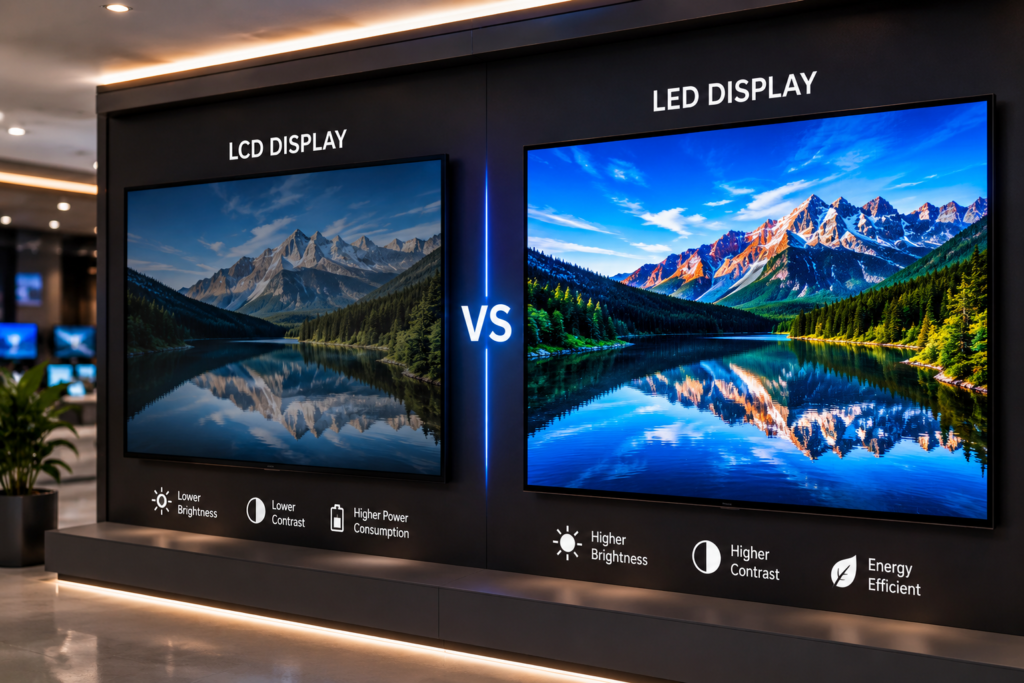
- Lower brightness
- Higher energy consumption
- Reduced contrast
LED Display Pros
- High brightness
- Better contrast
- Energy efficient
- Longer lifespan
- Flexible installation options
LED Display Cons
- Higher purchase price
- Premium models may be expensive
Key Takeaways
- LED displays generally outperform traditional LCD displays.
- LCD remains suitable for budget-conscious applications.
- LED technology offers better brightness and efficiency.
- Long-term operating costs favor LED displays.
- Future display innovations continue advancing LED technology.
Conclusion
When evaluating LCD vs LED display technologies, the right choice depends on your specific requirements, budget, and intended application. LCD displays remain a practical option for cost-sensitive environments, while LED displays offer superior brightness, energy efficiency, contrast, and long-term value.
For businesses investing in digital signage, video walls, retail displays, or outdoor applications, LED technology is typically the preferred solution due to its performance advantages. As display technology continues to evolve, LED systems are expected to remain the industry standard for high-quality visual communication.
FAQ Section
1. What is the main difference between LCD and LED displays?
The primary difference is the backlighting technology. LCD displays use fluorescent lighting, while LED displays use light-emitting diodes.
2. Is LED better than LCD?
In most cases, LED displays offer better brightness, contrast, energy efficiency, and lifespan than traditional LCD displays.
3. Which display consumes less power?
LED displays generally consume less electricity than LCD displays.
4. Are LED displays more expensive?
Yes. LED displays often have higher initial costs but lower long-term operating expenses.
5. Which display lasts longer?
LED technology typically offers a longer operational lifespan.
6. Can LCD displays be used outdoors?
LCD displays can be used outdoors, but LED displays generally perform better in bright sunlight.
7. Which display provides better image quality?
LED displays usually deliver better contrast, color accuracy, and brightness.
8. Are LED displays environmentally friendly?
LED displays are generally considered more environmentally friendly because they use less power and contain fewer hazardous materials.
9. What industries commonly use LED displays?
Retail, transportation, hospitality, sports, entertainment, education, and corporate sectors widely use LED displays.
10. What is the future of display technology?
Emerging technologies such as Mini LED, Micro LED, AI-powered optimization, and ultra-high-resolution displays are shaping the future.