
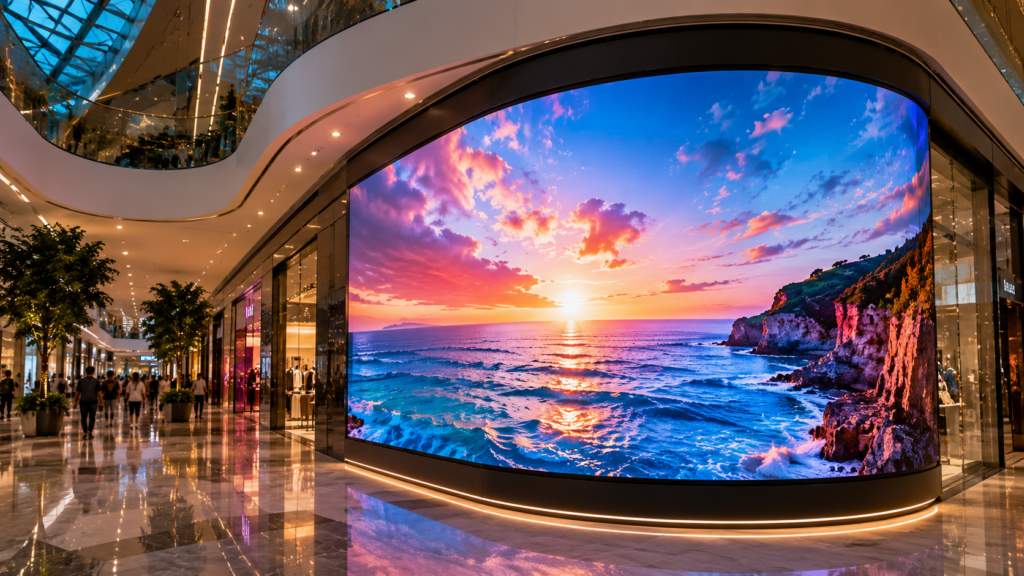
Introduction
Flexible LED display technology is transforming the digital signage and visual communication industry by enabling displays to bend, curve, wrap around surfaces, and adapt to unique architectural designs. Unlike traditional flat LED screens, a flexible LED display offers unprecedented installation versatility, making it ideal for creative advertising, retail environments, entertainment venues, exhibitions, and modern architectural projects.
As businesses seek innovative ways to capture audience attention, flexible LED displays have become increasingly popular due to their ability to create immersive visual experiences. Whether installed on curved walls, columns, wave-shaped structures, or custom-designed installations, these displays provide stunning image quality while maintaining the advantages of traditional LED technology.
The growing demand for eye-catching digital communication solutions has positioned flexible LED displays as one of the fastest-growing segments in the display industry. This comprehensive guide explores everything you need to know about flexible LED displays, including their technology, features, benefits, applications, buying considerations, industry use cases, and future trends.
What Is a Flexible LED Display?
A flexible LED display is a digital screen made from soft, bendable LED modules that can conform to curved, irregular, or custom-shaped surfaces. Unlike rigid LED panels, flexible displays use specialized materials and circuit designs that allow them to bend without affecting image quality or performance.
These displays are commonly used to create:
- Curved video walls
- Cylindrical LED screens
- Wave-shaped displays
- Creative retail installations
- Architectural media facades
- Immersive exhibition displays
- Custom digital signage solutions
Flexible LED technology combines visual performance with installation freedom, allowing designers and businesses to create unique display experiences.
Main Components of a Flexible LED Display
- Flexible LED modules
- Soft PCB boards
- Magnetic mounting systems
- Control system
- Power supply units
- Receiving cards
- Content management software
These components work together to provide seamless visual output while maintaining flexibility.
How Does a Flexible LED Display Work?
A flexible LED display functions similarly to traditional LED screens but uses bendable modules instead of rigid cabinets.
Step 1: Content Creation
Users prepare videos, graphics, animations, and digital advertisements.
Step 2: Signal Processing
The controller converts content into display-ready digital signals.
Step 3: Data Distribution
Signals are transmitted to individual LED modules.
Step 4: LED Illumination
Millions of LEDs light up in precise patterns to create images.
Step 5: Curved Visual Output
The flexible structure allows content to appear seamlessly across curved surfaces.
This technology enables stunning visual presentations that traditional displays cannot achieve.
Key Features of Flexible LED Display Technology
Bendable Design
The primary advantage is the ability to bend and conform to unique shapes.
Lightweight Construction
Flexible LED displays weigh less than many traditional display systems.
Seamless Visual Appearance
Modules connect smoothly to create uninterrupted images.
High Brightness
Displays remain visible even in challenging lighting conditions.
Excellent Color Reproduction
Advanced calibration ensures vivid and accurate colors.
Wide Viewing Angles
Audiences can view content clearly from various positions.
Easy Installation
Magnetic mounting systems simplify installation and maintenance.
Customizable Shapes
Designers can create highly creative display configurations.
Benefits of Flexible LED Displays
Greater Design Freedom
Architects and designers can create visually striking installations.
Enhanced Audience Engagement
Unique display shapes naturally attract attention.
Space Optimization
Flexible displays adapt to spaces where flat screens cannot fit.
Improved Brand Visibility
Creative digital signage stands out in competitive environments.
Lightweight Structure
Reduced weight simplifies transportation and installation.
High Durability
Modern flexible LED displays are designed for long-term use.
Energy Efficiency
LED technology helps minimize power consumption.
Flexible LED Display vs Traditional LED Display
| Feature | Flexible LED Display | Traditional LED Display |
|---|---|---|
| Shape Flexibility | Excellent | Limited |
| Curved Installations | Ideal | Difficult |
| Creative Design Options | Extensive | Moderate |
| Weight | Lightweight | Heavier |
| Installation Flexibility | High | Moderate |
| Image Quality | Excellent | Excellent |
| Brightness | High | High |
| Maintenance | Easy | Moderate |
Common Uses of Flexible LED Displays
Retail Stores
Retailers use flexible displays to create immersive shopping experiences.
Applications include:
- Window displays
- Product showcases
- Brand promotions
- Interactive experiences
Shopping Malls
Flexible LED displays enhance customer engagement through creative advertising.
Corporate Environments
Businesses use them for:
- Reception areas
- Showrooms
- Brand storytelling
- Interactive presentations
Entertainment Venues
Popular applications include:
- Concert stages
- Nightclubs
- Theme parks
- Digital art installations
Museums and Exhibitions
Flexible displays create engaging educational experiences.
Architectural Projects
Building facades and interior designs benefit from customized LED solutions.
Types of Flexible LED Displays
Curved LED Displays
Designed for smooth curved installations.
Cylindrical LED Displays
Wrap around columns and pillars.
Wave-Shaped Displays
Create visually dynamic architectural features.
Concave Displays
Curve inward for immersive experiences.
Convex Displays
Curve outward to maximize visibility.
Custom-Shaped Displays
Tailored to unique design requirements.
Factors to Consider Before Buying a Flexible LED Display
Pixel Pitch
Smaller pixel pitches provide higher image quality for close viewing.
Installation Environment
Consider:
- Indoor applications
- Outdoor exposure
- Ambient lighting
- Structural requirements
Screen Size
Determine dimensions based on available space and audience distance.
Curvature Requirements
Different projects require varying levels of flexibility.
Content Management
Ensure compatibility with software and control systems.
Budget Planning
Evaluate total ownership costs including installation and maintenance.
Common Mistakes When Selecting Flexible LED Displays
Choosing the Wrong Pixel Pitch
Improper pixel pitch can reduce image clarity.
Ignoring Structural Requirements
Installation surfaces must support the display.
Prioritizing Price Over Quality
Lower-cost solutions may compromise reliability.
Overlooking Maintenance Access
Serviceability should be considered during design.
Underestimating Content Requirements
Creative displays often require specialized content creation.
Expert Tips for Maximum Performance
Use High-Resolution Content
Premium visuals maximize display impact.
Plan Installation Carefully
Proper planning reduces installation challenges.
Conduct Regular Maintenance
Routine inspections improve system longevity.
Optimize Viewing Distances
Match display specifications to audience needs.
Work With Experienced Installers
Professional installation ensures optimal results.
Industry Applications
Retail Industry
Flexible LED displays help brands create memorable shopping experiences.
Hospitality Sector
Hotels use creative displays for branding and guest communication.
Transportation Facilities
Airports and stations deploy flexible displays for information systems.
Healthcare Organizations
Medical facilities use digital displays for communication and navigation.
Educational Institutions
Schools use immersive displays for learning environments.
Entertainment Industry
Concerts, festivals, and attractions rely heavily on flexible LED technology.
Future Trends in Flexible LED Display Technology
Micro LED Integration
Micro LED technology will improve efficiency and image quality.
Interactive Displays
Touch-enabled flexible screens are becoming more common.
AI-Powered Content Optimization
Artificial intelligence will improve content delivery and management.
Higher Resolutions
4K, 8K, and future resolutions will continue expanding.
Transparent Flexible Displays
New innovations are combining flexibility with transparency.
Sustainable Manufacturing
Manufacturers are focusing on eco-friendly production processes.
Advantages and Disadvantages
Pros
- Highly flexible design
- Unique visual impact
- Lightweight construction
- Excellent image quality
- Easy installation
- Wide viewing angles
- Energy efficient
Cons
- Higher upfront investment
- Specialized installation requirements
- Custom content may be needed
Key Takeaways
- Flexible LED displays enable creative and curved installations.
- They provide excellent image quality and audience engagement.
- Suitable for retail, entertainment, architecture, and corporate environments.
- Proper planning and pixel pitch selection are essential.
- Future innovations will further expand display possibilities.
Conclusion
Flexible LED display technology is redefining what is possible in digital signage and visual communication. By combining exceptional image quality with unmatched installation flexibility, these displays allow businesses, designers, and organizations to create memorable visual experiences that traditional screens simply cannot achieve.
From retail stores and entertainment venues to corporate environments and architectural projects, flexible LED displays offer a powerful solution for engaging audiences and enhancing brand visibility. As technology continues to evolve, flexible LED displays will play an increasingly important role in shaping the future of digital communication.
FAQ Section
1. What is a flexible LED display?
A flexible LED display is a bendable digital screen made from soft LED modules that can conform to curved and custom-shaped surfaces.
2. Where are flexible LED displays commonly used?
They are widely used in retail stores, shopping malls, museums, entertainment venues, exhibitions, and architectural projects.
3. Can flexible LED displays be curved?
Yes. Flexible LED displays are specifically designed for curved, cylindrical, and custom-shaped installations.
4. Are flexible LED displays durable?
Modern flexible LED displays are engineered for long-term performance and reliability.
5. What is the ideal pixel pitch for a flexible LED display?
The ideal pixel pitch depends on viewing distance and application requirements.
6. Are flexible LED displays energy efficient?
Yes. Like traditional LED displays, they consume relatively low amounts of power while providing excellent brightness.
7. Can flexible LED displays be used outdoors?
Certain models are designed for outdoor applications and include weather-resistant features.
8. How are flexible LED displays installed?
Many systems use magnetic mounting structures that simplify installation and maintenance.
9. Do flexible LED displays support video playback?
Yes. They can display videos, animations, graphics, presentations, and real-time content.
10. What is the future of flexible LED display technology?
Future developments include Micro LED integration, AI-powered management, transparent displays, and higher resolutions.